Halal Nail Polish: Is It Really Wudu Friendly?
By Hijabi Bridal Team ·
Is halal nail polish really halal? It can be halal to wear, but "halal" on a bottle of nail polish doesn't mean it's wudu friendly. Halal certification usually covers the cosmetic ingredients and how the polish is made, not whether water can reach your nail through it. Wudu is only complete when water touches the nail itself, so for Islamic prayer the question that matters is simpler: is anything still coating your nails when you wash? This guide covers breathable and water-permeable polish, Orly Breathable, which brands call themselves halal, and what Muslim women can wear instead when they want color and prayer to work together.
Is there really halal nail polish?
Yes, in one sense. Plenty of nail polish brands sell certified halal nail polish, which means the formula avoids ingredients Muslims hold as impermissible and the product is made to halal standards. Many of these polishes are also cruelty-free, vegan-friendly, toxin-free, alcohol-free or sold in eco-friendly packaging, which matters to shoppers of Islamic cosmetics and natural beauty products alike.
What halal certification doesn't usually tell you is whether the polish lets water through. That's a separate question, and for Muslim women who pray five times a day, it's the more important one. A polish can be made entirely from permissible ingredients and still form a film that water can't pass through.
Demand is growing fast. The halal cosmetics market, including the US and UK halal cosmetics market, now serves American and British Muslim consumers looking for permissible cosmetics, halal beauty and cosmetic products for Muslim consumers that reflect Islamic values in beauty products. That growth has brought more Muslim beauty products, more personal care products made with natural ingredients and vegan ingredients, and more eco-friendly cosmetics. It has also brought more confusion, because the halal certification process checks permissible materials, not how a finished polish behaves during wudu.
Is halal nail polish really halal?
The ingredients can be. Whether it's halal to wear while you pray depends on water. Under Islamic law, wudu requires water to reach every part of the limbs being washed, including the fingernails. If a coating stops that water, the wudu isn't complete and the prayer that follows isn't valid, however permissible the ingredients are. That's why halal nail polish is best understood as polish with halal ingredients, not as polish you can pray in.
Which nail polishes are halal?
Any nail polish made without impermissible ingredients can be halal to wear, and most standard polishes don't contain animal-derived ingredients, although they normally contain some form of alcohol, whether it's ethyl alcohol or SD alcohom. Halal-certified formulas simply confirm this through a certification process, much as kosher certification does for Jewish consumers. For Islamic practices around prayer, though, every polish is judged by the same test: it has to come off before wudu, or be worn only on days you aren't praying. That's the dividing line between haram vs halal in nail care in Islam: the ingredients decide whether a product is permissible, and your wudu decides whether you can pray in it.
Are Muslims allowed to have nail polish?
Yes. Nothing in Islamic law forbids nail polish as a cosmetic. The limit comes from ritual purity: nail polish has to be removed before wudu and ghusl, because it blocks the water that purification requires. That makes nail polish easy to wear during your period, when you aren't praying, and difficult to wear on prayer days. Islamic jurisprudence on cosmetics treats this as a matter of religious compliance with prayer requirements, not a judgment on beauty itself, and Islamic guidelines on cosmetics in Islam leave plenty of room for Muslim women's beauty routines and nail care for Muslim women.
Can Muslims use halal nail polish?
Yes, Muslims can use halal nail polish. The practical question is timing. On days you pray, you would need to remove the polish before every wudu, which means nail polish remover several times a day. Most Muslim women don't find that realistic, so they save polish for their period, special occasions or Eid, and remove it before the ghusl that ends their period.
What nail polish can Muslims wear?
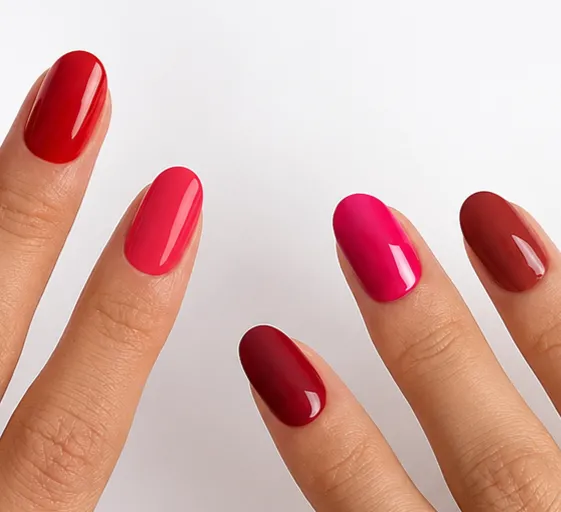
Muslims can wear any polish made from permissible ingredients, as long as they remove it before wudu and ghusl. Permissible colors aren't restricted; beauty standards in Islam are about modesty in presentation rather than any particular shade. Many women keep neutral or soft colors for everyday wear in line with modest beauty and Islamic fashion, and save bold nail art for Eid and gatherings at home. Silver nail polish, soft nudes and deep berry shades are all popular halal nails ideas, and the same halal nails designs work whether you choose polish for your period or silver nails for Muslim women on Eid. Muslim fashion trends, modest fashion trends and hijabi fashion trends all lean toward short, polished nails that pair with any hijab, which fits Muslim beauty standards, modest beauty standards and Islamic beauty standards alike. Mosque etiquette in US and UK mosque communities generally favors understated nails for congregational prayer.
Is my wudu valid if I have nail polish?
No. If ordinary nail polish is on your nails when you make wudu, the wudu isn't valid, because water can't reach the nail underneath. Fiqh rulings on wudu treat anything that blocks water as a barrier, whether it's polish, glue or paint. Remove the polish, make wudu again, and then pray. Wudu rituals are part of prayer rituals, and like other religious rituals and religious practices they depend on getting the basics right. Hygiene in Islam and personal hygiene are built into worship: prayer and hygiene practices go together, and beauty and hygiene in Islam are meant to support each other, not compete.
Is wudu valid with halal nail polish?
Not reliably. Halal nail polish companies say they they test their products with high jet sprayers to make sure water goes through. That same process can't be done at home, even if water succeeded in penetrating the polish in a lab. A halal certificate on the bottle doesn't confirm that water passes through it. At Halal Nails, we treat any polish, halal-certified or not, as a barrier: take it off before wudu.
Can I perform wudu with breathable nail polish?
We don't recommend it. Breathable nail polish, sometimes sold as porous nail polish, permeable nail polish or water-permeable polish, is marketed as letting oxygen and water vapor pass through the film. Wudu needs liquid water to reach the nail, not vapor over time. The polish materials and pigment composition still form a film with some water resistance, and there's no simple way to confirm at home that water reaches your nail during an ordinary wudu. When your prayer is at stake, uncertainty is a reason to remove the polish, not to trust the label. Whether you ask "is breathable nail polish wudu friendly" or look for water-permeable nail polish labeled wudu-friendly nail polish, the permeable formula still leaves nail polish materials on the nail. For Shariah compliance, Islamic law compliance and religious observance, we'd rather you be certain. An Islamic compliant manicure is one that's off your nails when the water touches them, and that's the whole answer to Muslim nails wudu questions.
Can I pray with halal nail polish on?
Only if the polish was applied after you made wudu. Applying halal polish after wudu doesn't affect it, so you can pray until your wudu breaks. Before your next wudu, the polish has to come off completely. In practice that means removing and reapplying polish between prayers, which is why most women who want color on prayer days choose removable press-ons instead. Prayer compatibility is the whole point of halal fake nails: the best halal fake nails, and the best halal press on nails, come off before wudu without a remover.
Is it halal to pray with nail polish?
It depends on your wudu. Praying with halal polish that went on after wudu is fine. However, regular nail polishes do contain alcohol for quick drying. You can't pray with that even if you made a wudu before. Praying on a wudu made over halal polish isn't allowed, because that wudu was never complete. Prayer readiness starts with bare nails at the moment you wash. Good salat preparation and salat etiquette make that a habit, and prayer etiquette at the mosque follows the same rule.
Do your prayers get accepted if you have nail polish on?
Acceptance is with Allah alone, but validity is something you can control. A prayer performed with wudu made over nail polish isn't valid, because the wudu itself isn't valid. If you realize afterward that polish was on your nails when you washed, remove it, make wudu and repeat that prayer. That small step of prayer preparation keeps your salat acceptance question where it belongs, with Allah, instead of with your manicure.
Is Orly Breathable halal?
Orly Breathable is halal-certified for its ingredients. Orly launched the breathable line in 2016, marketing it as a polish Muslim women could wear, and says the formula lets oxygen and water vapor pass through. Its halal certification comes from the Islamic Society of the Washington Area, and Orly's own halal campaign states that the certification is about the ingredients, not about permeability, leaving wudu use to each person's discretion.
So Orly Breathable is halal in the sense that its ingredients are permissible. Whether it's wudu friendly is a different question, and the certification doesn't answer it. Following our position above, we'd treat Orly Breathable like any other polish: wear it on days you aren't praying, and remove it before wudu or ghusl. That's not a criticism of any brand; it reflects cultural sensitivity to what Muslim women actually need, and the difference between halal nail polish and halal nail polish wudu friendly claims.
Which nail polish brands are halal?
A growing number of nail polish brands sell halal-certified or breathable formulas, including Orly Breathable, and some US-based and UK-based halal cosmetics brands specialize in them. Mainstream brands such as Sally Hansen, for instance, sell standard polishes that aren't marketed as halal or breathable. When you compare brands, look at what the certification actually covers. Halal certification, US halal certification bodies and their UK counterparts generally check permissible ingredients and manufacturing, while claims about water permeability come from the brand itself.
Beauty blogger recommendations and beauty blog reviews can help with color, wear and chip resistance, but they can't confirm your wudu. For that, the test is removability. Hijabi beauty bloggers, hijabi beauty trends and US and UK Muslim community beauty recommendations are useful for spotting nail polish trends, beauty trends and US and UK market beauty trends, but the final call on your wudu rests with you. The same goes for US-based and UK-based halal retailers and halal nails brands in the wider US and UK Muslim market, which serve US and UK Muslim consumers and a growing US and UK Muslim consumer market shaped by US and UK market trends and US and UK Muslim community beauty standards. Even nail salon listings for halal nails near me can't promise a wudu-friendly polish. Islamic practices in the US and UK, Muslim American and British culture, and religious freedom in the US and UK give Muslim women the space to follow their own standards here, and interfaith dialogue has helped mainstream beauty companies understand why.
What are the best halal nail polish brands?
The best halal nail polish brands are clear about what their certification covers, list their nail polish ingredients openly, and are cruelty-free and vegan. Look for brands that tell you which ingredients they leave out, including nail polish ingredients to avoid such as formaldehyde and toluene, and that don't imply their certificate proves water permeability. The FDA's page on nail care products explains how cosmetic regulations and product warnings work in the US, and UK cosmetic rules follow similar principles for labeling and safety. A good formula should also be chip resistant, since a chipped polish is harder to remove fully before ghusl. That kind of transparency is what Muslim American and British cosmetic preferences increasingly expect from the Islamic cosmetics industry and from US-based and UK-based halal cosmetics brands.
Which nail polish is wudhu-friendly?
No nail polish can be relied on as wudhu-friendly while it stays on your nails. Breathable formulas, permeable coatings and water-permeable coatings all still leave a film between the water and the nail. The only truly wudu friendly products are ones you can remove before every wudu, or ones that don't coat the nail at all.
That leaves two prayer-friendly beauty options. Henna stains the nail instead of coating it, so water still reaches it, and it has been part of Muslim women's beauty routines for centuries. Press-on nails applied with alcohol-free halal nail glue tabs come off in seconds before wudu and go back on after, giving you a polished look with none of the doubt. These are the most practical prayer-friendly products and prayer-friendly beauty products available: prayer friendly beauty that fits real worship and prayer routines.
Timing matters most around Ramadan. Ramadan observance, Ramadan preparation and Ramadan prep tips usually include extra prayers, so Ramadan beauty routines and Ramadan beauty tips favor removable options. Ramadan nail care, nail care for Ramadan and Ramadan nail trends lean toward press-ons, and many women save polish for Eid instead. Ramadan nail inspiration often turns into Eid nail art, and a set of press-ons makes one of the easiest Eid gift ideas alongside Eid makeup, Eid makeup trends and Eid makeup tutorials. Beyond Ramadan, it's the same Islamic lifestyle and Muslim women's lifestyle: faith and beauty, faith and fashion, and faith and personal care working together.
What nail polish is suitable for Muslim women?
Any polish with permissible ingredients is suitable for Muslim women to wear on days they aren't praying, and it's worth choosing a cruelty-free nail polish or vegan nail polish if ethical sourcing matters to you. For prayer days, polish isn't the practical choice. Muslim-friendly nail care for prayer means nails you can take off before wudu, which is exactly what press-ons on tabs are designed for. That's why so many women searching for nails for Muslim women, the best nails for Muslim women or Muslim nails end up choosing halal press on nails. With the best halal nail glue, meaning alcohol-free tabs, the best halal nails press on sets become wudu friendly nails you can remove in seconds. Islamic nail care doesn't have to mean bare nails every day.
What is the best halal nail polish for Muslims?
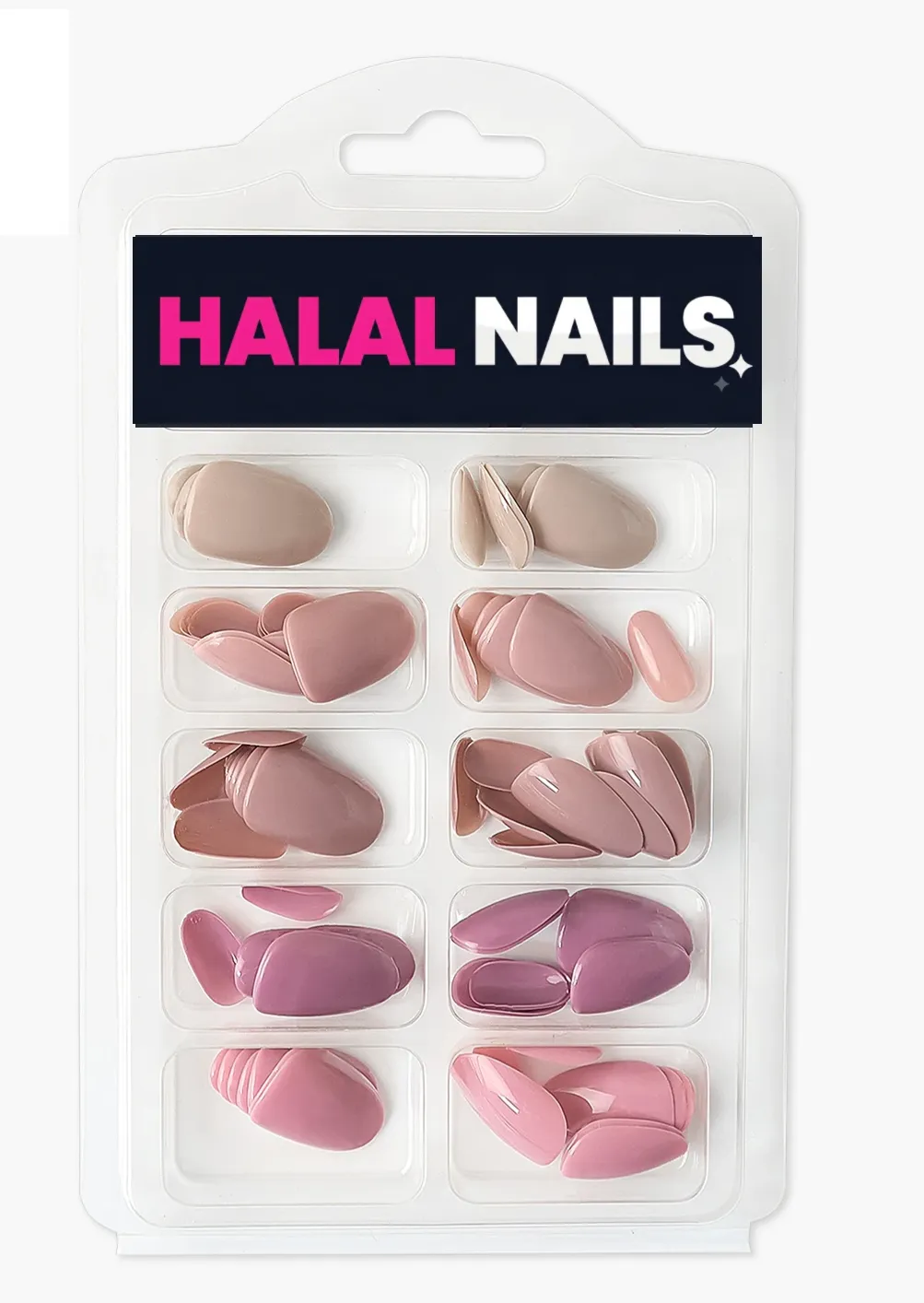
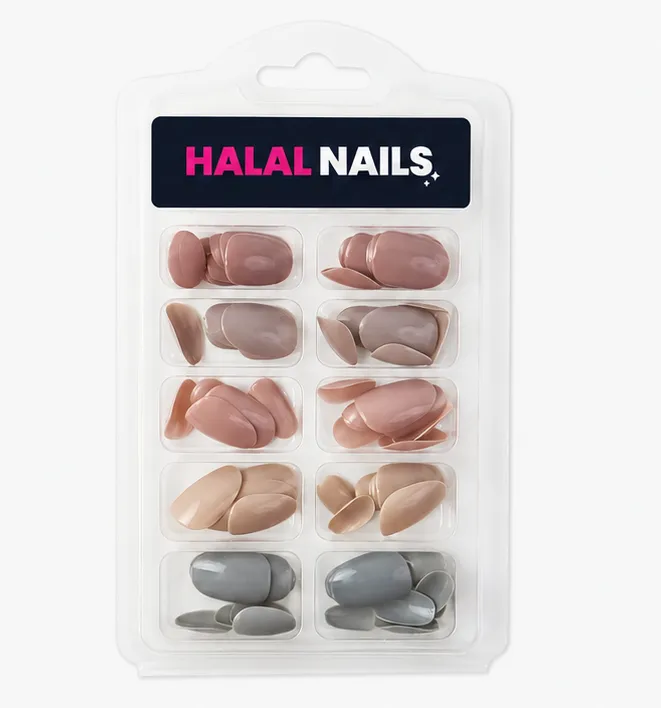
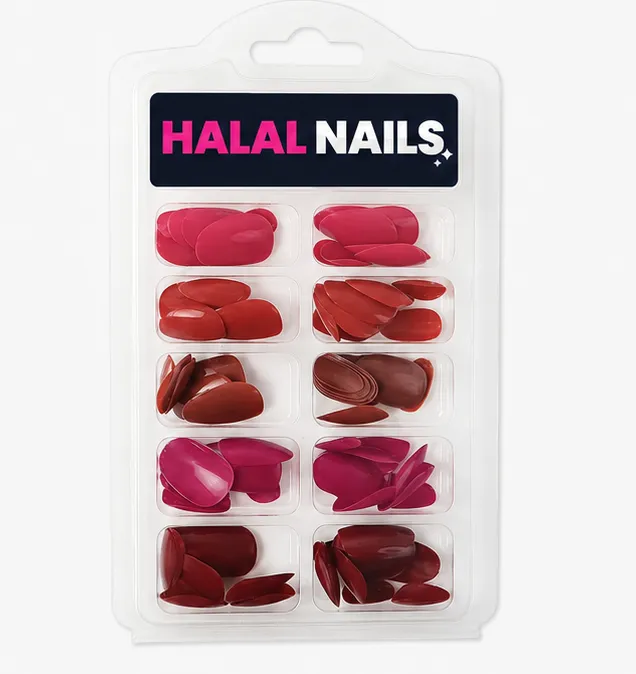
For days you aren't praying, the best halal nail polish is a cruelty-free, vegan formula from a brand that's transparent about its halal certification. For prayer days, the best option isn't a polish at all. Our Halal Nails collection gives you the look of a fresh manicure in Pink Neutrals, Cool Neutrals and Autumn Berries, with Halal Nails Glue Tabs included so the whole set comes off before wudu. Long-lasting color, reusable nails and no remover needed. It's Islamic values in beauty routines put into practice, and it suits modest beauty products, modest fashion, Islamic fashion trends and Islamic modesty fashion alike. Muslim American beauty and British Muslim beauty increasingly look this way across the American Muslim community, the British Muslim community, and the US and UK Islamic communities: faith-based beauty standards with fake nails and press on nails that respect salat. For more on the nails themselves, see are fake nails haram in Islam and can you pray with fake nails on.
Whatever you wear, keep your natural nails healthy between manicures. The American Academy of Dermatology's nail care tips recommend keeping nails clean, dry and trimmed, which suits Islamic hygiene practices and Muslim hygiene just as well. Simple nail care routines and good personal grooming habits between sets keep natural nails strong, whatever mix of nail art designs you choose.
Frequently Asked Questions
Can I pray with halal nail polish?
Only if you applied it after wudu. Once your wudu breaks, remove the polish completely before making wudu again. A wudu made over halal nail polish isn't reliable, because the polish still coats the nail.
Can you pray with halal nail polish on?
Yes, if the polish went on after you made wudu, and you remove it before your next wudu. For everyday prayer, removable press-ons on glue tabs are far easier than removing polish several times a day.
Which brands of nail polish are halal?
Brands such as Orly Breathable carry halal certification for their ingredients, and several halal cosmetics brands sell breathable formulas. Certification usually covers ingredients and manufacturing, not whether water reaches the nail during wudu.
Does breathable nail polish halal?
Breathable nail polish can have halal ingredients, but being breathable doesn't make it reliable for wudu. It lets vapor through, while wudu needs water to reach the nail. Remove it before wudu.
Is there any halal-certified nail polish available?
Yes. Several brands, including Orly Breathable, sell halal-certified nail polish in the US, UK and beyond. Check what the certificate covers before assuming it's wudu friendly.
Can nail polish be wudu friendly?
Not while it's on your nails. Any polish leaves a film over the nail, so the only wudu friendly approach is removing it before you wash, or choosing henna or press-ons on tabs instead.
Is breathable nail polish actually halal?
Its ingredients often are. Its suitability for wudu is uncertain, so at Halal Nails we treat breathable polish as a barrier and recommend removing it before wudu and ghusl.