Red Collection
Is Red a Traditional Muslim Wedding Color?
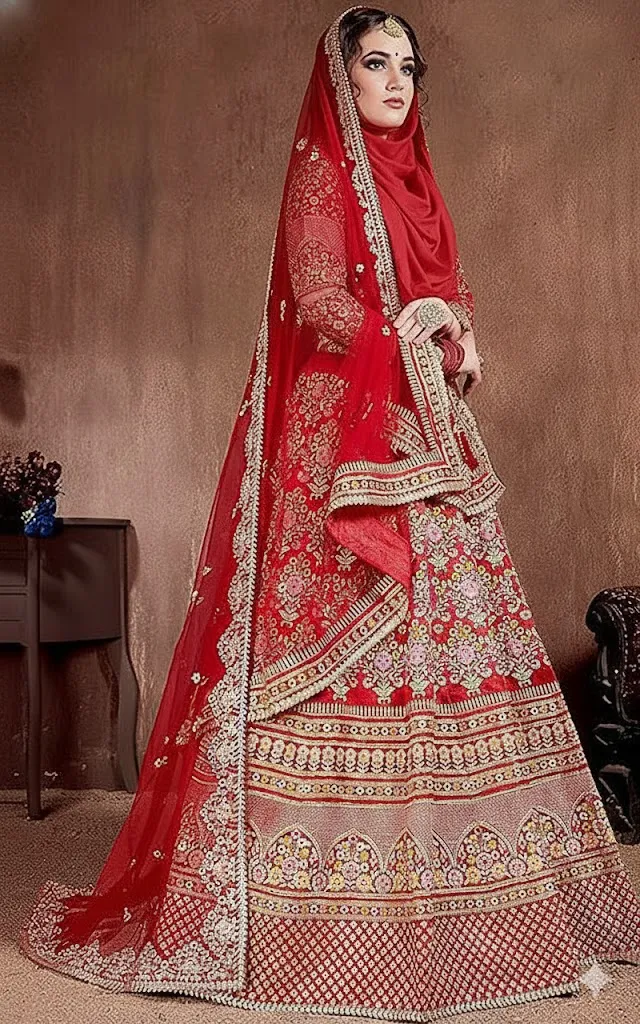
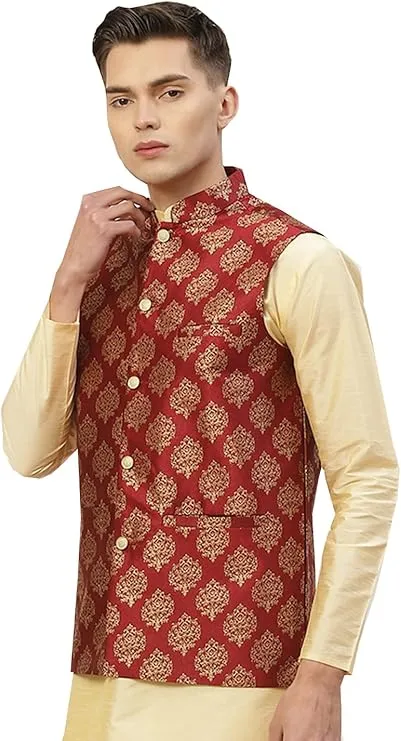
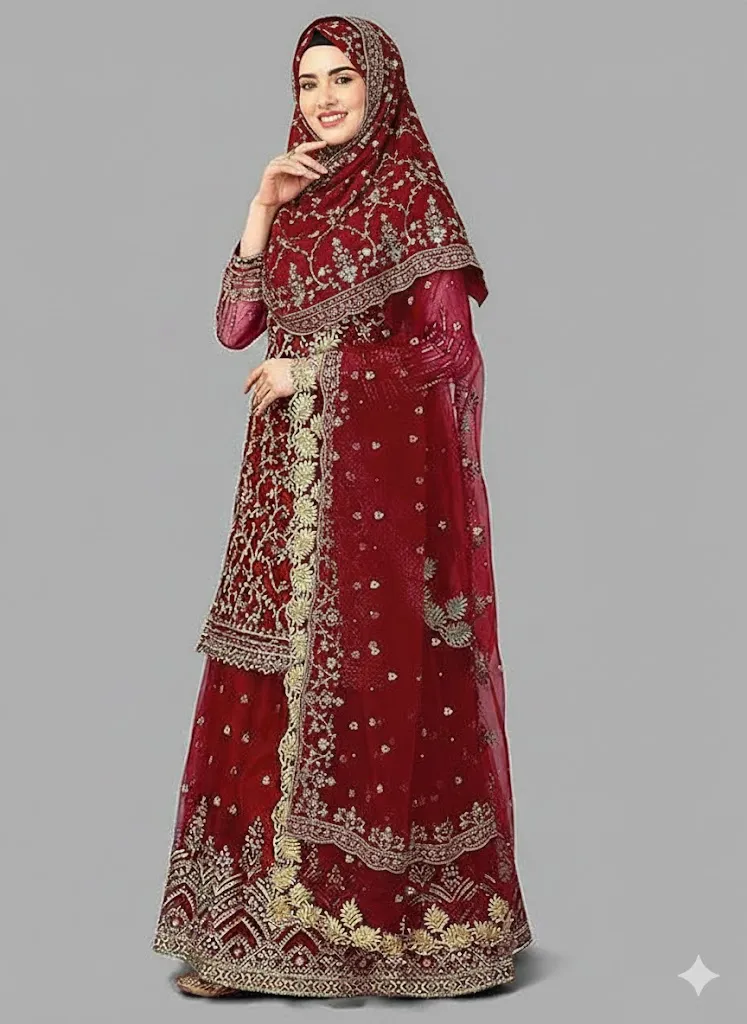
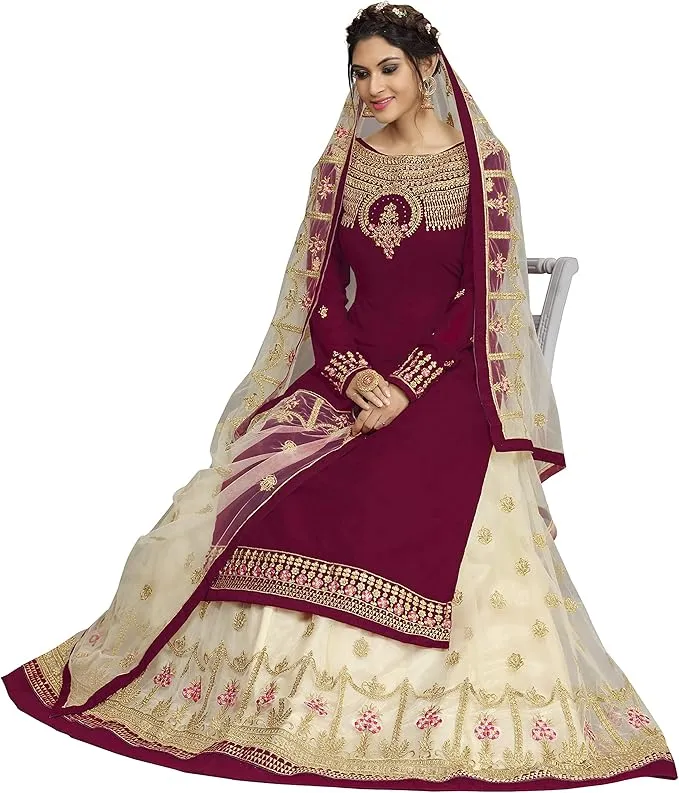
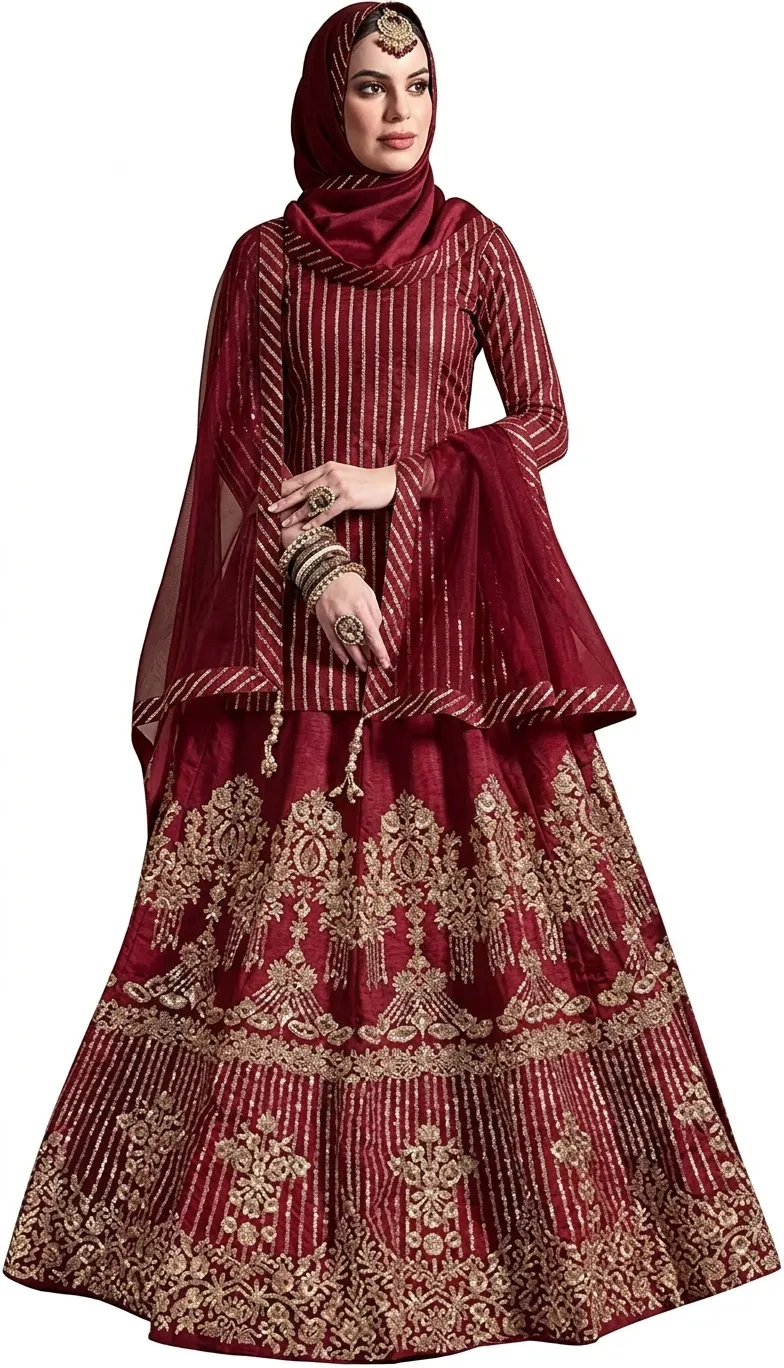
Red is a traditional Muslim wedding color, holding a cultural significance rooted in centuries of South Asian Islamic wedding traditions, and signaling joy, prosperity, and the start of a new life. For brides from Pakistani, Indian, and Bangladeshi families, red Muslim bridal elements are not simply for a color: they are from a red bridal tradition that was widely prevalent in Asia since the middle ages. Red was absorbed into Islamic wedding traditions as Chinese and South Asian communities shaped their own celebration customs. Our red collection features modern designs with minimized embroidery and lace overlays. READ MORE BELOW...
Is Red a Traditional Muslim Wedding Color?
Whether choosing a modern dress with minimal embroidery or heavily embroidered traditional wear, a Muslim bride from a Pakistani family will most often choose red bridalwear shaped by South Asian influences that associate deep red with celebration and marital blessing. Pakistani and Indian influences carried this color tradition to the US, where red remains the dominant bridalwear choice for South Asian communities today. That said, Islamic customs place no requirement on wedding colors — Islamic customs speak to modesty in dress, not to palette. A Muslim bride from an Arab background may choose white or gold, shaped by Arab bridal preferences for lighter formal tones. Champagne and pastel colors have become popular among modern Muslim brides. A convert bride may bring entirely different wedding colors to the conversation. These principles set the framework — modest dress, a valid nikah — and leave the aesthetic to the bride and her family's heritage.
Why Do Muslim Brides Wear Red?
Muslim brides wear red primarily because of Pakistani traditions and Indian culture — two of the most powerful influences on Muslim bridal fashion in the US — where red has been the defining bridal color for centuries. The answer is cultural, not religious: Islamic wedding rituals place no requirement on bridal color. Red's dominance in red muslim bridal comes entirely from its roots in South Asian wedding customs, where it signals joy, celebration, and the weight of the marriage occasion across communities regardless of faith. For Muslim brides from Pakistani or Indian backgrounds, wearing a red Muslim bridal dress at a nikah is simply what brides in their family have always worn — a living piece of traditional clothing passed down through generations.
The symbolism of red in South Asian bridal culture is layered and longstanding. In Indian culture, red is associated with prosperity and new beginnings. In Pakistani traditions specifically, red became the signature nikah color through the Mughal era, when Persian and Central Asian influences merged with South Asian textile culture to produce the richly embroidered bridal lehenga that remains the most recognizable piece of Muslim bridal attire in the US today. The cultural significance of color in wedding customs runs deep in the South Asian diaspora, which brought these marriage rituals intact when families emigrated to the US.
Middle Eastern customs tell a different story. In Gulf Arab wedding traditions and across many Middle Eastern communities in the US, ivory, gold, and champagne are more common for the main nikah ceremony, with red appearing at the walima or for a second outfit change. This distinction explains why red Muslim bridal dominates searches from Pakistani and Indian Muslim communities while remaining less prominent in Arab American Muslim wedding culture. The red wedding dress is a South Asian tradition practiced by Muslims, not an Islamic tradition that uses red. In American Muslim weddings and in interfaith marriages where the guest list spans multiple cultural backgrounds, red has a communicative advantage: it reads as a celebratory bridal color across South Asian, Middle Eastern, and Western cultural frames alike. Wedding fashion trends confirm that red leads every other color category in Muslim bridal attire sales year over year — a pattern reflecting both the demographic weight of South Asian Muslims in the US and the enduring pull of wedding attire rooted in shared cultural heritage. The South Asian diaspora has shaped American Muslim wedding attire, Red's persistence as the dominant bridal color is one of the most compelling data points.
What Color Do Muslim Brides Wear for a Wedding?
Arab-American, Turkish-American, and West African brides each bring distinct cultural traditions to the question of what to wear. Red Muslim bridal collections exist alongside white, champagne, and pastel ranges, each serving a different set of cultural traditions and each grounded in the same commitment to modesty. These days lilac and sage green are the most trending colors in Muslim bridalwear, reflecting the larger trends in the wedding industry. American Muslims also choose white and ivory as part of the larger bridal culture in the US - these colors never go out of style.
What Is the Tradition of the Red Bride?
The red bridal tradition in South Asian weddings is among the oldest continuous bridal practices in the world. Red was already the ceremonial color of brides in the subcontinent when Muslim communities first formed there in the 8th century. As Islamic wedding traditions spread through South Asia, they preserved this red bridal tradition because it did not conflict with the faith's requirements around modest dress. No Islamic wedding rituals require red — the tradition was permitted, but not mandated — and it persists today across Pakistani weddings, Indian wedding traditions, and Bangladeshi wedding culture simultaneously.
The cultural significance of red is expressed most vividly at the Henna Night — the pre-wedding mehndi gathering. The Henna Night is typically the bride's first appearance in the red color story, and its deep tones photograph beautifully against the orange and brown of fresh mehndi. Pakistani and Indian influences on this mehndi tradition have spread across the US Muslim community to the point where brides from non-South Asian backgrounds now incorporate a pre-wedding mehndi night into their planning. This spread reflects the cultural significance of South Asian wedding aesthetics in American Muslim life — a living example of cultural exchange within the community.
This color tradition reaches its most public expression at the walima reception — the post-wedding feast hosted by the groom's family. The bride traditionally appears in her most elaborate red look of the entire sequence, although nowadays she might choose a more modern lilac or blue color. Indian Muslim Weddings and Pakistani weddings alike treat this event as the primary public celebration, making its outfit the most photographed of the wedding. It is the image that endures in the family album across generations, reinforcing the Cultural Significance of red as the color of memory in wedding culture.
Red Lehengas, Anarkalis, and Shararas: South Asian Red Dress Collection
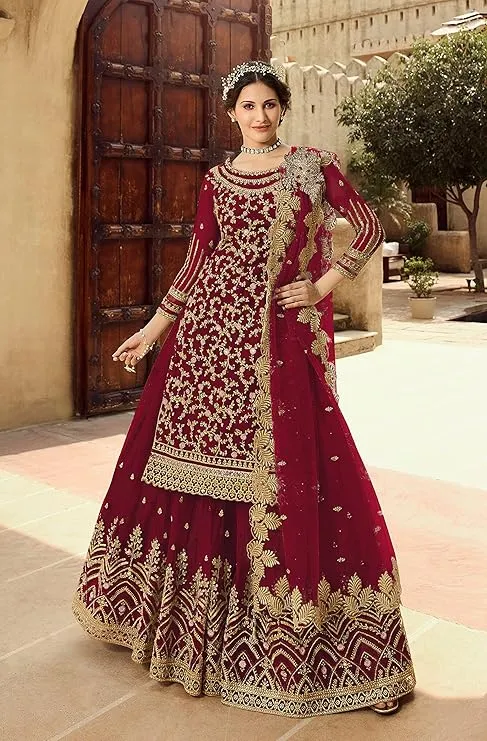
The red lehenga is the most iconic piece in this collection and the centerpiece of South Asian red wedding dress culture. A red lehenga — full circular skirt, fitted blouse, and dupatta — is the Traditional Attire of the Pakistani and North Indian Muslim bride for the Nikah Ceremony. In this collection, red lehengas feature heavy gold zardozi embroidery, sequin borders, and stonework detailing drawn directly from traditions in Lahore and Karachi bridal markets.
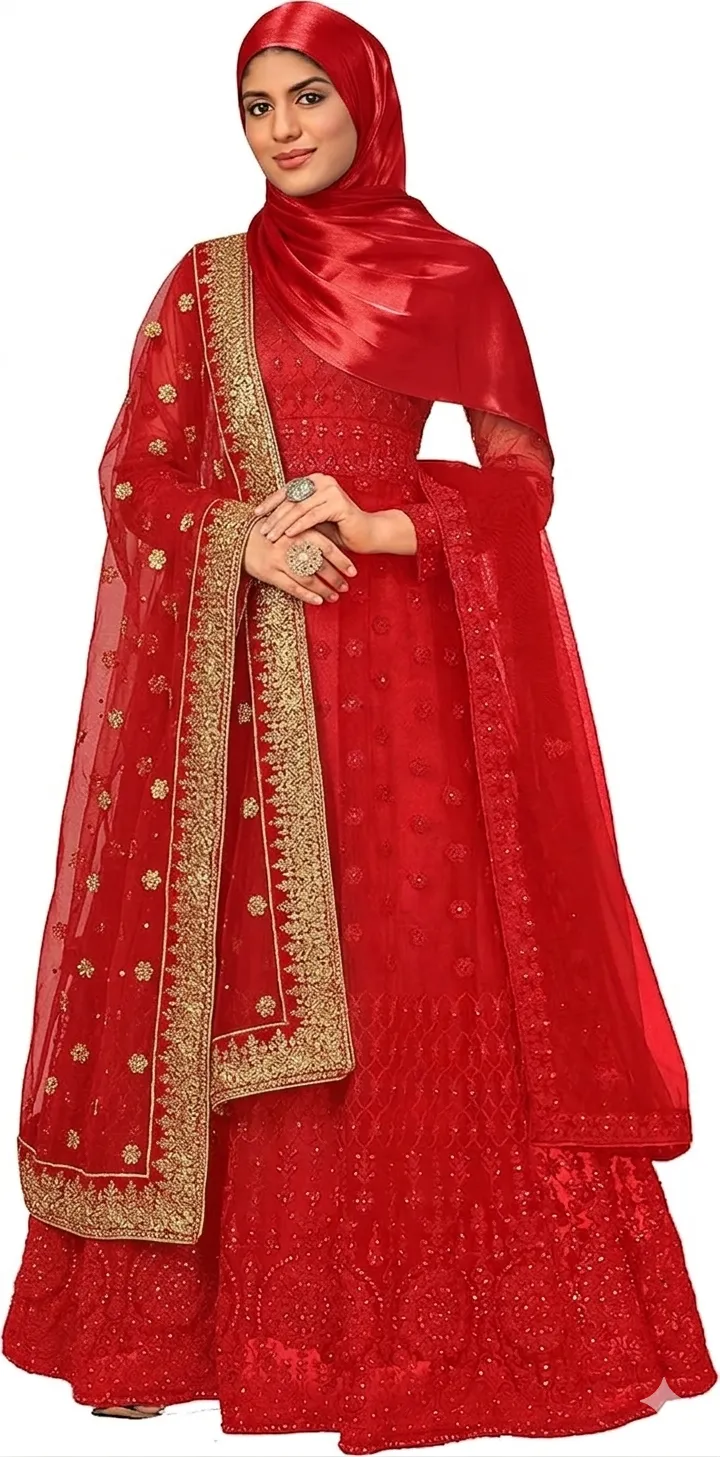
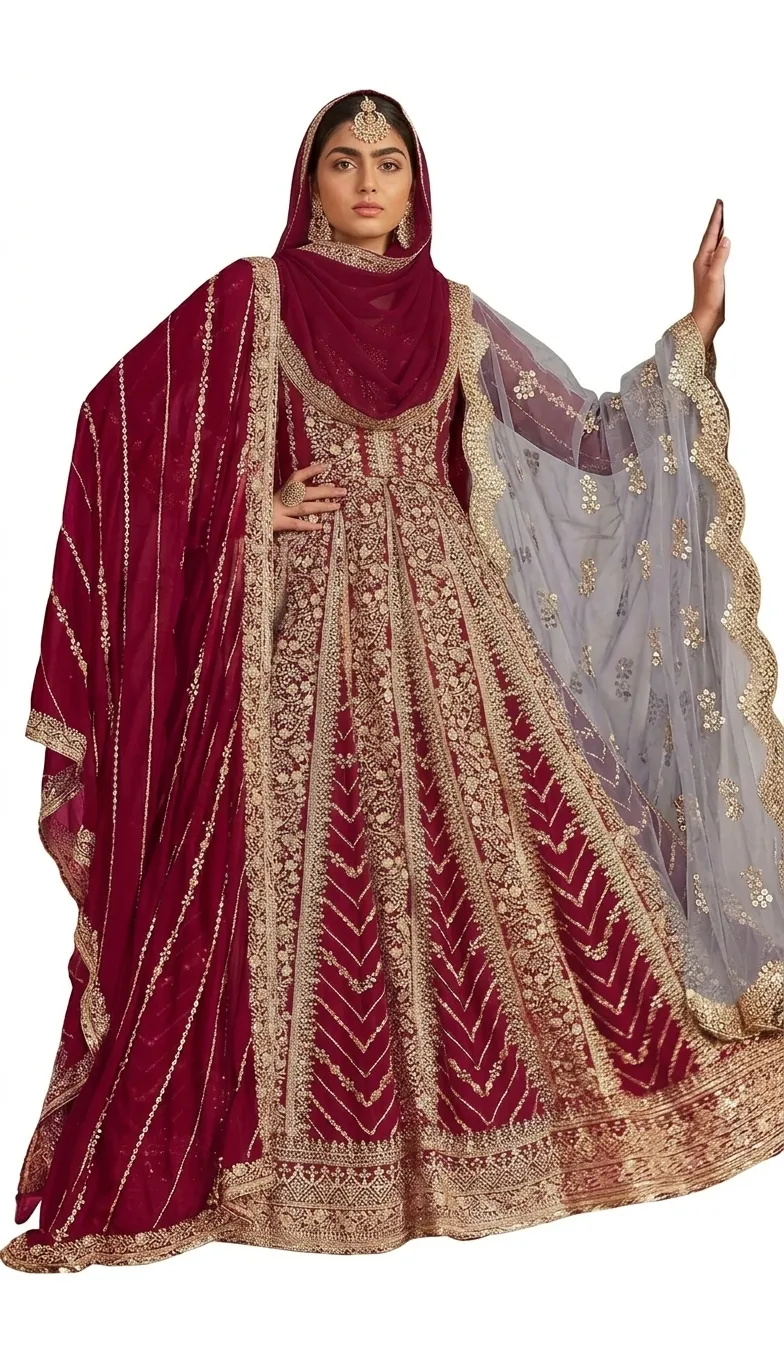
Red Muslim bridal gowns — the flared, anarkali, floor-length silhouette from Mughal court dress — are the most hijab-friendly option in red Muslim bridal dress culture. An anarkali's construction provides full shoulder-to-ankle coverage naturally, making it the easiest choice for brides who wear hijab, requiring no modifications beyond the bridal hijab itself. This collection includes lightweight lace overlay anarkalis for a lighter nikah look and heavy georgette versions with gold beadwork for grander occasions. Indian Muslim Weddings in the US favor the anarkali because its silhouette photographs well in both mosque and ballroom settings — making it well-suited to the realities of the American Muslim occasion.
Red shararas — wide-legged pants worn with long tunics — are the third major red dress silhouette here. The sharara is the most comfortable option for brides seated through long proceedings, its wide cut allowing ease of movement. Brides from UP and Lucknow Muslim families maintain a strong sharara tradition, and that tradition has arrived intact in the US Muslim community. Red shararas in this collection include complete sets with embroidered hem, cuffs, and coordinating dupatta — Traditional Attire offered as complete ready-to-wear sets.
Red Caftans and Abayas: Middle Eastern Red Dress Styles
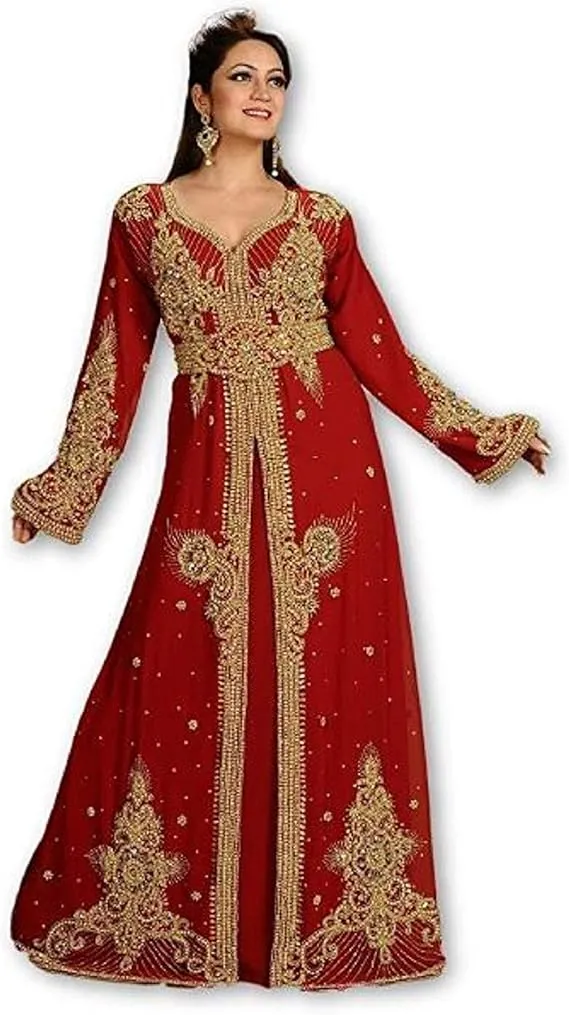
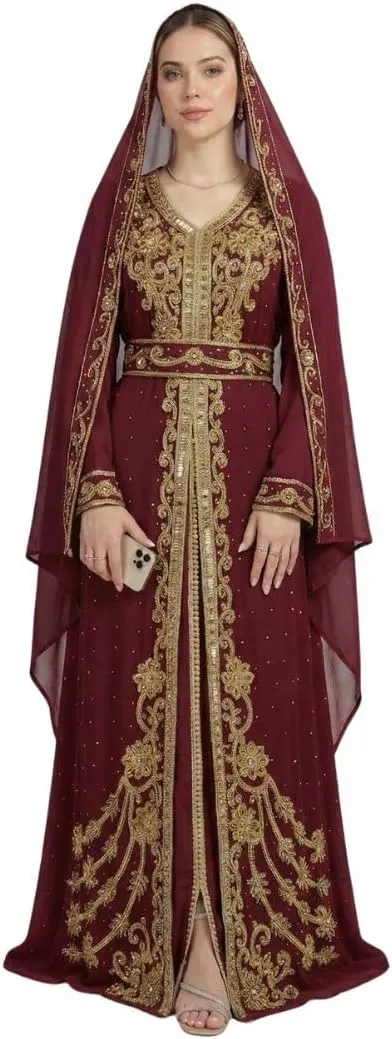
Red appears in Middle Eastern culture as a formal bridal color, particularly in Gulf wedding traditions where deep red and burgundy caftans sit alongside gold as wedding colors for celebration. Arab-American brides who want the visual impact of red without the South Asian lehenga silhouette find red caftan bridalwear a culturally resonant choice. This tradition approaches red dress with restraint — a single-piece floor-length garment with moderate embellishment — reflecting the aesthetic principles of Middle Eastern Bridal Trends that favor structure over surface decoration.
Red abaya-style dresses draw from the same Middle Eastern Bridal Trends that established the abaya silhouette as the dominant form of dress in Gulf Muslim communities. A red abaya-style dress provides full coverage — long sleeves, floor length, opaque fabric — in bridal fabrication: embroidered chiffon, beaded georgette, or velvet. For Arab-American brides who observe Islamic wedding rituals standards of full coverage and want their look rooted in Middle Eastern culture rather than South Asian heritage, the red abaya-style dress is the most aligned choice here.
Red Muslim bridal gown styles beyond the Gulf also encompass North African wedding customs. The Moroccan takchita in red is a two-piece layered garment with elaborate hand-stitching in gold thread — a form of Islamic wedding rituals dress that is as intricate as a South Asian lehenga but entirely distinct in silhouette and decorative language. This collection includes red caftan styles from North African traditions, reflecting the full scope of Middle Eastern red dress beyond the Gulf Arab aesthetic.
The Henna Night, Nikah, and Walima: Red Bridalwear Across the Wedding Sequence
A full South Asian Muslim Wedding typically spans three distinct events — the Henna Night, the nikah, and the Walima Reception — each with its own bridalwear register. The mehndi night calls for the lightest and most colorful look of the sequence: often a red or orange sharara or lehenga with less embroidery than the nikah outfit. It is a festive pre-wedding gathering, and the bridalwear reflects that informal warmth. Understanding these distinctions helps brides and planners allocate the bridal budget across the full Wedding Ceremony arc rather than concentrating it in one ensemble.
The Nikah Ceremony bridalwear is the most formally scrutinized outfit of the sequence. The Nikah Ceremony fulfills the Islamic customs and religious requirements of the marriage — witnesses, mahr, offer and acceptance — and the wedding attire worn during it must meet Islamic customs standards of full modest coverage. For South Asian brides, this means the red Muslim bridal lehenga or red anarkali with a bridal hijab: a Wedding Ceremony look that is both culturally grounded and Islamically compliant. Pakistani weddings typically reserve their most embroidered and elaborate wedding attire for the Nikah Ceremony, making it the most visually significant moment of the entire celebration.
The Walima Reception bridalwear may repeat the nikah outfit or introduce a second formal red look — sometimes in a different shade such as burgundy or magenta — to distinguish the two events while maintaining the color story. The post-wedding feast is more relaxed in terms of Islamic customs than the nikah, being a celebratory feast rather than a religious rite, but the expectation of formal red Wedding Ceremony dress remains strong. Some brides reserve their most embellished lehenga for that evening, wearing a more covered anarkali at the nikah — a distinction that reflects both Cultural Significance and Islamic customs priorities in South Asian wedding culture.
Red Bridal Accessories: Completing the Look
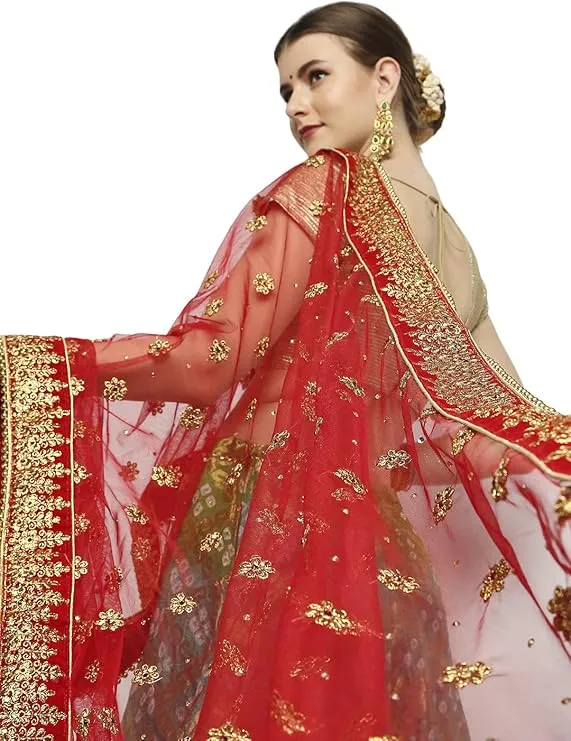
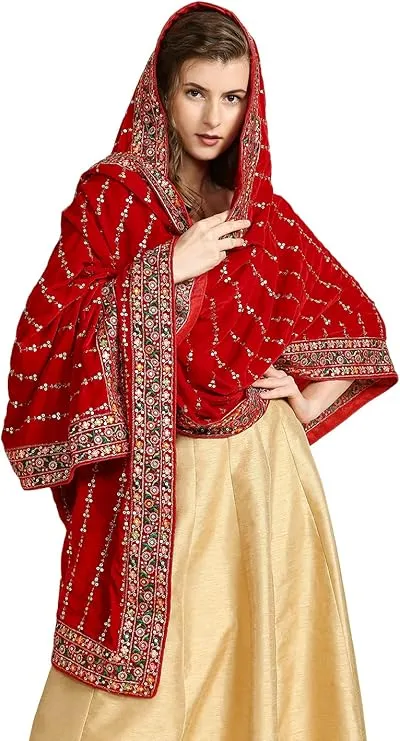
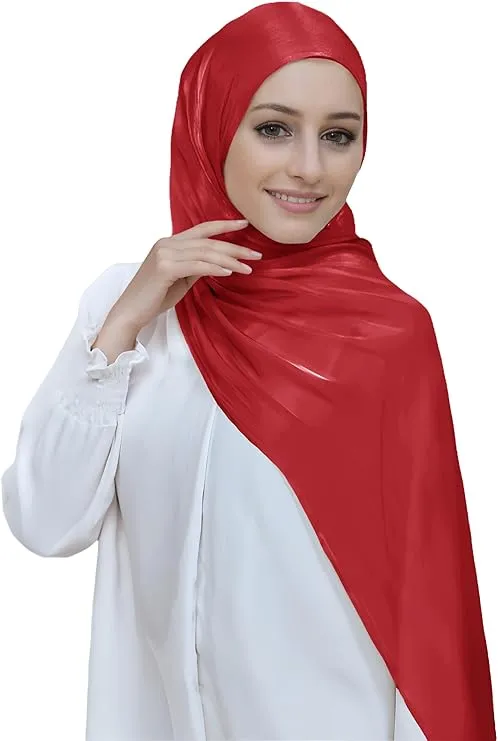
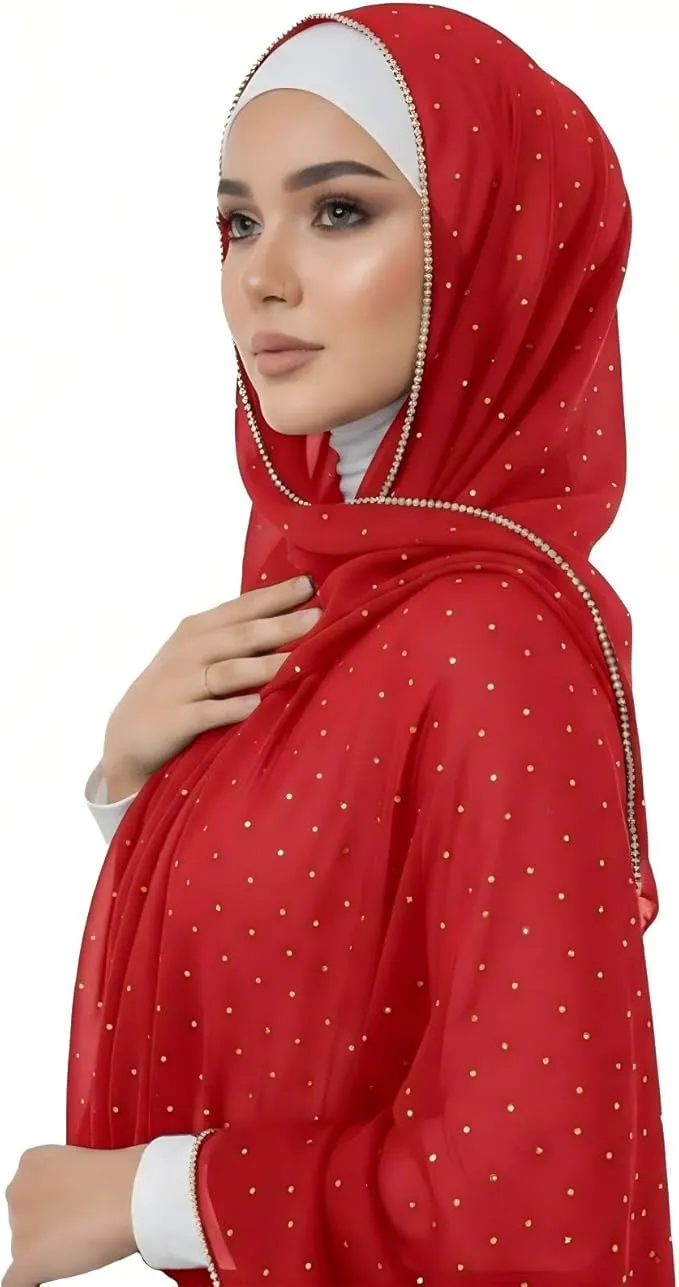
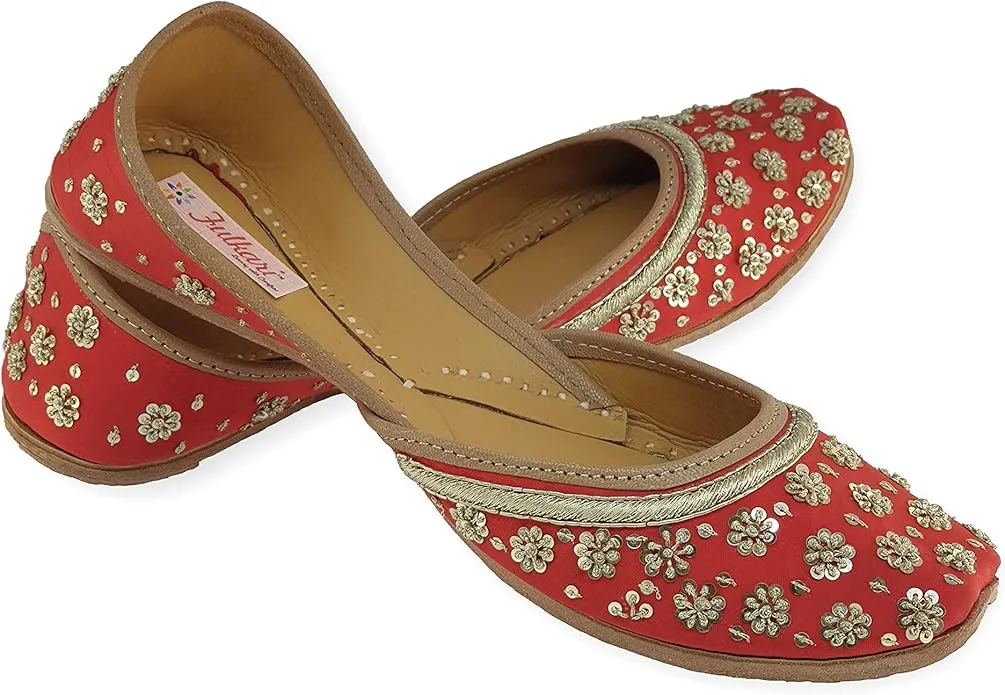
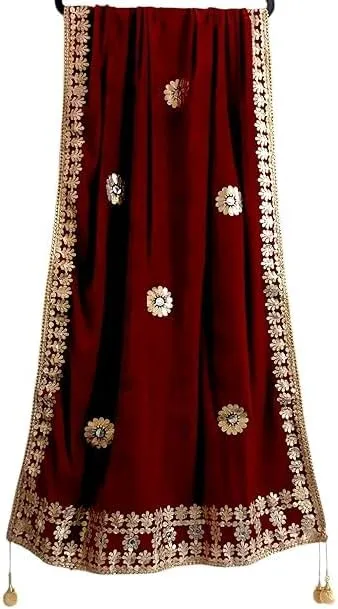
A complete red Muslim bridal look requires accessories that carry the bridal look from head to toe without a gap. This collection includes red bridal hijabs in sparkle chiffon and crepe, red embroidered dupattas, gold nikkah jewelry sets, red jutti, and red halal nail products — all chosen to complete the red bridalwear look in one place. A red dupatta can be worn over the red Muslim bridal look with hijab as a layered head covering, creating the traditional dupatta-over-hijab styling that is central to Pakistani and Indian wedding aesthetics.
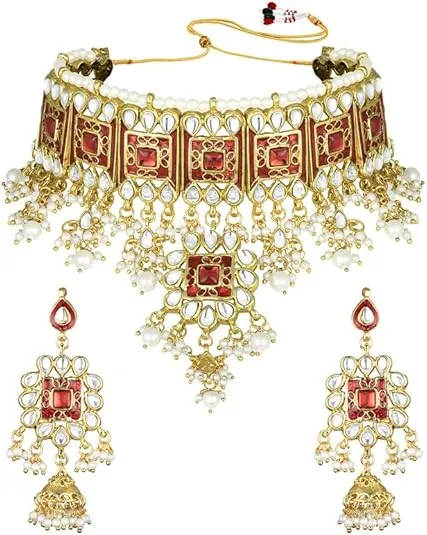
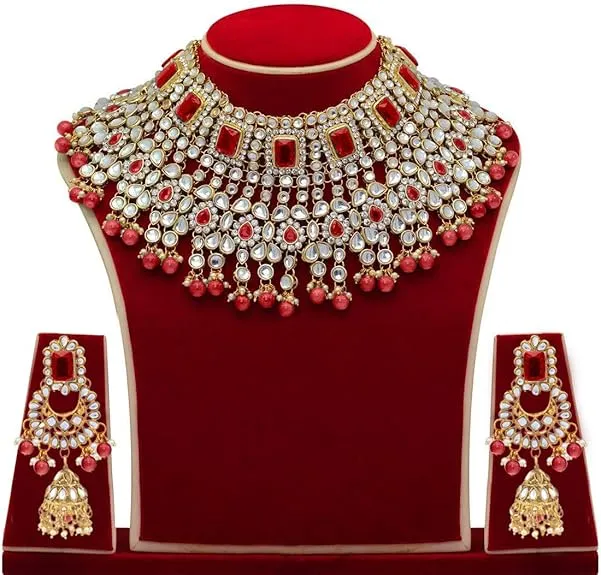
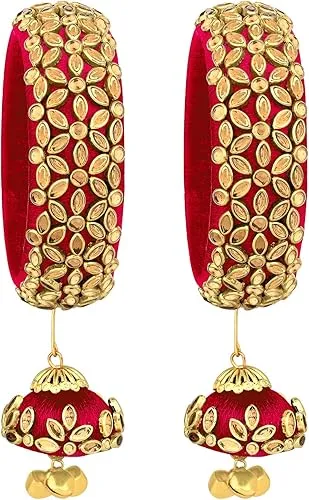
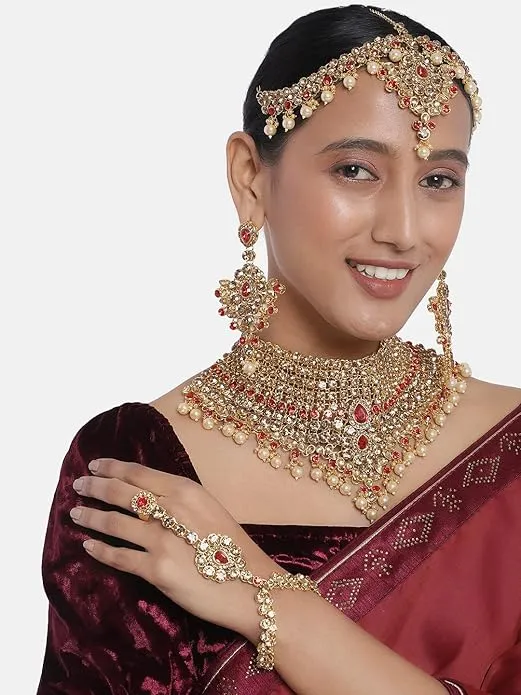
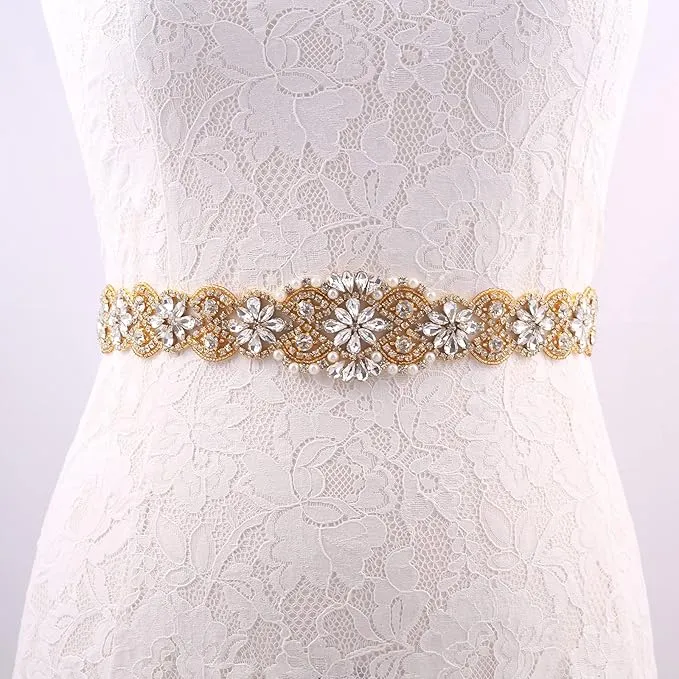
Gold nikkah jewelry is the most culturally significant accessory in the red bridal ensemble. South Asian Influences on wedding jewelry culture establish gold as the metal of choice — warm in tone, it complements deep red in photographs and carries associations of prosperity. The nikkah jewelry sets here — maang tikka, jhumka earrings, necklace, and bangles — echo the gold threadwork on the red dresses. Cultural Significance in nikkah jewelry is also expressed through stones: ruby-red accents in the set echo the red dress and complete the look from head to fingertip.
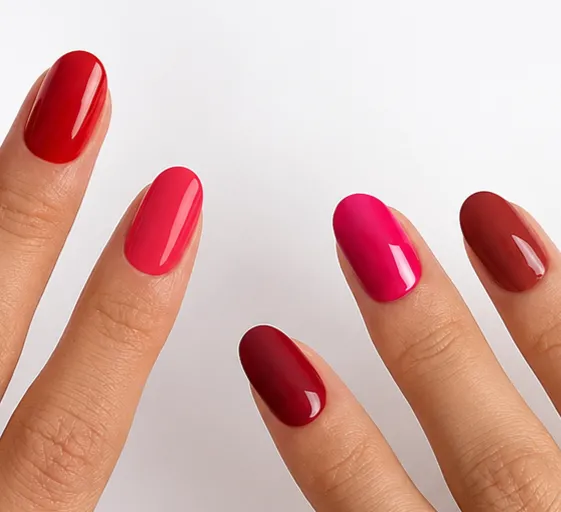
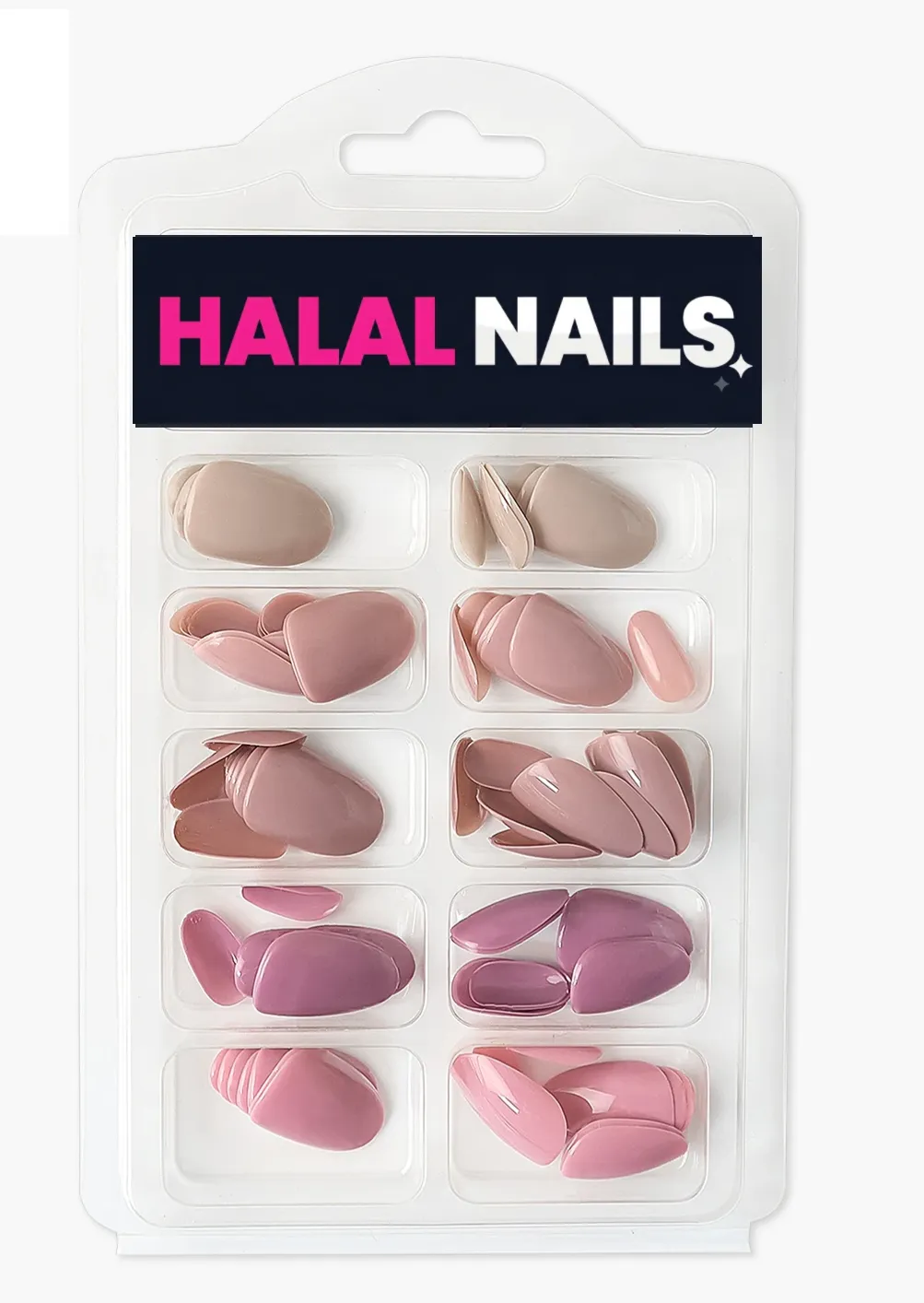
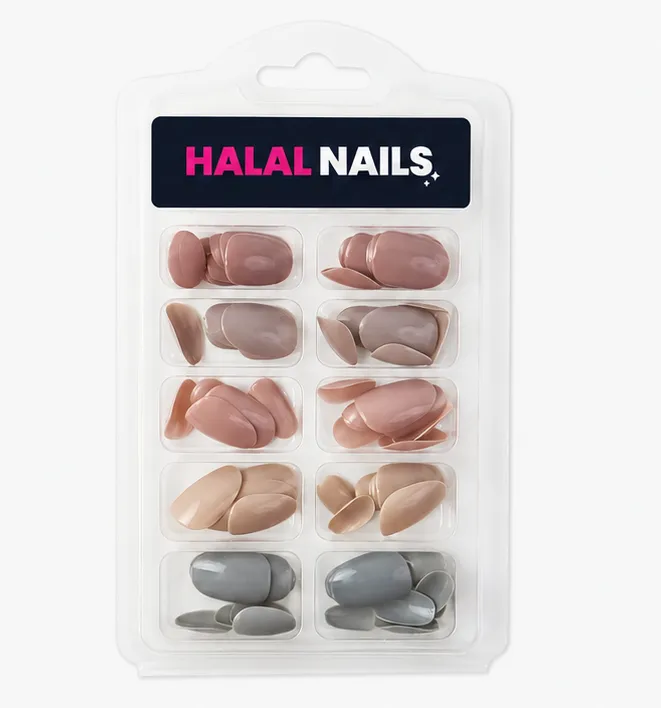
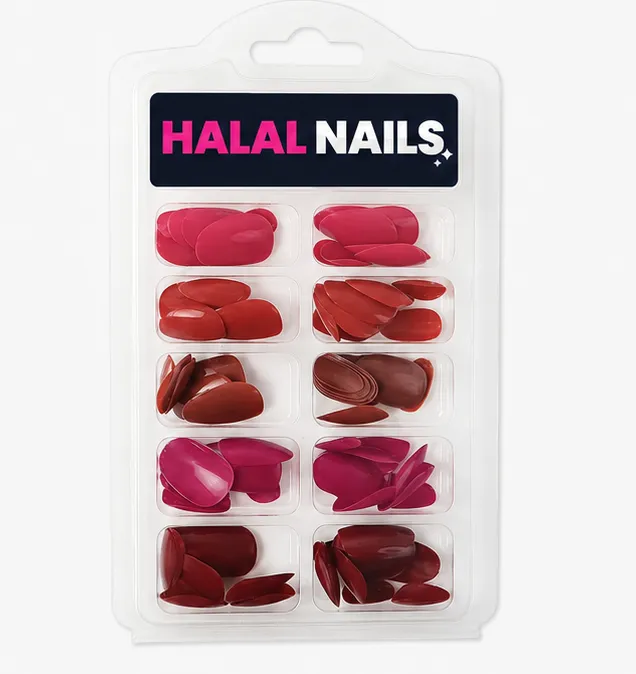
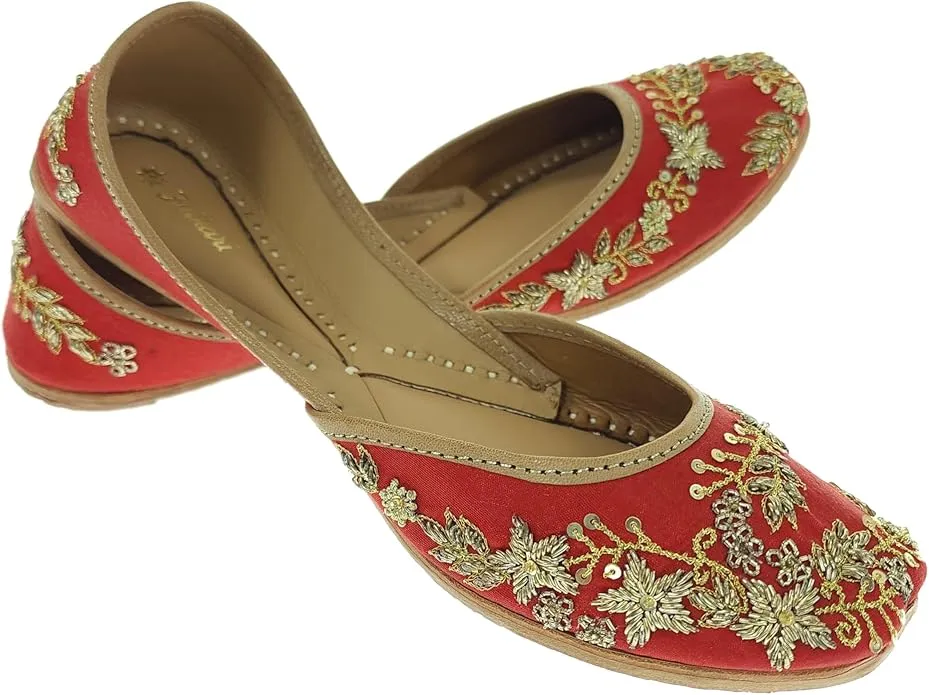
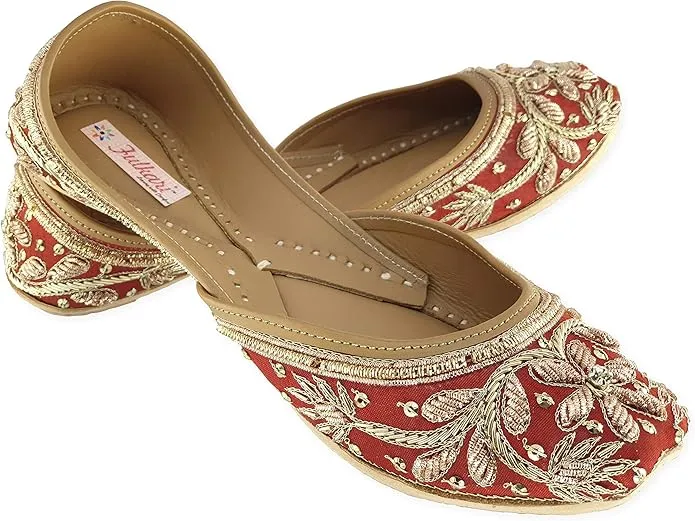
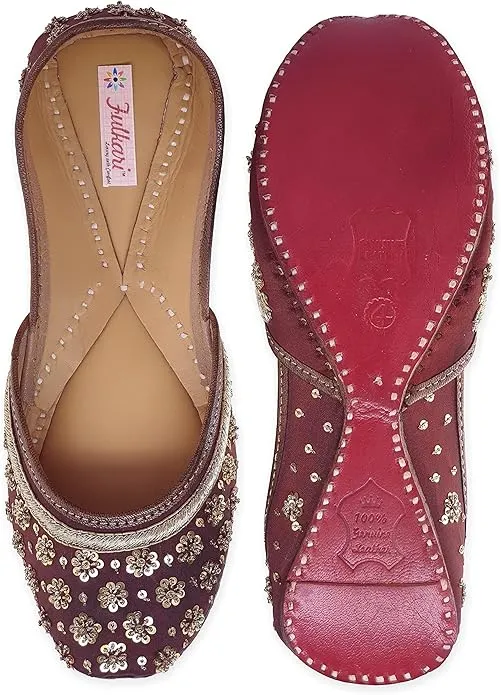
Red jutti — traditional flat embroidered shoes — complete the red bridalwear look below the hem. Red-and-gold juttis with zardozi embroidery are the most culturally aligned footwear for South Asian red wedding attire, echoing the lehenga or anarkali embroidery and keeping the bride comfortable through a long sequence of events. Red halal press-on nails — red cat-eye and deep red traditional styles — are the final bridalwear detail: wudu-friendly, removable before prayer, and vivid enough to complete the full Cultural Significance of the red wedding look in photographs.
Red Bridal in the US: Cultural Exchange and the American Muslim Wedding
This collection reflects decades of cultural exchange between these traditions and American bridal culture. Wedding customs in America have evolved in ways that honor this color tradition while adapting it to American venues, American photographers, and guests unfamiliar with the bride's heritage. South Asian weddings in the US are increasingly hybrid events — the nikah may be held in a mosque or hotel ballroom, the red dress with minimal embroidery or lace overlay purchased on Amazon rather than imported from Lahore, and the wedding planner American-born with no personal connection to this color tradition's origins. These adaptations are cultural exchange in American weddings made visible.
The cultural exchange between Islamic wedding traditions and American bridal culture shows most clearly in how red is now styled. A traditional Pakistani red Muslim bridal lehenga worn with a Western-style bouquet, photographed in a New England farm venue, is a fusion of cultural traditions that was uncommon a generation ago. This post-wedding reception aesthetic — red dress, American setting, South Asian jewelry, Western photography — is now mainstream in US Muslim bridal media. The wedding ceremony sequence itself has absorbed American staging: floral arches, formal table settings, first-look photography now appear at Pakistani weddings alongside traditional practices like the nikah contract and the dua.
This collection reflects the broader story of cultural traditions meeting a new context without losing their essential character. The requirements of the faith — full coverage, hijab-friendly silhouettes, appropriate dress — remain constant whether the bride is in Lahore or Los Angeles. What changes is the setting. Red Muslim bridal in the US is both a continuation of one of the world's oldest continuous color traditions and a living example of how cultural traditions remain creative across generations and geographies. For Muslim brides planning their 2026 celebration, this collection offers that connection — to the Red Bridal Tradition, to South Asian Influences, and to the evolving story of Muslim wedding customs in America.
Frequently Asked Questions
Is Red a Traditional Muslim Wedding Color?
Red is a traditional Muslim wedding color due to the sheer numbers of people embracing it. Red is the color of joy, prosperity, and new beginnings in Pakistani and Indian wedding culture — a red bridal tradition that predates Islam in the subcontinent and was absorbed into Islamic wedding traditions as South Asian Muslim communities shaped their celebration customs.
Why do Muslim brides wear red?
Muslim brides wear red primarily because of Pakistani traditions and Indian culture, where red has been the defining bridal color for centuries. The reason is cultural, not religious — Islamic wedding rituals place no requirement on bridal color. The symbolism of red in South Asian wedding customs — joy, celebration, and prosperity — became part of the shared fabric of South Asian weddings regardless of faith. Middle Eastern customs differ: Arab Muslim brides more commonly wear ivory, champagne, or gold. Red's dominance in the US Muslim bridal market reflects the demographic weight of South Asian Muslims and the cultural significance of color in their wedding attire traditions.
What color do Muslim brides wear for a wedding?
Muslim brides choose wedding colors based on their family's cultural traditions rather than any single Islamic requirement. Islamic customs speak to modesty in wedding attire, not to color. Red dominates in South Asian Muslim communities due to Pakistani and Indian influences on the Red Bridal Tradition. Arab-American brides more often choose white or gold, shaped by Middle Eastern culture's bridal preferences. Convert Muslim brides and brides from West African, Turkish, and other communities choose wedding colors from their own heritage.
What is the tradition of the red bride?
The Red Bridal Tradition in South Asian Muslim weddings is one of the oldest continuous bridal practices in the world. Red was the ceremonial color of brides in the Indian subcontinent before Islam's arrival, and as Islamic wedding traditions spread through South Asia, they absorbed and preserved the Red Bridal Tradition because it did not conflict with Islamic customs around modesty. Today, the tradition spans the Henna Night, the Nikah Ceremony, and the Walima Reception — three distinct events in the South Asian Muslim Wedding sequence, each with its own bridalwear expectations.
What is the best red Muslim bridal for 2026?
The best red Muslim bridal for 2026 is fully hijab-friendly, modest in silhouette, and drawn from South Asian Islamic wedding traditions. A red lehenga or red anarkali styled with a red bridal hijab and gold nikkah jewelry is the leading choice for Pakistani and Indian Muslim brides. For Arab-American brides, a red abaya-style wedding dress or red caftan reflecting Middle Eastern Bridal Trends is the most culturally resonant option. All red bridalwear in this collection is available on Amazon with US shipping.
What red bridalwear styles are in this collection?
This red collection includes red lehengas, red anarkali gowns, red shararas, red abaya-style wedding dresses, and red caftan styles drawing from both South Asian and Middle Eastern Bridal Trends. Accessories include red bridal hijabs, red embroidered dupattas, gold nikkah jewelry sets, red jutti, and red halal nail products. All bridalwear is hijab-friendly, modest in silhouette, and available on Amazon with US shipping.
What is the difference between red bridalwear for the Henna Night, Nikah Ceremony, and Walima Reception?
Each event in the South Asian Muslim Wedding sequence has its own red bridalwear register. The Henna Night calls for lighter, more colorful dress — a sharara or lehenga with moderate embroidery. The Nikah Ceremony bridalwear is the most formally modest, meeting Islamic customs standards of full coverage. The Walima Reception bridalwear repeats or builds on the nikah look, sometimes in a different shade such as burgundy. All three events are part of the Red Bridal Tradition.
Is red appropriate for a Muslim wedding?
Yes. Red is fully appropriate for a Muslim wedding and is the most historically significant color in South Asian Islamic wedding traditions. Islamic customs place no restriction on wedding colors — only on the modesty of wedding attire. Red Muslim bridal that meets Islamic customs standards of full coverage — long sleeves, floor length, opaque fabric, hijab-friendly construction — is entirely appropriate for any Muslim Wedding, from the nikah to the Walima Reception.
What is the red Muslim bridal price range on Amazon?
Red Muslim bridal price points in 2026 span from approximately $60 for lighter chiffon anarkali styles to $200 for heavily embroidered lehenga sets. A complete red bridalwear look — dress, bridal hijab, dupatta, nikkah jewelry, jutti, and halal nails — can be assembled for approximately $250 to $350 on Amazon, significantly below comparable modest wedding attire from Western bridal boutiques.