Lilac Collection
What is the best color for a walima function?
Lilac is one of the most flattering and fashion-forward colors for the walimah function in 2026 — a soft, luminous purple that photographs beautifully under reception lighting and creates a distinctly fresh, contemporary bridal look. As a lilac Muslim bridal color, it carries the romantic softness of pastel bridal fashion trends while retaining enough depth and color presence to read as genuinely formal and celebratory at the walimah reception. READ MORE BELOW...
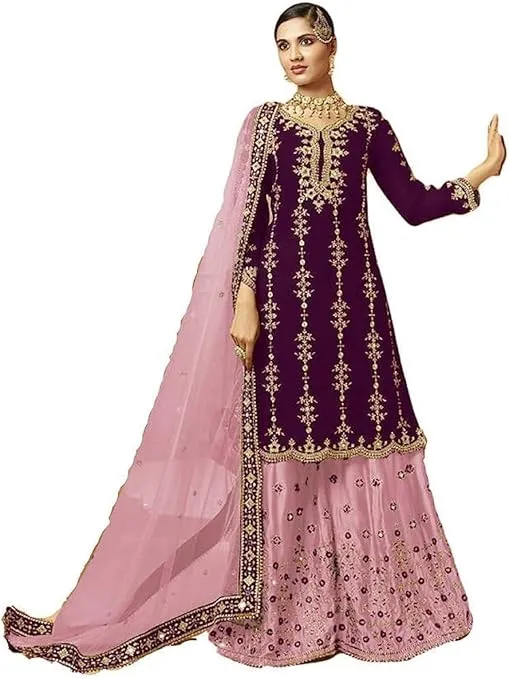
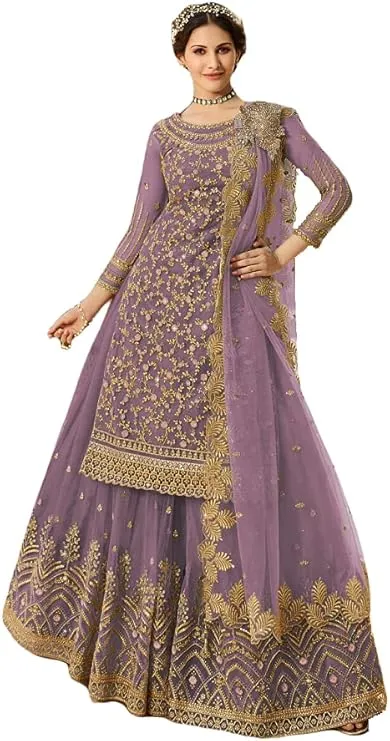
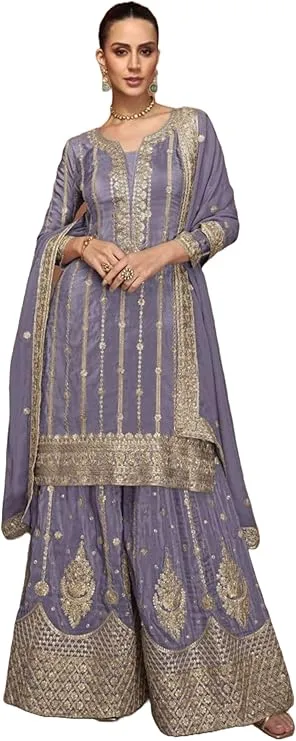
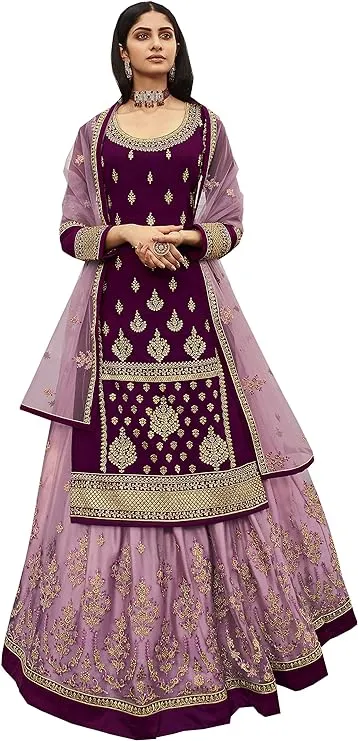
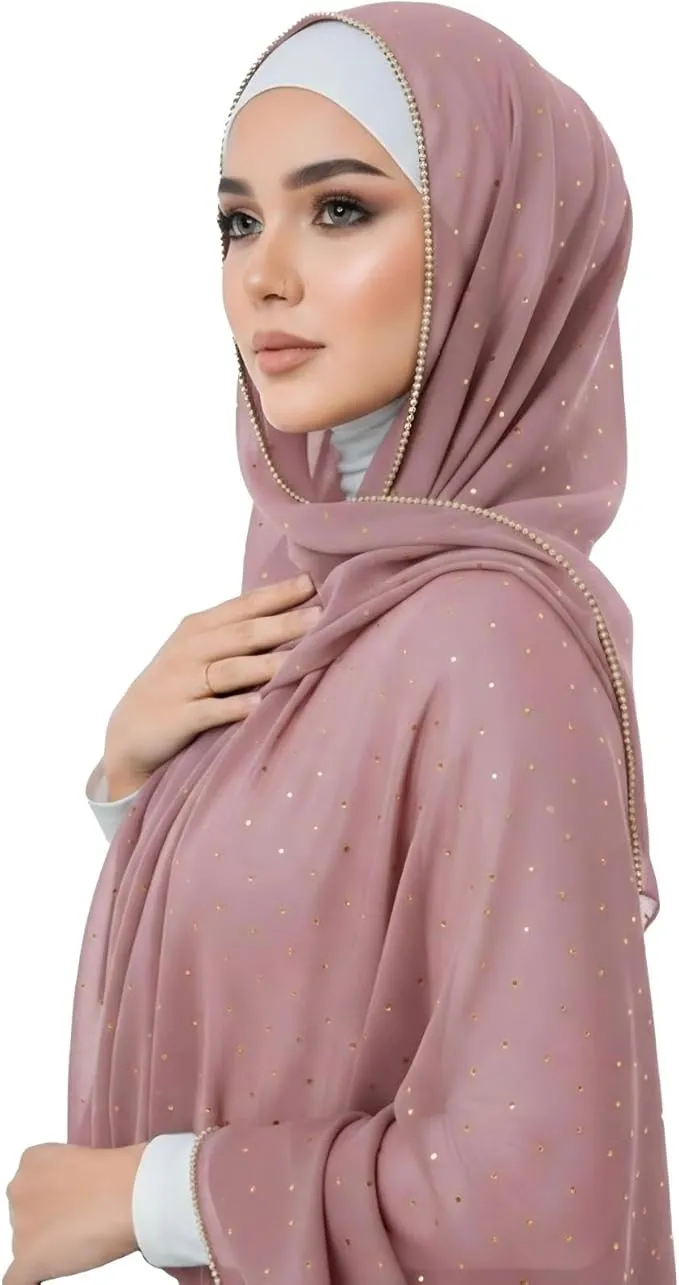
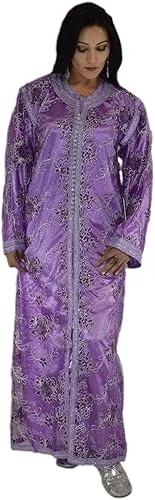
What Is the Best Color for a Walima Function?
The walimah function occupies a distinct place in Muslim wedding traditions — it is the reception hosted by the groom's family to celebrate the marriage, and it carries its own dress code expectations that differ subtly but meaningfully from the nikah ceremony. Where the nikah calls for the most formal, dignified, and traditionally weighted bridal dress, the walimah invites something slightly more celebratory and personal — a bridal dress that reflects the joy of the occasion and the bride's own aesthetic without the full ceremonial weight of the nikah look. Lilac Muslim bridal wear meets this brief beautifully: it is formal enough for a walimah reception venue, contemporary enough to feel fresh and intentional, and soft enough to create a romantic, feminine bridal impression that the event calls for.
In Pakistani culture and the broader South Asian community in the United States, the walimah has evolved into one of the most photographed and visually celebrated occasions in the wedding sequence — and the bride's second look, worn at the walimah, is increasingly treated as a deliberate fashion statement in its own right rather than simply a repeat of the nikah color. Lilac color has emerged as one of the dominant fashion trends for walimah bridal wear in 2026, driven by its presence on South Asian fashion designers' collections, its strong performance in social media bridal content, and its natural coordination with the white, ivory, and gold wedding decor that dominates contemporary US wedding venues.
From an event planning perspective, the lilac Muslim bridal dress at the walimah creates an exceptional visual contrast with typical reception decor. White floral arrangements, ivory table linens, and gold accents — the standard palette of formal US wedding venues — all coordinate naturally with lilac bridal wear, creating a fully cohesive visual environment without requiring specialized or expensive decor adjustments. Cultural exchange within the American Muslim community has also driven lilac's rise as a walimah color: it is appreciated across South Asian, Middle Eastern, and Western guest backgrounds simultaneously, making it one of the most universally effective bridal color choices for the multicultural walimah guest lists that characterize Muslim weddings in the United States today.
What Is the Significance of a Purple Wedding Dress?
Purple has carried profound symbolic weight across cultures and centuries — and for a lilac Muslim bridal gown, that symbolism layers beautifully with Islamic wedding traditions to create a color choice that is simultaneously fashionable and meaningful. Across many cultural traditions, purple represents spiritual wisdom, divine connection, and blessed transition — associations that align naturally with the Islamic understanding of marriage as a sacred covenant and a spiritual act. The softer lilac and lavender wedding dress variations of purple carry these associations in a gentler, more romantic register than deep violet, making them appropriate for bridal occasions without the heaviness that a darker purple can project.
In Moroccan wedding traditions — one of the most visually rich and widely admired sources of bridal fashion inspiration within the American Muslim community — purple and lilac appear in ceremonial kaftans and embroidered robes as colors of celebration and royal dignity. This Moroccan wedding tradition association gives the lilac Muslim bridal look a heritage depth that purely trend-driven color choices lack. American Muslim weddings that draw from Moroccan wedding traditions often incorporate lilac and lavender in both the bride's bridal dress and the wedding decor — creating an immersive color environment rooted in genuine cultural significance rather than seasonal fashion alone.
In contemporary bridal fashion trends, the lavender wedding dress and its lilac variations have established themselves as the defining pastel bridal color of the 2026 spring wedding season — appearing on runways, in bridal editorials, and in the social media content of fashion designers and bridal influencers across every cultural background. For the lilac Muslim bridal dress specifically, this mainstream fashion trend visibility has driven a significant expansion in the availability of modest bridal wear in lilac and lavender tones — making it easier than ever for Muslim brides in the United States to find a lilac lehenga, sharara, or bridal caftan that meets both Islamic modest dress requirements and the color ambitions of a contemporary 2026 bridal aesthetic. Boho chic weddings and spring wedding inspiration content have been particularly influential in establishing lilac as a bridal color that communicates joy, creativity, and personal expression — qualities that resonate strongly with the walimah function's celebratory spirit.
For unique wedding attire that honors both fashion and faith, the lilac Muslim bridal look represents one of the most compelling choices in the 2026 bridal wear landscape. Its purple color symbolism connects to spiritual depth; its contemporary fashion presence connects to modern bridal aesthetics; and its practical performance across a wide range of skin tones, venue lighting conditions, and event planning contexts makes it a reliable, beautiful choice for any Muslim bride planning a walimah reception look that she will be proud of in photographs for the rest of her life.
What Color Do Muslim Brides Usually Wear?
Muslim brides wear a genuinely remarkable range of colors — a direct reflection of the cultural diversity within the global Muslim community and the flexibility that Islamic customs provide when it comes to bridal dress. Islam does not mandate a specific wedding color; it requires modesty in dress and dignity in appearance. Everything else — color, fabric, embellishment, silhouette — is shaped by the bride's cultural background, family tradition, and personal taste. This freedom has produced one of the most visually diverse bridal traditions in the world, and the color conversation in American Muslim culture reflects that diversity in full.
Red is the most historically dominant bridal color in South Asian wedding traditions — across Pakistani culture, Indian Muslim communities, and Bangladeshi wedding customs. Its cultural significance as a color of joy, celebration, and marital blessing has made it the default choice for generations of South Asian Muslim brides at the nikah ceremony. White has become widespread among Arab-American and Middle Eastern bridal fashion-influenced Muslim brides, reflecting both Western bridal conventions and the spiritual associations of purity and new beginnings in Islamic wedding ceremonies in the US. Champagne, blush, and gold sit between these two dominant traditions and have emerged as the most popular choices among second-generation American Muslim brides navigating cultural fusion in wedding attire across multiple heritage influences.
Lilac Muslim bridal wear has grown rapidly in this color landscape — driven by its absence of strong cultural ownership (unlike red or white, lilac does not belong exclusively to any single cultural tradition), its performance in contemporary bridal fashion trends, and its natural suitability for the walimah function in particular. For Muslim brides planning a two-look wedding — a traditional wedding color for the nikah ceremony and a more fashion-forward choice for the walimah — lilac is the most widely chosen second-look color in the South Asian community for 2026. Interfaith weddings and cultural fusion in wedding attire contexts have also driven lilac's adoption: it communicates bridal intent and elegance clearly to guests of every background without requiring any cultural context to appreciate its beauty.
The practical considerations that shape bridal color choice for Muslim brides in the United States are also worth addressing directly. The ceremony wear for the nikah and the walimah often needs to work across multiple lighting conditions — natural daylight for outdoor photography, the warm artificial light of mosque interiors for the nikah, and the cooler event lighting of reception venues for the walimah. Lilac performs exceptionally well across all of these conditions: its soft purple tones hold their vibrancy under warm lighting, cool beautifully under bright event lighting, and create a luminous, ethereal quality in natural daylight photography that few other bridal colors can match. For Muslim brides whose wedding day spans multiple venues and lighting environments, lilac Muslim bridal wear is one of the most consistently beautiful choices available in 2026.
Best Lilac Muslim Bridal Lehenga for 2026
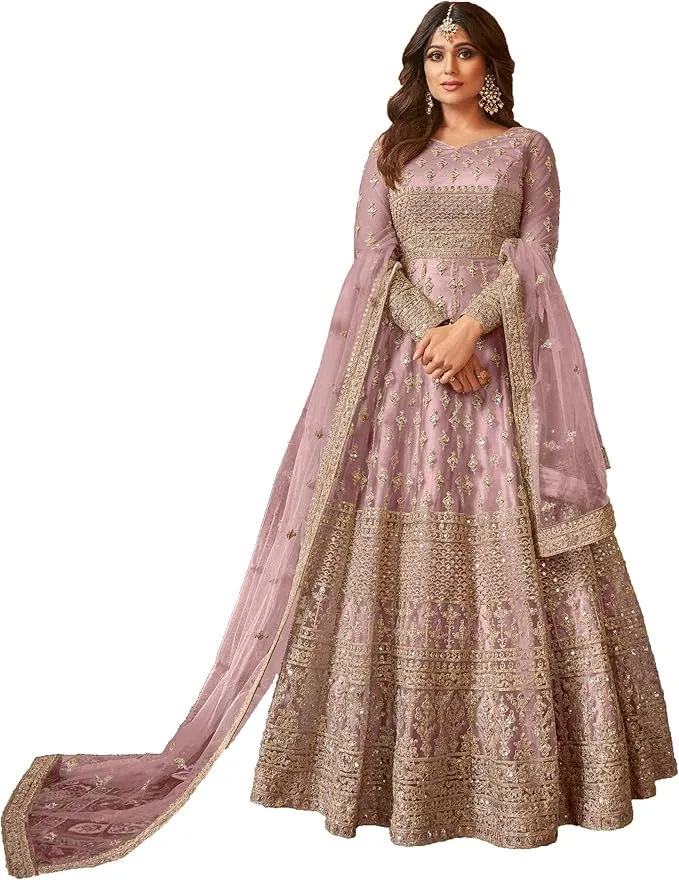
The best lilac Muslim bridal lehenga for 2026 features a silk or velvet fabric base in soft lilac or lavender with silver or white gold embroidery — a combination that creates a cool, luminous bridal look of exceptional sophistication. The silver embroidery against lilac fabric is one of the most visually harmonious pairings in South Asian bridal fashion, with the metallic thread catching reception lighting in ways that complement rather than overwhelm the softness of the lilac color. Bridal fashion trends in 2026 favor embroidery that uses multiple tones of silver — bright silver, white gold, and pale champagne thread in the same design — creating depth and dimension against the lilac fabric base.
For Muslim brides, the lehenga blouse must be hip length or longer with the back fully covered — the standard modesty requirement that applies across all lehenga styles. Hijabi Bridal's lilac lehenga is curated with this requirement in mind. The dupatta that accompanies a lilac lehenga can be styled over the hijab — draped at the crown and pinned with silver accessories — or it can be used over the arm.
In the Indian-American community and across the South Asian community more broadly, the lilac lehenga has established itself as the most fashionable walimah look of the 2026 wedding season. Fashion designers within the South Asian bridal space have showcased lilac and lavender lehenga collections extensively, and the color's presence in Bollywood-adjacent bridal content has driven strong demand from Indian Muslim brides and Pakistani brides alike who want a walimah look that feels genuinely current. Browse Hijabi Bridal's <a href="https://hijabibridal.github.io/shop/category/muslim-lehenga" class="text-[#db2777] font-bold hover:underline">Muslim lehenga collection</a> filtered to the lilac color category for the strongest 2026 options in this style.
Best Lilac Sharara and Bridal Caftan for the Walimah
Beyond the lehenga, the lilac Muslim bridal look finds some of its most beautiful expressions in the sharara and bridal caftan silhouettes — both of which carry the color with exceptional grace and both of which are naturally suited to the walimah function's slightly more relaxed formality level compared to the nikah ceremony.
A lilac sharara set — wide embroidered trousers with a long silver-embroidered tunic and matching dupatta — offers the full cultural significance of South Asian bridal fashion in a silhouette that is more comfortable for extended walimah wear than the lehenga. The wide trouser construction allows unrestricted movement across a long reception evening, and the lilac color of the fabric reads as consistently beautiful under reception lighting from every angle and distance. For Muslim brides who found their nikah lehenga heavy or restrictive, the lilac sharara as a walimah second look is one of the most practical and most beautiful solutions available. Browse Hijabi Bridal's <a href="https://hijabibridal.github.io/shop/category/sharara" class="text-[#db2777] font-bold hover:underline">sharara collection</a> for lilac and lavender options in silk and chiffon.
The lilac bridal caftan is the strongest option for Muslim brides whose aesthetic draws from Middle Eastern bridal fashion or who want a walimah look that works across both South Asian and Western cultural reference points. A flowing lilac caftan in embroidered brocade or silk with silver thread detail at the neckline, cuffs, and hem is one of the most effortlessly elegant walimah looks available — fully modest by construction, visually sophisticated, and extraordinarily comfortable for a long reception evening. Browse Hijabi Bridal's <a href="https://hijabibridal.github.io/shop/category/bridal-caftans" class="text-[#db2777] font-bold hover:underline">bridal caftan collection</a> for lilac and lavender styles that suit the walimah occasion perfectly.
Styling the Lilac Muslim Bridal Look: Hijab, Jewelry, and Wedding Decor
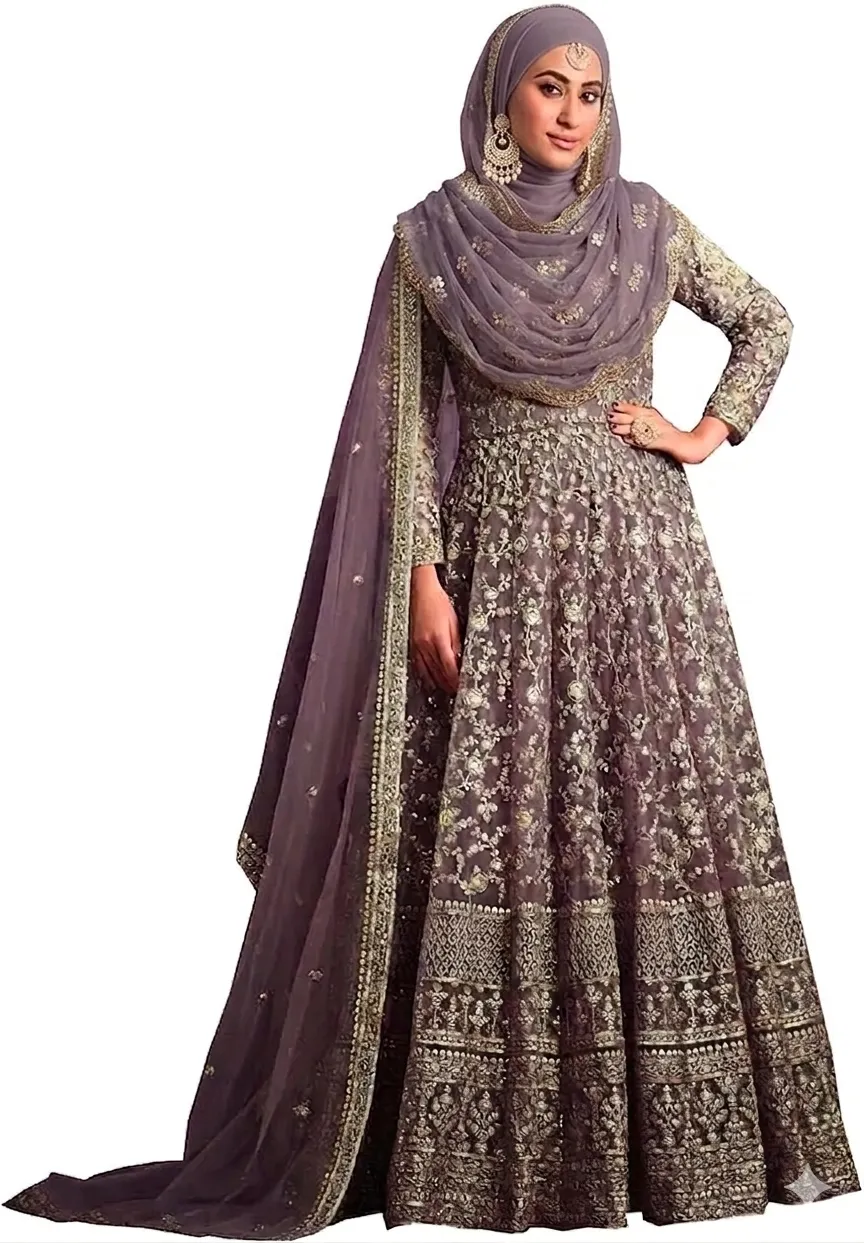
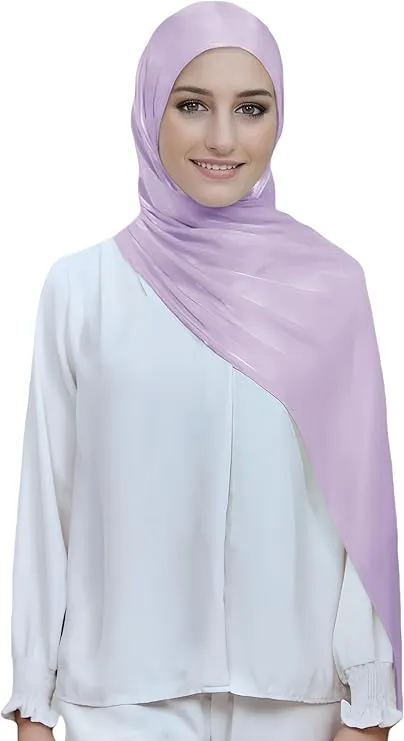
The hijab is the element of the lilac Muslim bridal gown that most determines whether the full ensemble reads as cohesive and intentional. For a lilac lehenga or sharara, the most effective hijab approaches are: the dupatta from the set styled at the crown and draped over the shoulders in a voluminous fold; a separate ivory or white silk bridal hijab worn beneath the dupatta for added structure; or a lilac chiffon bridal hijab in a matching or slightly deeper tone that coordinates directly with the bridal dress fabric. The hijab should always be ironed and structured — a limp or loosely draped hijab against the precision of a silver-embroidered lilac lehenga creates a visual imbalance that undermines the polish of the overall look.
Nikkah jewelry for the lilac Muslim bridal look works best in silver or white gold tones — the cool metallic register of silver coordinates with lilac's purple undertones in a way that yellow gold typically does not. A layered silver necklace set worn over the hijab at the chest, crystal or amethyst drop earrings visible below the hijab frame, and silver bangles create a fully cohesive bridal jewelry look that photographs with the clean, contemporary quality that the lilac bridal color demands. detail to the bridal jewelry that elevates the overall look from beautiful to genuinely curated. Hijabi Bridal's <a href="https://hijabibridal.github.io/shop/category/nikkah-jewelry" class="text-[#db2777] font-bold hover:underline">nikkah jewelry collection</a> includes silver-tone sets across every budget level that coordinate naturally with lilac bridal wear.
Wedding decor coordination for a lilac Muslim bridal walimah is one of the most rewarding aspects of event planning around this color. White and ivory floral arrangements with touches of lavender — garden roses, wisteria, or lilac blooms — coordinate directly with the bride's lilac Muslim bridal look and create a romantic, spring-inspired reception environment that reads beautifully in photographs. Silver candle holders, ivory table linens, and lavender ribbon or napkin accents complete the decor picture without requiring significant additional investment. For American Muslim brides hosting multicultural walimah celebrations where the guest list spans South Asian, Middle Eastern, Western, and potentially interfaith backgrounds, the lilac and silver wedding decor palette is one of the most universally appreciated aesthetic choices available — it communicates celebration, elegance, and personal thoughtfulness in a visual language that transcends any single cultural tradition.
Frequently Asked Questions
What is the best color for a walima function?
Lilac is one of the strongest bridal color choices for the walimah function in 2026 — soft enough to create a romantic, contemporary look distinct from the nikah ceremony, yet formal enough to suit the reception venue context. It coordinates naturally with white, ivory, and gold wedding decor, photographs beautifully under reception lighting, and is appreciated across South Asian, Middle Eastern, and Western guest backgrounds simultaneously. Lilac Muslim bridal wear in lehenga, sharara, and bridal caftan silhouettes all suit the walimah occasion well.
What is the significance of a purple wedding dress?
Purple carries symbolic associations with spiritual wisdom, divine connection, and royal dignity across many cultural traditions — associations that align naturally with the Islamic understanding of marriage as a sacred covenant. In Moroccan wedding traditions, purple and lilac appear in ceremonial bridal kaftans as colors of celebration and blessing. In contemporary bridal fashion trends, lilac and lavender wedding dresses represent one of the defining aesthetic choices of the 2026 spring wedding season, combining spiritual depth with modern bridal elegance.
What color do Muslim brides usually wear?
Muslim brides wear a wide range of colors depending on cultural background. Red is traditional in South Asian Muslim communities. White is common among Arab-American and Middle Eastern fashion-influenced brides. Champagne and blush are popular among contemporary American Muslim brides. Lilac has grown rapidly as a walimah color in 2026 — it carries no single cultural ownership, works across all Muslim bridal traditions, and is one of the most universally flattering and photographically beautiful choices for the walimah function specifically.
Is lilac a good color for a Muslim bridal lehenga?
Yes — a lilac Muslim bridal lehenga with silver or white gold embroidery is one of the most sophisticated and fashion-forward bridal looks in the 2026 South Asian bridal fashion landscape. It suits the walimah function particularly well as a second look after a more traditionally colored nikah outfit. Every lilac lehenga product page at Hijabi Bridal includes a free choli sewing pattern for making a hip-length or longer modest blouse in the same fabric.
What hijab style works best with a lilac Muslim bridal look?
The most effective hijab options for a lilac Muslim bridal look are: the dupatta from the lehenga or sharara set styled at the crown in a voluminous fold; a separate ivory or white silk bridal hijab worn beneath the dupatta for added structure; or a lilac chiffon bridal hijab in a matching or slightly deeper tone. The hijab should always be ironed and secured with silver pin accessories for the proportional balance that silver-embroidered lilac bridal wear demands.
What jewelry suits a lilac Muslim bridal outfit?
Silver and white gold tone nikkah jewelry coordinates most naturally with lilac Muslim bridal wear. A layered silver necklace set worn over the hijab at the chest, crystal or amethyst drop earrings visible below the hijab frame, and delicate silver bangles create a fully cohesive bridal jewelry look.
What wedding decor suits a lilac Muslim bridal walimah?
White and ivory floral arrangements with touches of lavender — garden roses, wisteria, or lilac blooms — coordinate directly with a lilac Muslim bridal look. Silver candle holders, ivory table linens, and lavender ribbon or napkin accents complete the decor palette. The lilac and silver wedding decor combination is one of the most universally appreciated aesthetic choices for multicultural walimah celebrations, communicating celebration and elegance across every cultural guest background.
Is lilac suitable for interfaith or multicultural Muslim weddings?
Yes — lilac is one of the strongest choices for interfaith and multicultural Muslim weddings because it carries no exclusive cultural ownership. Unlike red, which is strongly associated with South Asian traditions, or white, which reads as specifically Western, lilac communicates bridal elegance and joy in a visual language that guests of every cultural background appreciate equally. Its contemporary fashion presence and spiritual color symbolism make it a natural choice for culturally fusion wedding attire contexts.