Muslim Wedding Dresses Collection
What is appropriate to wear to a Muslim wedding?
For a Muslim bride, it isn't appropriate to wear form-fitting or revealing clothing to her Muslim wedding. While the bridal industry thrives selling wedding attire that isn't respectful dress for a Muslim woman, there are alternatives! At Hijabi Bridal, our priority is to make Muslim wedding dresses available that cover the body in a beautiful manner for your wedding day. Cultural attire is making a big comeback, so be prepared to trend in our traditional dresses and modest clothing. READ MORE BELOW...
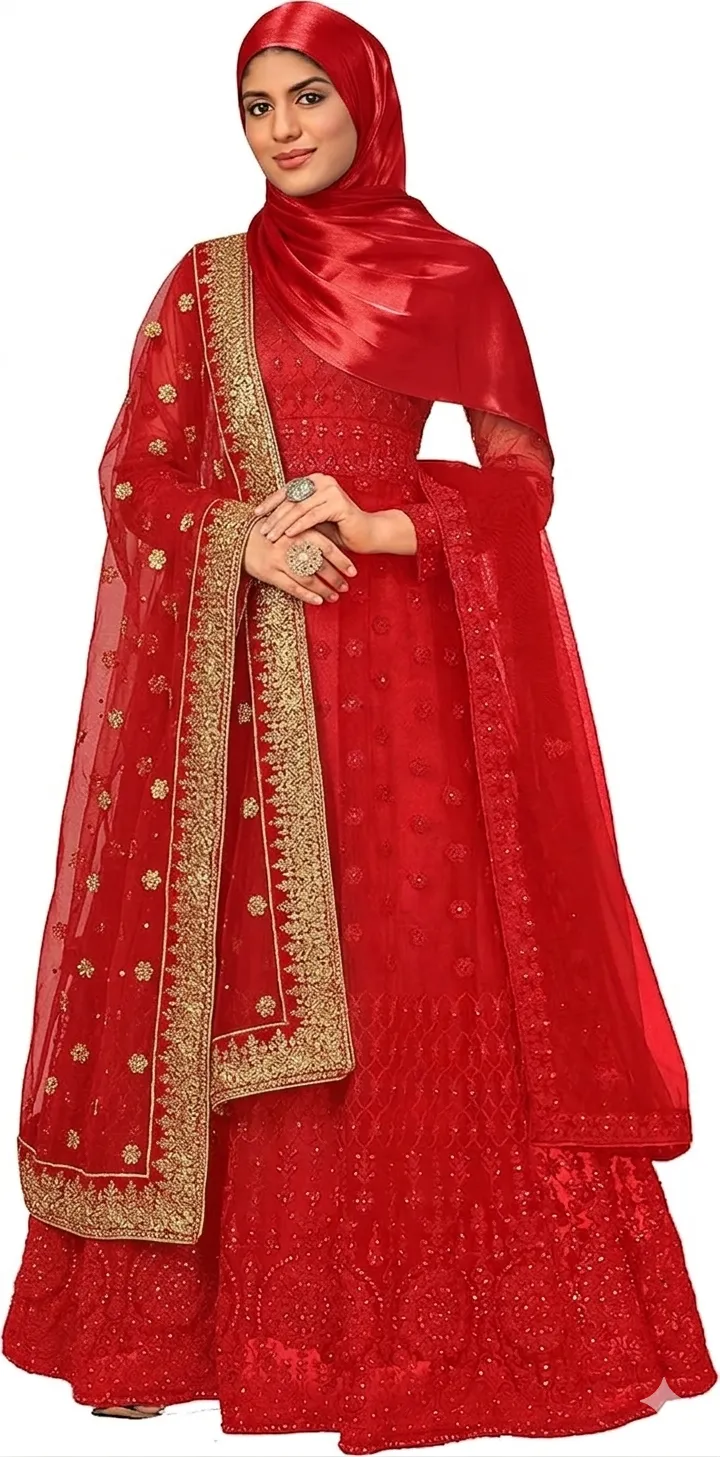
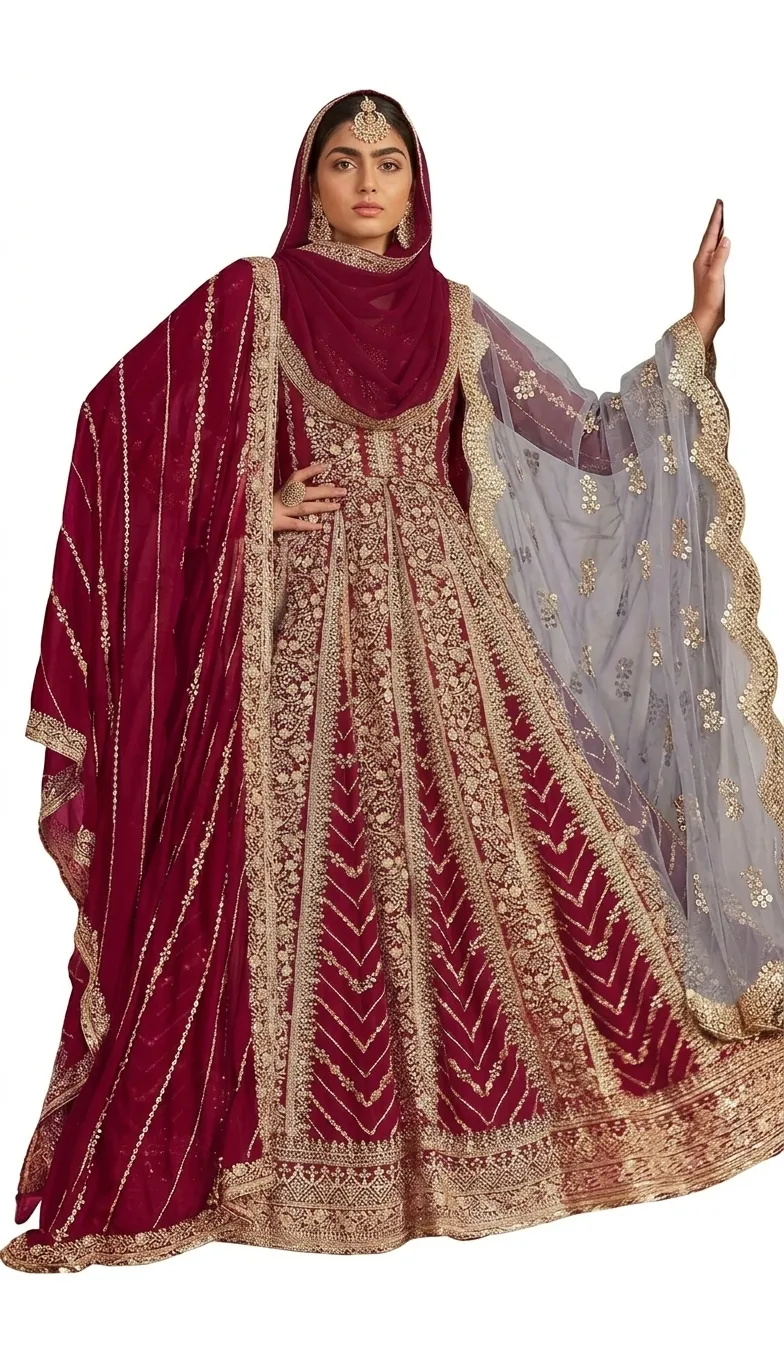
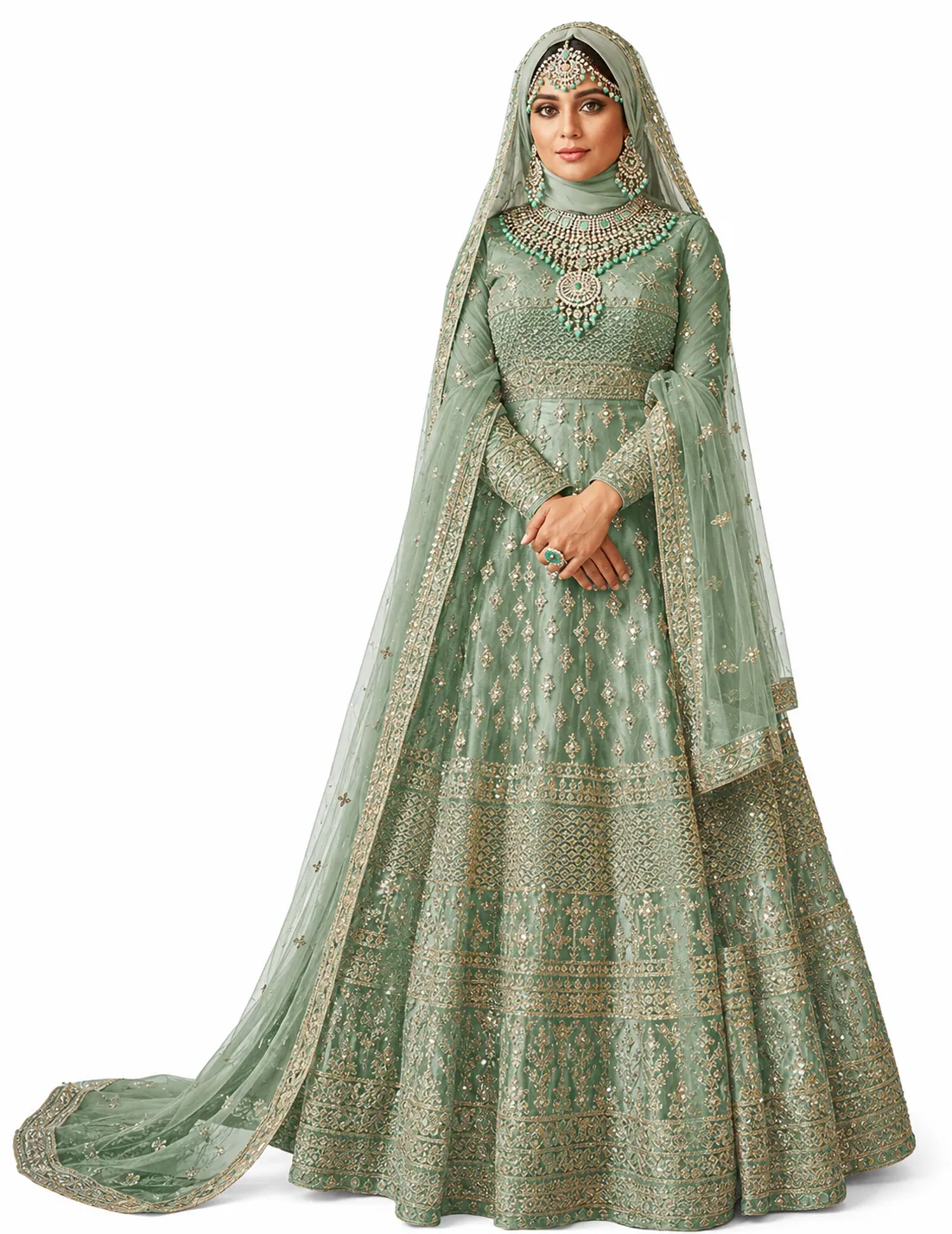
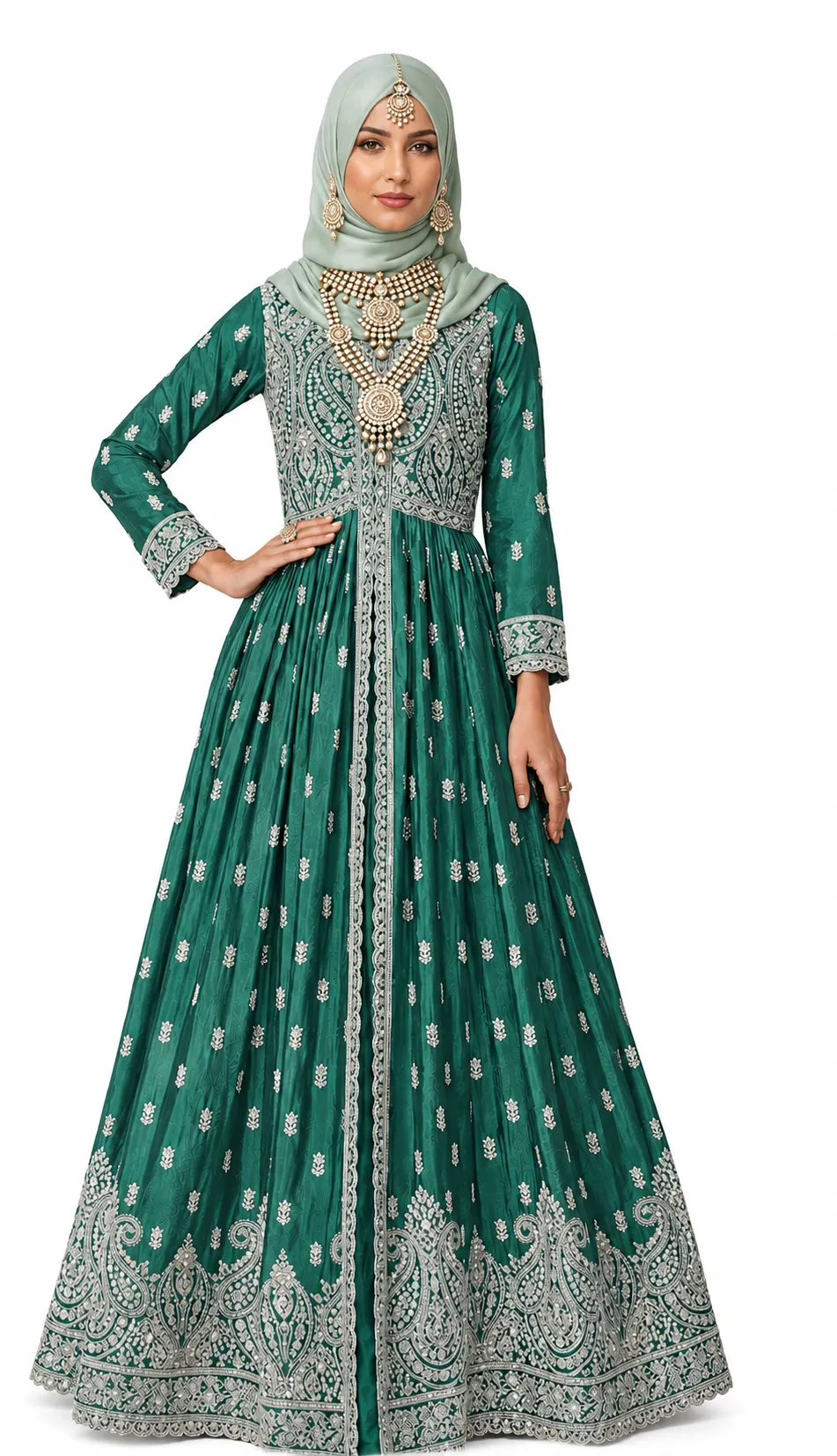
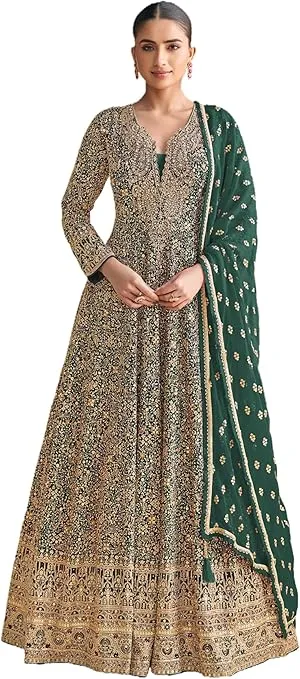
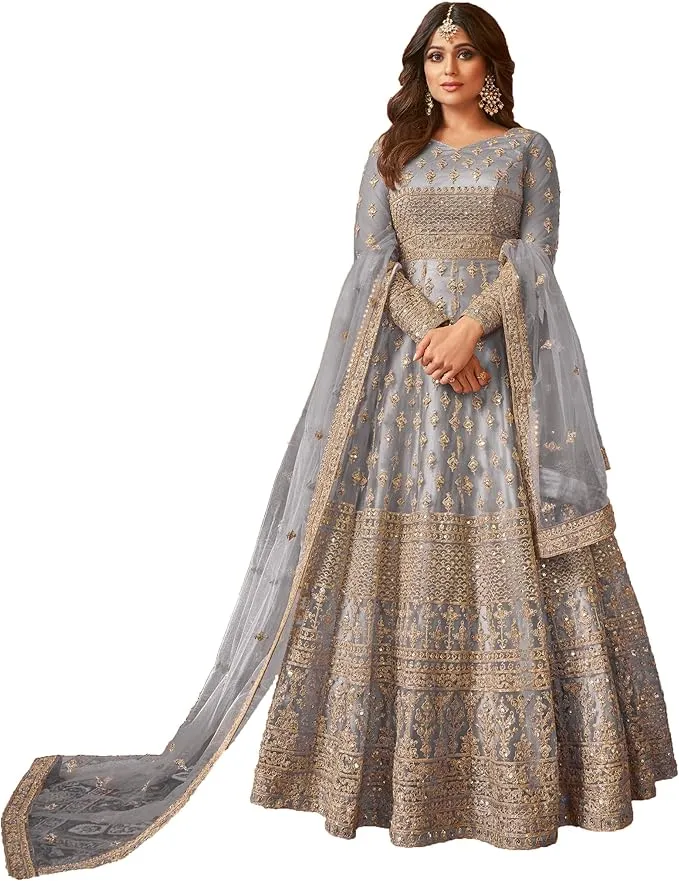
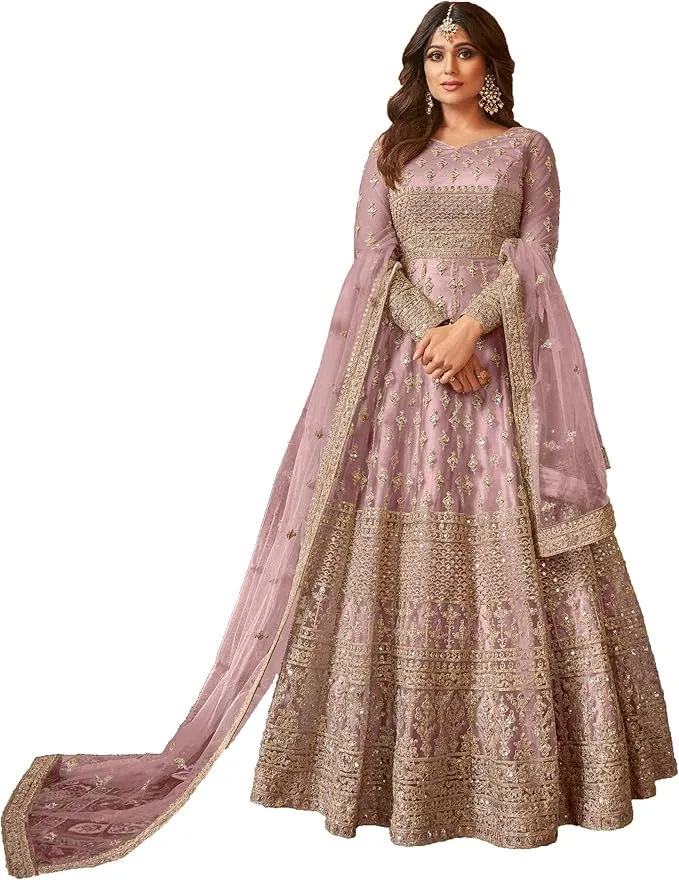
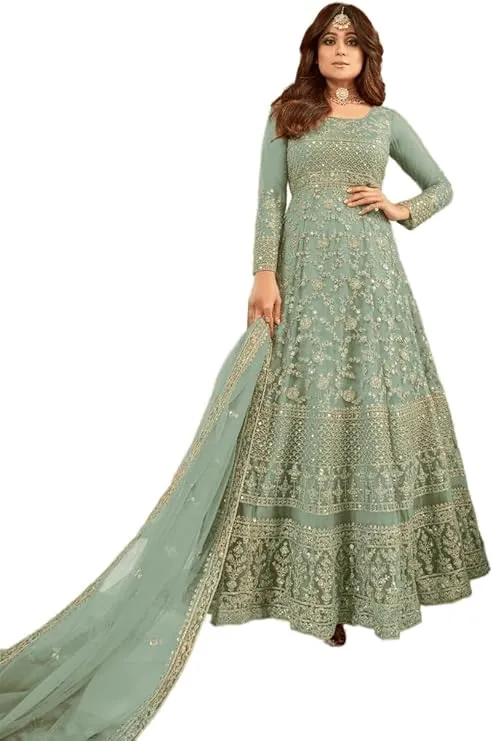
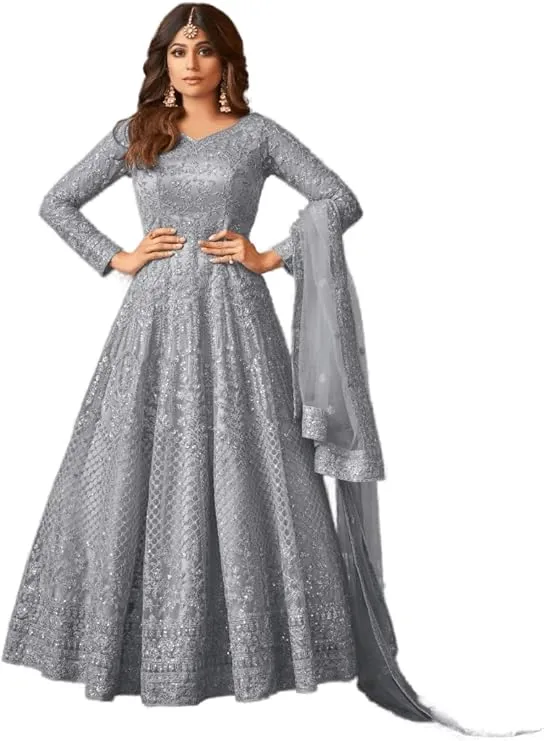
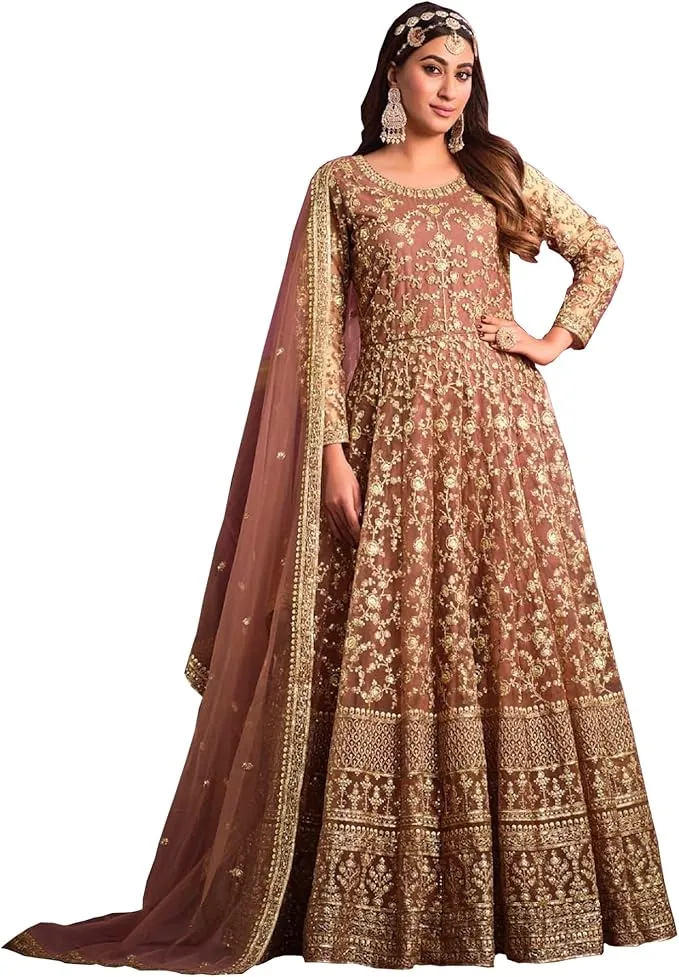
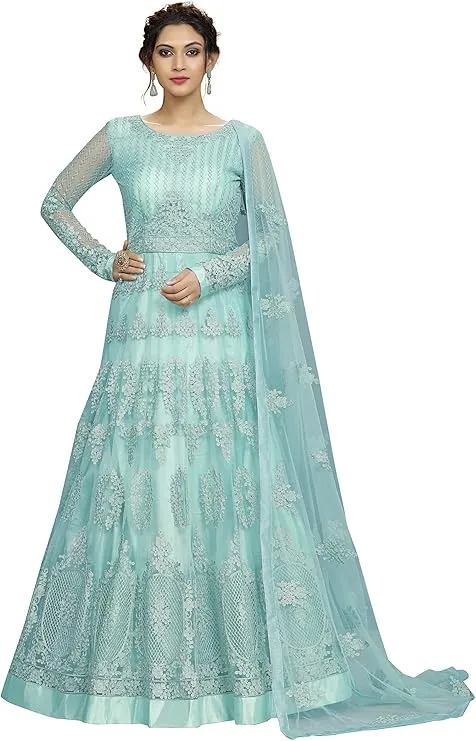
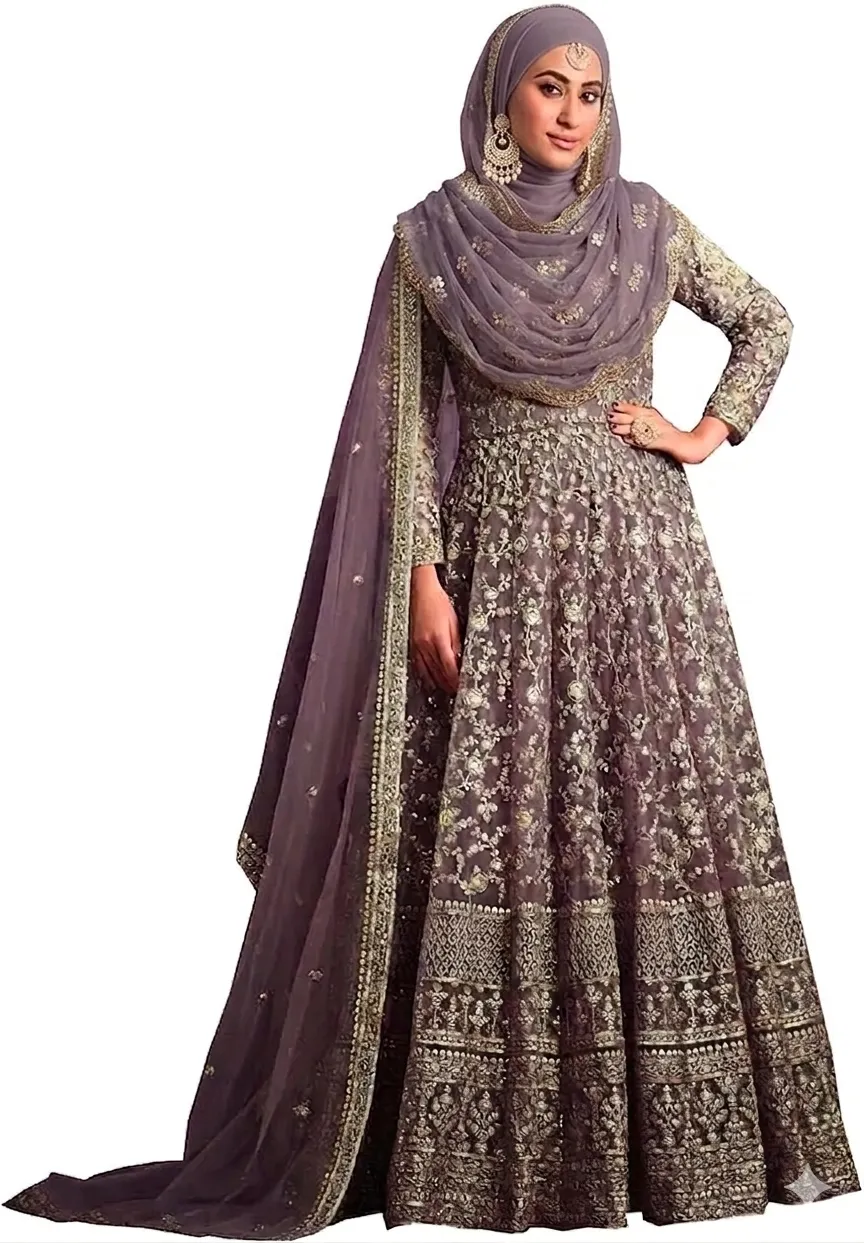
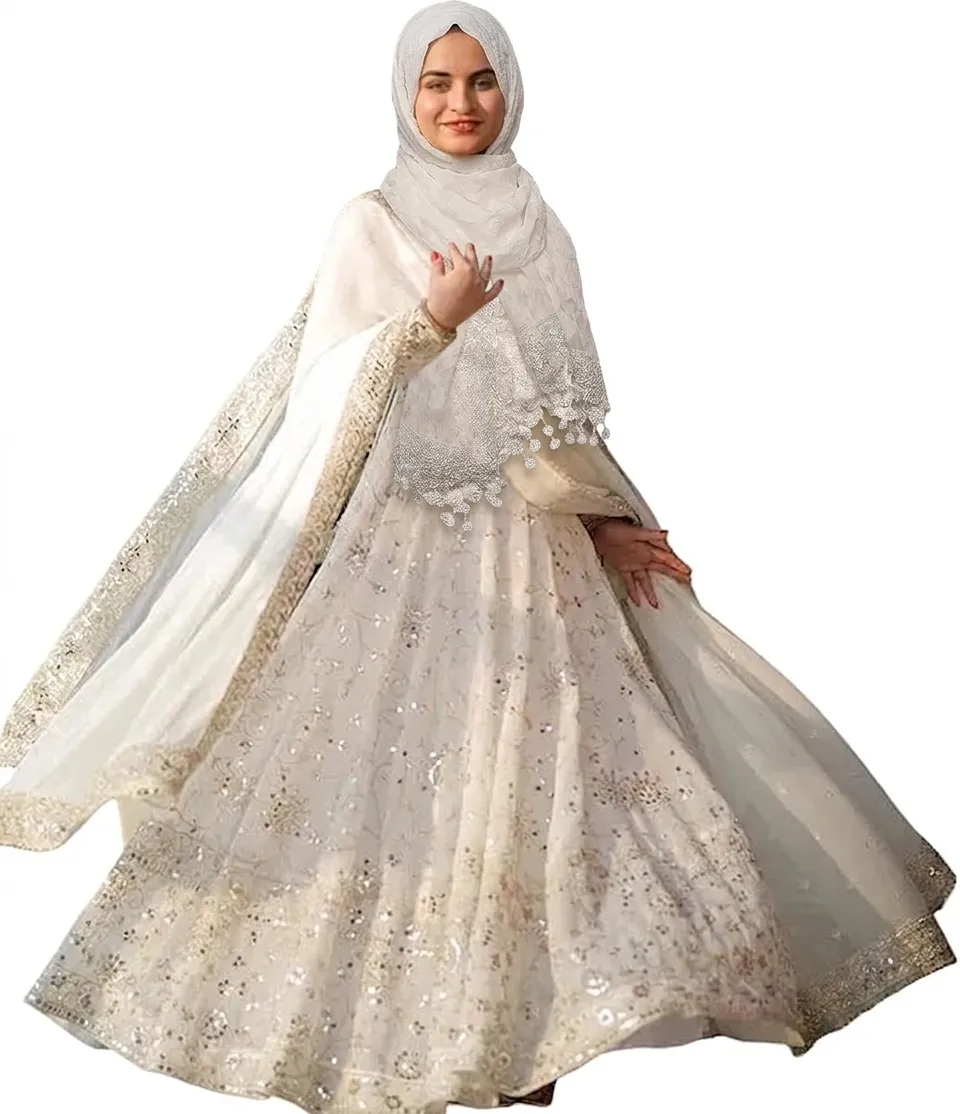
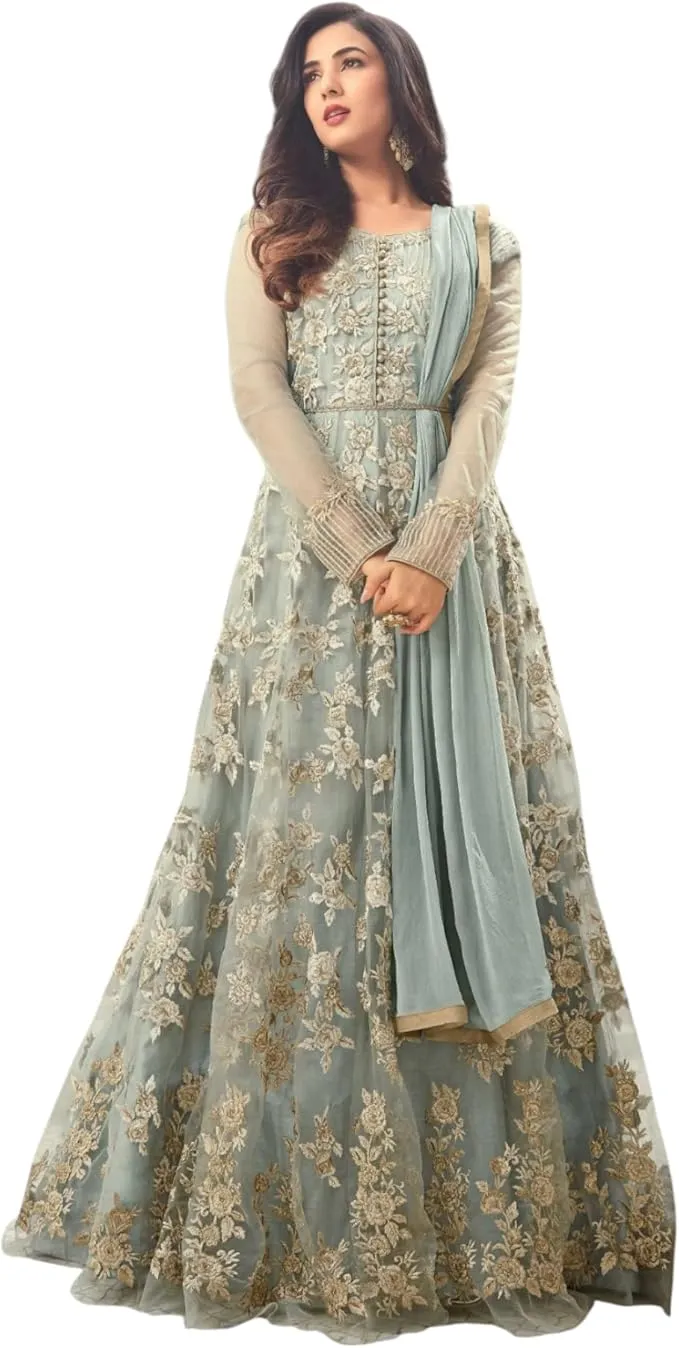
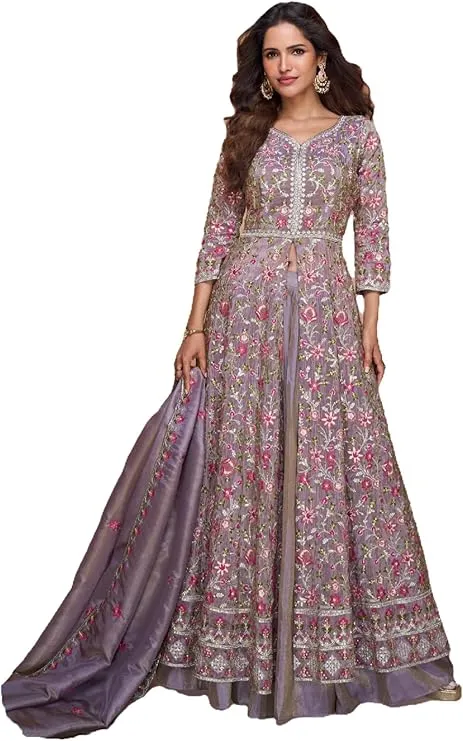
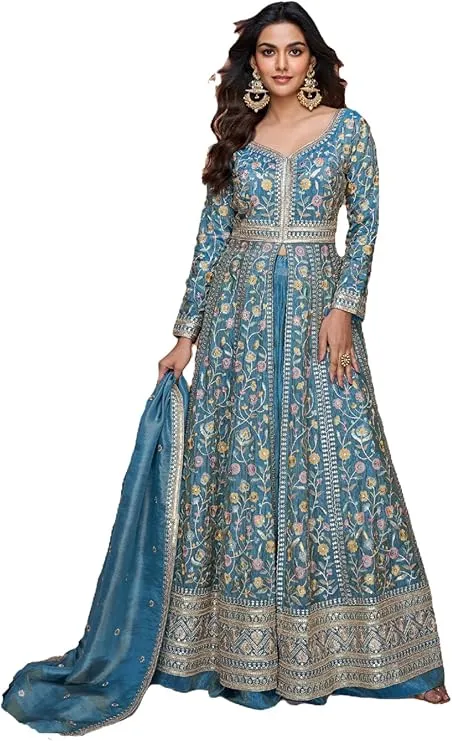
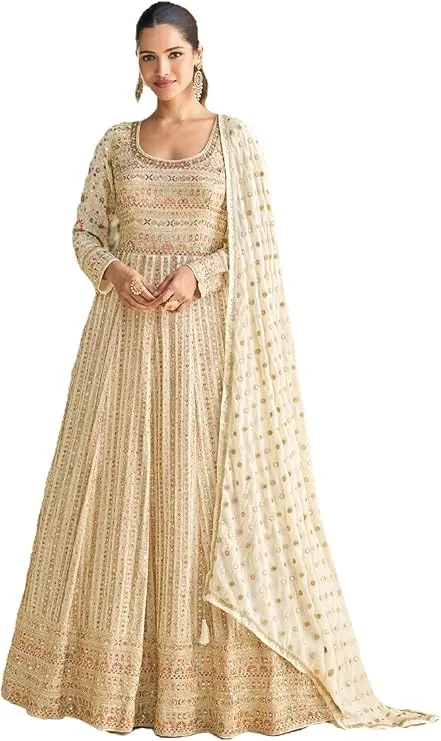
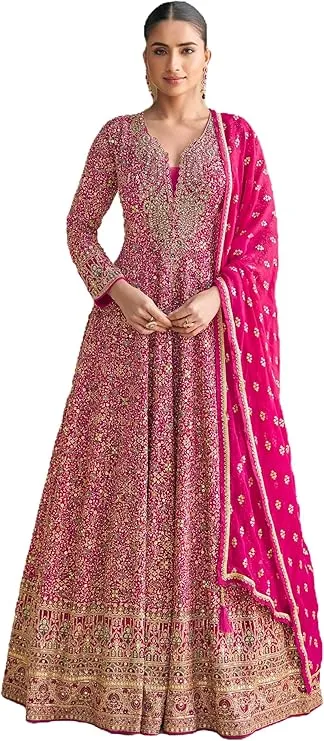
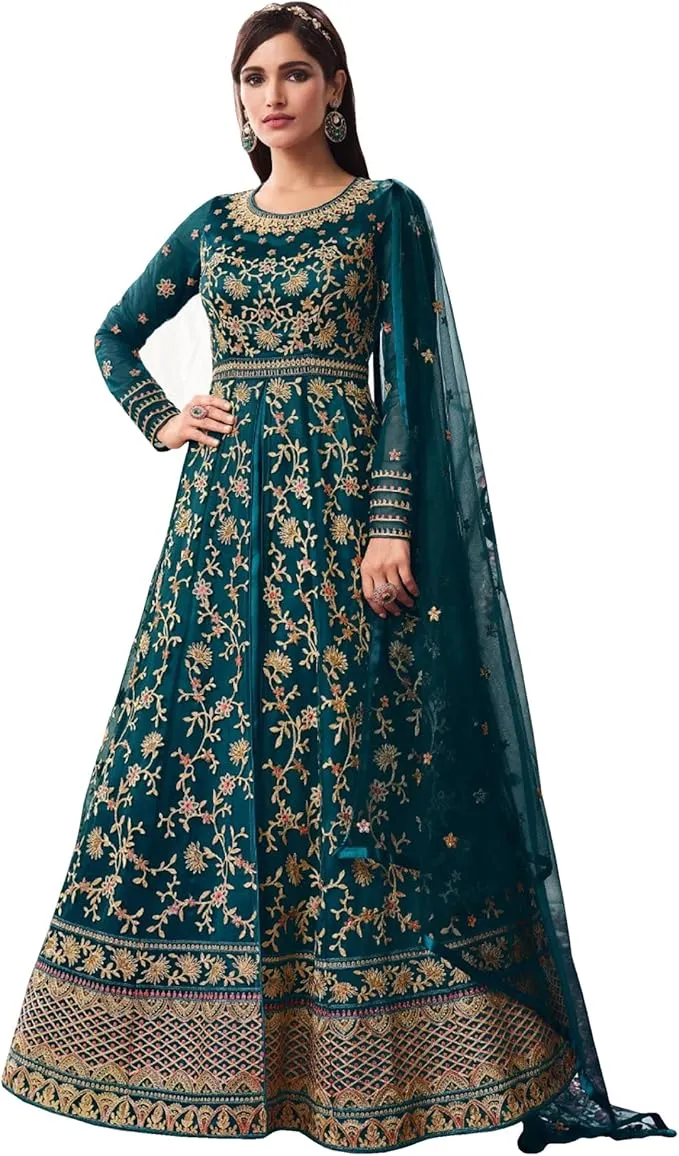
What is appropriate to wear to a Muslim wedding? Muslim wedding dresses
As during any other time in a Muslim woman's life, what's appropriate to wear to her Muslim wedding is modest clothing. There are no special guidelines that make revealing clothing and form-fitting dresses, even if sold as Muslim bridal dresses, appropriate to wear on this special day. Many websites that sell wedding attire make special sections of formal wear for Muslim weddings that don't fit the ideal of modest clothing. Hijabi Bridal is different.
Hijabi Bridal curates cultural attire and traditional dress, in Islamic customs, that's perfect formal wear. Most of our collection is Indian clothing that is modest and wearable by a bride from South Asia or from any cultural background. We also sell <a href="https://hijabibridal.github.io/shop/category/bridal-caftans" class="text-[#db2777] font-bold hover:underline">embroidered abaya caftans</a>that are suitable for those who prefer Middle Eastern customs. We curate <a href="https://hijabibridal.github.io/shop/category/muslim-groom-outfit" class="text-[#db2777] font-bold hover:underline">sherwani suits, thobes, and dishdashas for the groom</a>to modestly match his lovely bride, because modesty goes both ways. Even if you have an interfaith wedding coming up, our job is to support your selection of respectful dress.
That said, if you choose a wedding gown from another site, just be sure to cover up in front of guests. View our cape selection to see how it's done. While we don't go so far as to encourage plain abaya with hijab for your wedding, browse through our site for ideas on how to cover with Muslim wedding dresses in style and wear your hijab too!
Muslim bridal dresses for wedding: Which color is best for a Nikkah?
The best color for a nikkah ceremony is the one that feels the most meaningful to you — but if you want a clear starting point for Muslim wedding dresses: red remains the most traditional dress color scheme across South Asian wedding attire and the most-purchased Nikkah color in the US Muslim community. Trending colors like sage green, champagne, ivory, and white might be the traditional dress color for your nikkah ceremony, as those colors might resonate more with your cultural traditions for bridal wear. Wedding color schemes for Nikkah in the US have expanded significantly over the past several years, and this Muslim bridal dresses collection reflects that range — from deep red and red wine through champagne, sage, lilac, peach, pink, and multiple blues. Whatever you choose, the color you wear to your Nikkah will set the visual tone for the photographs taken at the moment of the most spiritual and cultural significance of your wedding day.
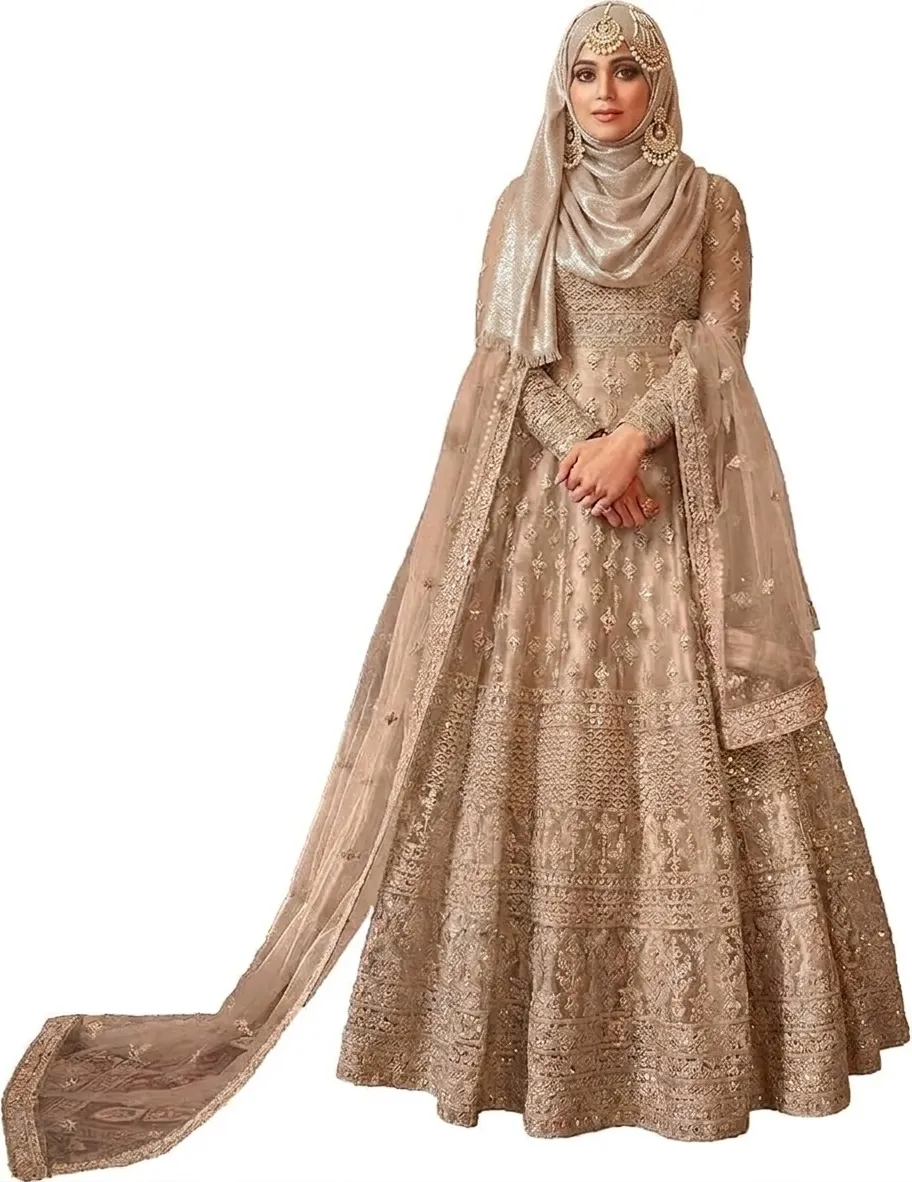
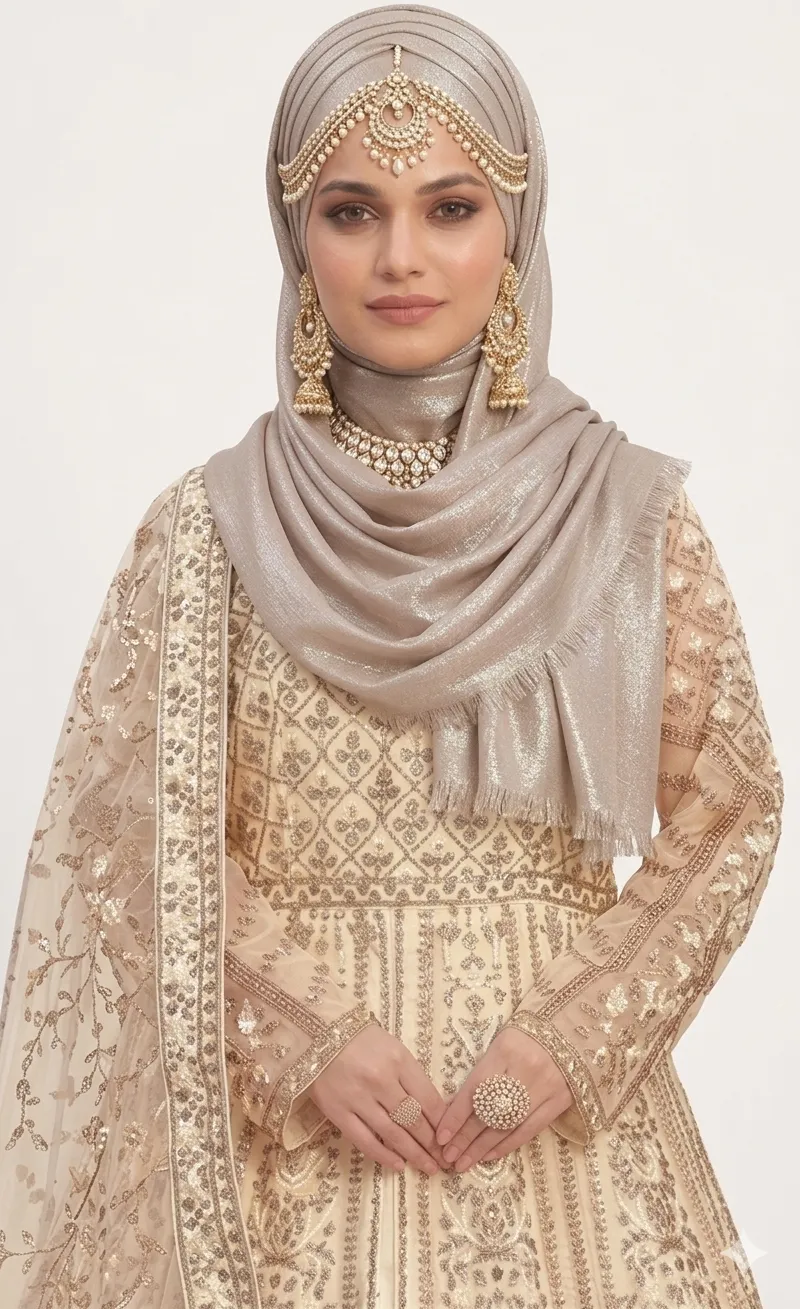
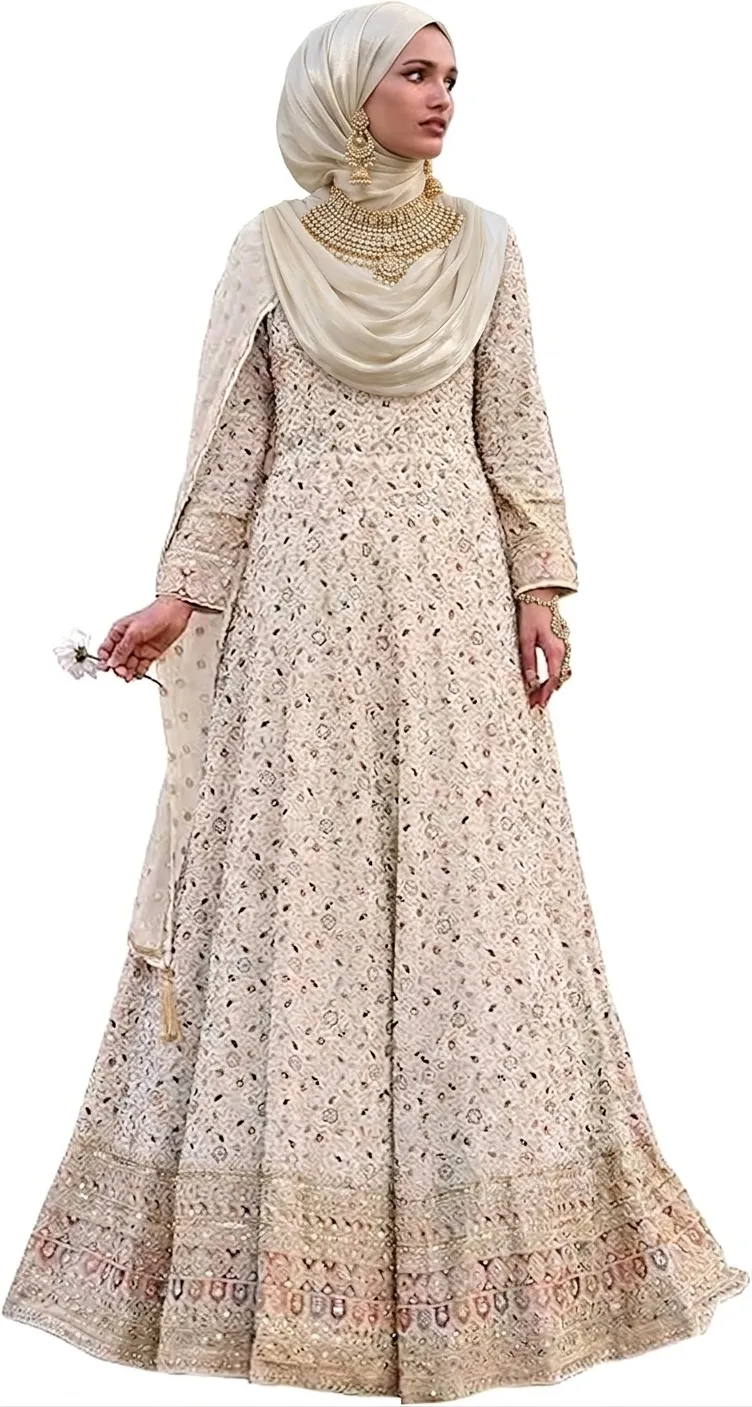
Once you have settled on a color, the next decision for wedding planning that flows directly from the color scheme is your hijab coordination for the religious ceremony. For Muslim wedding dresses with hijab, this is where your wedding attire comes together as a complete ensemble rather than just a dress. Every gown in this collection comes with a matching dupatta, and for the Nikkah ceremony opaque dupattas can be worn as the hijab and transparent ones are typically worn over the hijab: pinned at the crown so its embroidered border frames the face. Because the dupatta is already matched to the dress in both color and embellishment, your Nikkah color choice automatically carries through to the hijab layer — the two pieces work as one coordinated statement rather than two separate styling decisions. Deep red Muslim bridal dresses with red-bordered dupattas pair well with matching red hijab that reinforces the ceremonial weight of the color; a champagne gown with a gold-bordered dupatta and matching hijab reads as quietly luminous under any lighting. The color you choose for your Nikkah is not just the color of your Islamic clothing or wedding attire — it is the color of your whole look, from the hijab cover down.
For navigating weddings that bring together guests from multiple cultural traditions, the Nikkah color also carries a communicative function: it signals your heritage narrative to everyone in the room. Pakistan-inspired palettes in deep rose or red with gold threadwork read as specifically South Asian in character. For cultural exchange and interfaith marriages, ivory and pale champagne read as more universally bridal diverse wedding attire with cultural significance. Modest fashion trends reflect both directions equally, and Islamic clothing for Muslim brides has long supported this kind of intentional choice-making. The most important thing is that your Nikkah color, your dress, and your hijab coordination all come from the same decision — a clear sense of what you want this moment to look and feel like. Islamic traditions give brides the freedom to define that for themselves, and this Muslim wedding dress collection is built to support whatever direction you choose.
What Do Muslims Usually Wear to Get Married? Muslim Bridal Dresses
Muslims usually wear a modest, fully covering outfit for their wedding — but what that looks like depends entirely on cultural background, and the range is far broader than any single image suggests. For South Asian Muslim brides, Muslim wedding dress typically means a silk or velvet lahenga or sharara, a dupatta styled over the hijab, and gold zardozi embroidery across the surface. For Arab and Middle Eastern brides following Middle Eastern wedding traditions, Islamic bridal wear is more likely a long-sleeved abaya in ivory or white, a structured hijab in a matching fabric, and refined accessories in gold or pearl. For West African Muslim brides, a grand boubou or embellished caftan in saturated color with elaborate head wrapping is the cultural standard. All of these are valid, culturally grounded expressions of Islamic bridal wear — and all meet the Islamic marriage customs in the US standard of modest, covering dress that does not reveal the shape of the body.
The hijab is the element that most visibly distinguishes Muslim wedding dresses from other bridal looks, and hijab wedding fashion trends in 2026 have moved far beyond the simple pinned-scarf approach of earlier years. The most common approach for South Asian Muslim brides is the dupatta-as-wedding-veil technique: the dupatta that comes with the lahenga or sharara set is draped over the hijab in one of two ways. In the first, it is pinned at the crown and drawn forward over the face to cover makeup before the nikah contract — functioning as a wedding veil in an Islamic sense. In the second, the dupatta is pinned to the back of the hijab and falls in a long train behind — a stylish wedding veil effect that photographs beautifully from every angle. Both approaches work in any color: ivory and white read as classically bridal in US Muslim ceremonies, while red, gold, and champagne honor the South Asian tradition of rich, celebratory nikah attire.
For Arab-American brides and brides navigating interfaith wedding planning, the abaya remains one of the most elegant and practically effortless choices in modest wedding dresses. An abaya in silk crepe or embellished lace, worn with a structured hijab in a coordinating fabric, requires no modification for modesty and communicates bridal formality immediately to guests from any cultural background — a real advantage in the diverse guest lists that characterize interfaith wedding planning. Nikah attire in the abaya silhouette is among the most searched styles in Muslim bridal shops in the USA, particularly for brides whose look needs to work in a mosque setting where a more conservative style is appropriate.
The Western-influenced end of modest wedding dresses is also substantial. Many brides choose a long-sleeved, high-necked dress in ivory or champagne — a silhouette that reads as bridal to every guest regardless of cultural background — paired with a hijab in silk or chiffon and a dupatta worn as a wedding veil to the back. This fusion approach is one of the most consistent patterns in American Muslim weddings right now, and it reflects how Islamic bridal wear has evolved to serve brides building looks that honor their faith and speak to more than one cultural tradition simultaneously. What matters across all of these choices is coverage, modesty, and intentionality — not a prescribed silhouette. The full range of Muslim wedding dresses, abaya styles, and nikah attire in this collection is designed with every one of these contexts in mind.
Muslim bridal dresses: What is an Arab wedding dress?
An Arab wedding dress is a broad category that covers several distinct, traditional, embroidered silhouettes depending on the specific country and regional culture. The most widely recognized Muslim wedding dresses for women in the US are the embroidered kaftan (a long, flowing robe with wide sleeves and intricate surface decoration) and the embroidered abaya (a full-length, modest outer garment that can be styled as a bridal piece in luxurious fabrics). Both silhouettes are traditional, worn with hijab, and deeply embedded in Middle Eastern wedding customs as they has evolved across the Arab world. Middle Eastern wedding customs encompass enormous regional variety: a Lebanese Arab wedding dress often features Western-influenced structure with embroidered detailing; a Moroccan Arab wedding dress may include multiple outfit changes across the wedding celebration; a Gulf-region bride may wear a heavily embroidered kaftan in gold and white over elaborate traditional jewelry.
What connects all of these styles as Muslim wedding attire is their commitment to cultural heritage through embellishment, their embracing of Islamic traditions, and their compatibility with hijab. The kaftan is naturally hijab-friendly — its silhouette requires no modification to meet Islamic dress standards, and its embroidered surface creates enough visual richness that a simple, elegant hijab completes the look without competing with the garment. The abaya worn as a Muslim wedding dress functions similarly: the embroidered fabric carries the ornamentation, and the hijab provides the framework for modest fashion trends. In the US, Middle Eastern culture has shaped Muslim wedding dress choices significantly through American and pan-Arab media. But it is its Islamic historical use that has kaftan-style, embroidered wedding dresses appearing regularly in searches from brides who may not have Arab heritage but are drawn to the silhouette's combination of modest fashion and dramatic presence.
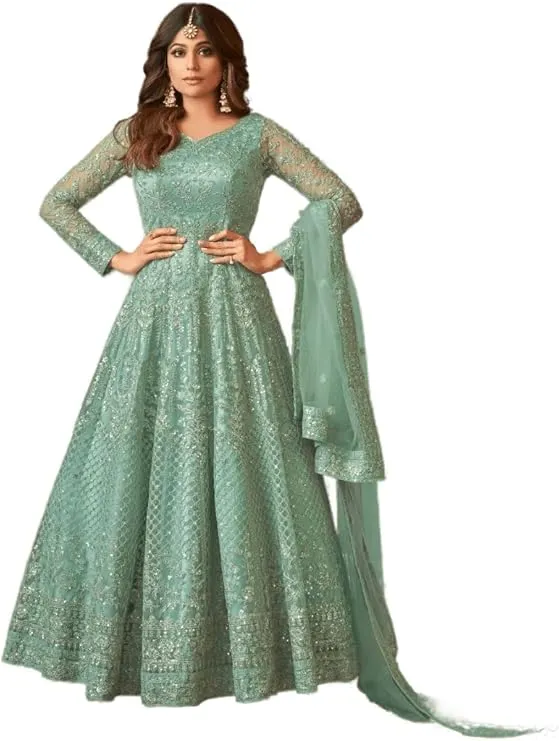
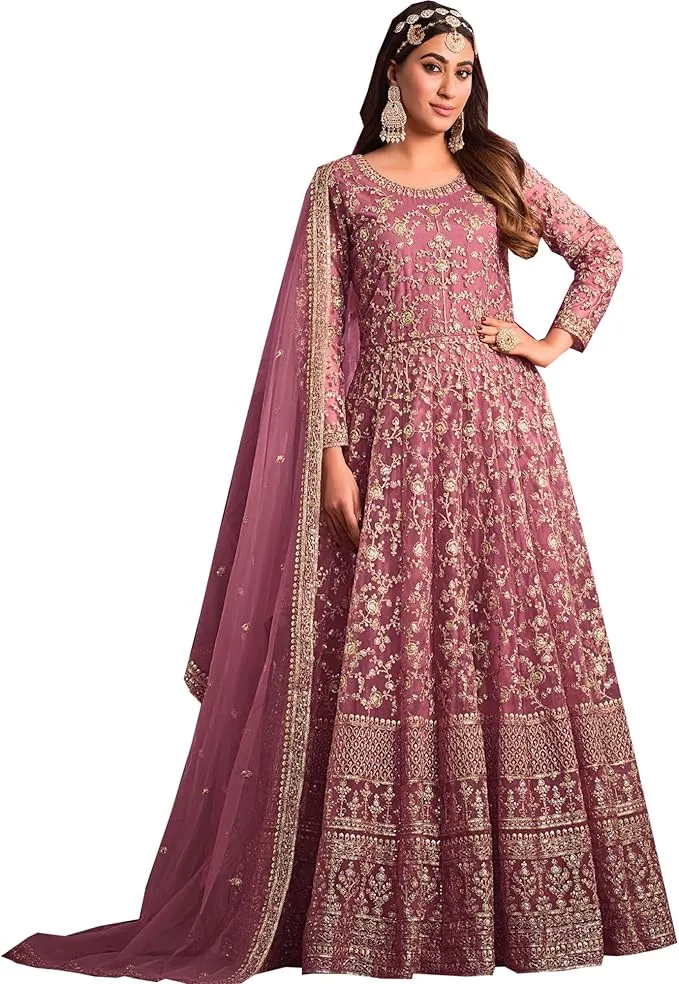
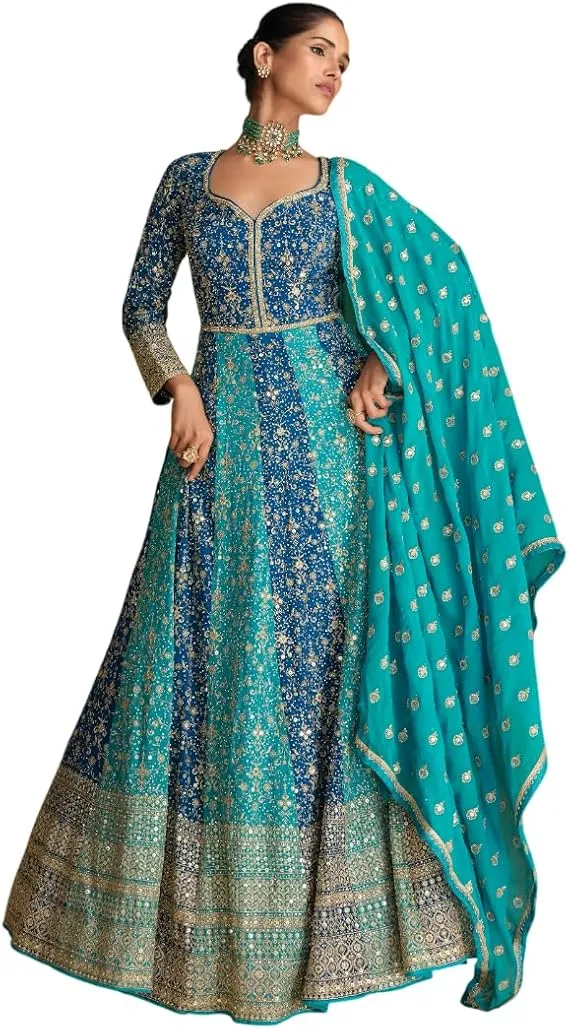
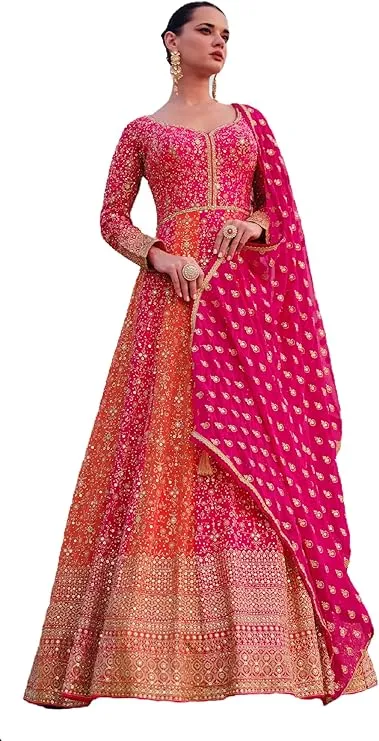
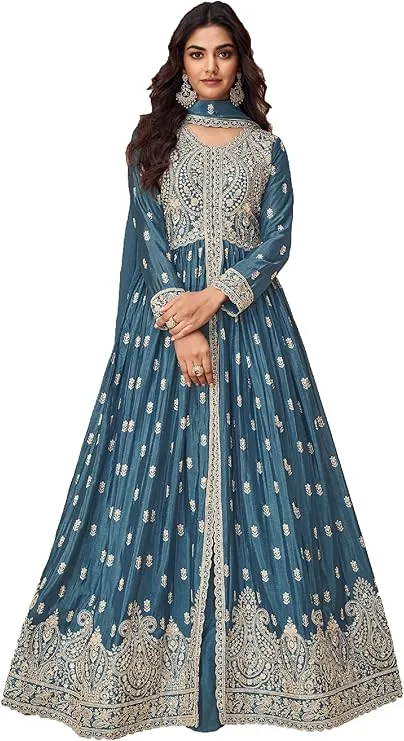
The collection on this page is South Asian in silhouette — anarkali gowns rather than kaftans or abayas — but it serves many of the same styling needs as a traditional Arab wedding dress: full coverage, embroidered fabric, a dupatta that functions as a hijab cover, and a range of colors that covers both traditional and contemporary wedding attire choices. For brides specifically looking to embrace Islamic traditions with a kaftan-style garment, our bridal caftans collection carries embroidered and beaded styles with strong Middle Eastern cultural heritage. For the hijab itself — whether worn under the dupatta or as the sole head covering — our [bridal hijab](https://hijabibridal.github.io/shop/category/bridal-hijab) page carries structured and draped styles designed to coordinate with both South Asian and Arab wedding dress aesthetics. Understanding the distinction between these silhouettes helps brides shop with clarity: a Muslim wedding dress can take many forms across Muslim wedding atire, and all of them are represented somewhere in this collection. The movement toward silhouette diversity in Islamic wedding ceremonies in the US reflects exactly the cultural breadth of the American Muslim community.
Frequently Asked Questions
Which color is best for a Nikkah?
Red is the most traditional choice in South Asian Islamic wedding customs and remains the most popular Nikkah color in the US Muslim community. Champagne, ivory, and pale gold are widely accepted alternatives, particularly for brides from Middle Eastern backgrounds or American Muslims without a specific South Asian tradition. All wedding colors for nikkah are valid — the most important factor is that the color feels ceremonially meaningful to you. The best color for a Nikkah depends on your cultural background and personal preference. All Muslim wedding dresses in this collection come with a matching dupatta that can be during the ceremony.
What is appropriate to wear to a Muslim wedding?
For a Muslim bride, it isn't appropriate to wear form-fitting or revealing clothing to her Muslim wedding. While the bridal industry thrives selling wedding attire that isn't respectful dress for a Muslim woman, there are alternatives! At Hijabi Bridal, our priority is to make Muslim wedding dresses available that cover the body in a beautiful manner for your wedding day.
What do Muslims usually wear to get married?
Muslims usually wear a modest, fully covering outfit for their wedding. For South Asian Muslim brides, Muslim wedding dresses typically mean a silk or velvet embroidered Muslim lahenga or sharara and a dupatta styled over the hijab, and gold zardozi embroidery across the surface. For Arab and Middle Eastern brides following Middle Eastern wedding traditions, Islamic bridal wear is more likely a long-sleeved abaya in ivory or white, a structured hijab in a matching fabric, and refined accessories in gold or pearl. For West African Muslim brides, a grand boubou or embellished caftan.
What is an Arab wedding dress?
An Arab wedding dress refers to two distinct traditional silhouettes depending on the region: the embroidered kaftan and the formal abaya worn as a bridal outer garment. Both are perfect for Muslim wedding attire and are compatible with hijab by design. Middle Eastern wedding customs vary significantly across countries — a Lebanese bridal look differs from a Moroccan or Gulf-region one — but the common thread is embroidered fabric, modest fashion construction, and hijab-friendly silhouettes. The collection of Muslim wedding dresses on this page is South Asian in style; for kaftan-style Arab wedding dress options, see our bridal caftans collection.
Do the dresses come with a hijab?
Every dress in this collection comes with a matching dupatta, which can be worn over the hijab for the nikkah ceremony — pinned at the crown so the embroidered border frames the face — and re-styled as a second layer over the arm or shoulder for the reception. This is the full Muslim wedding dresses with hijab look. The dupatta is not a separate hijab; it is a bridal scarf that layers over your hijab underneath. If you want a traditional bridal hijab, those are available on our bridal hijab page in colors coordinated to match these gowns.
What silhouette do these Muslim wedding dresses use?
All dresses in this collection follow the anarkali silhouette — a fitted, embroidered bodice that flares into a full-length skirt, worn over matching modest pants with a dupatta. This is the most common South Asian Muslim wedding dress shape in the US market, and it meets Islamic dress standards naturally: long sleeves, high neckline, and floor-length coverage. The silhouette works equally well for the nikkah ceremony, the walima reception, and any pre-wedding events where modest fashion is required.