Muslim Lehenga Collection
Can Muslims Wear a Lehenga?
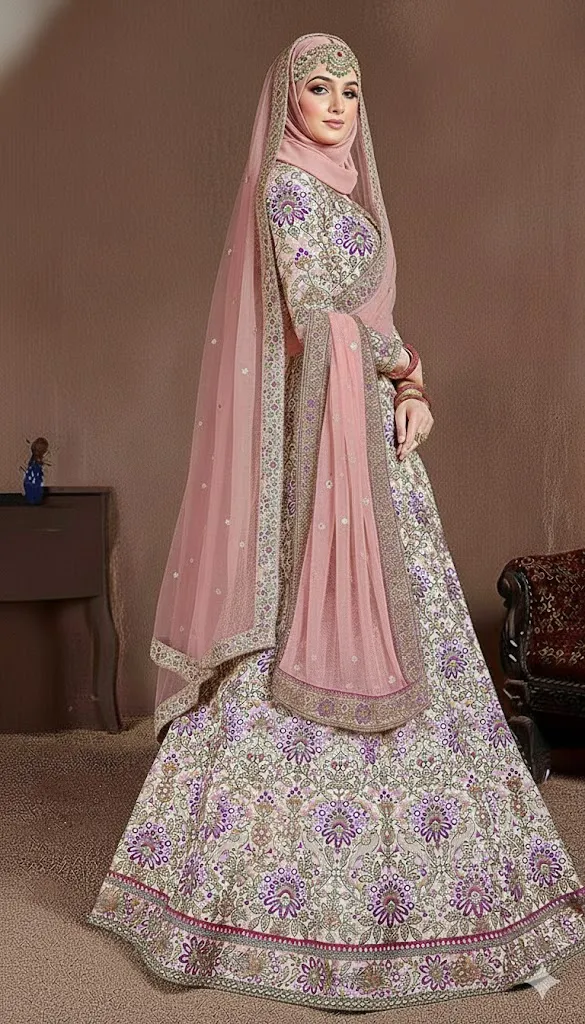
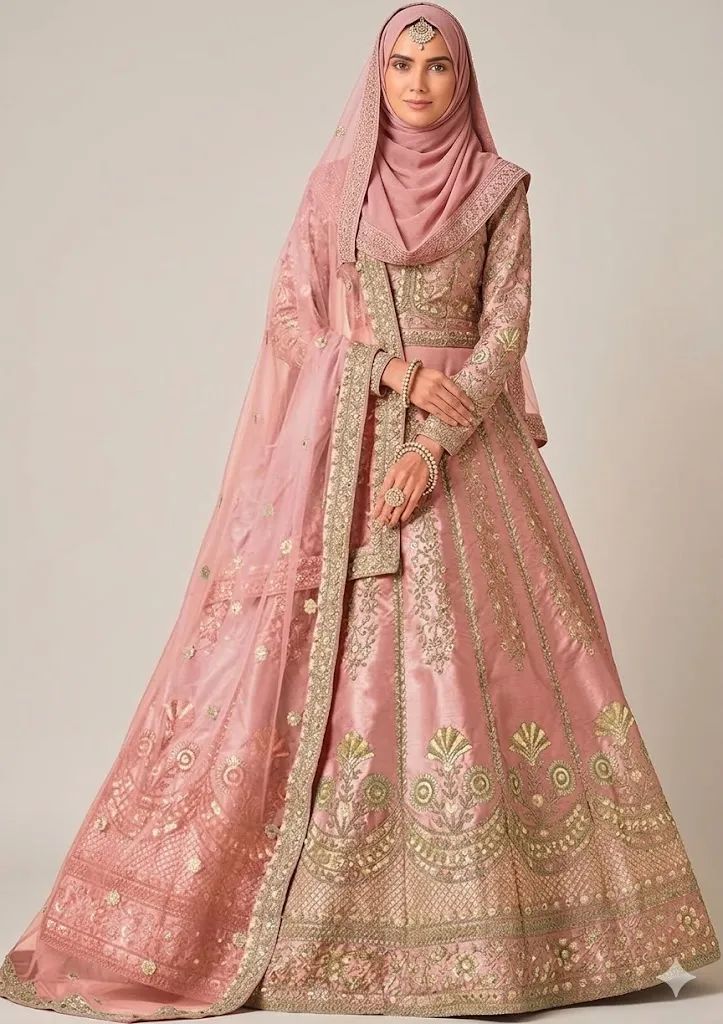
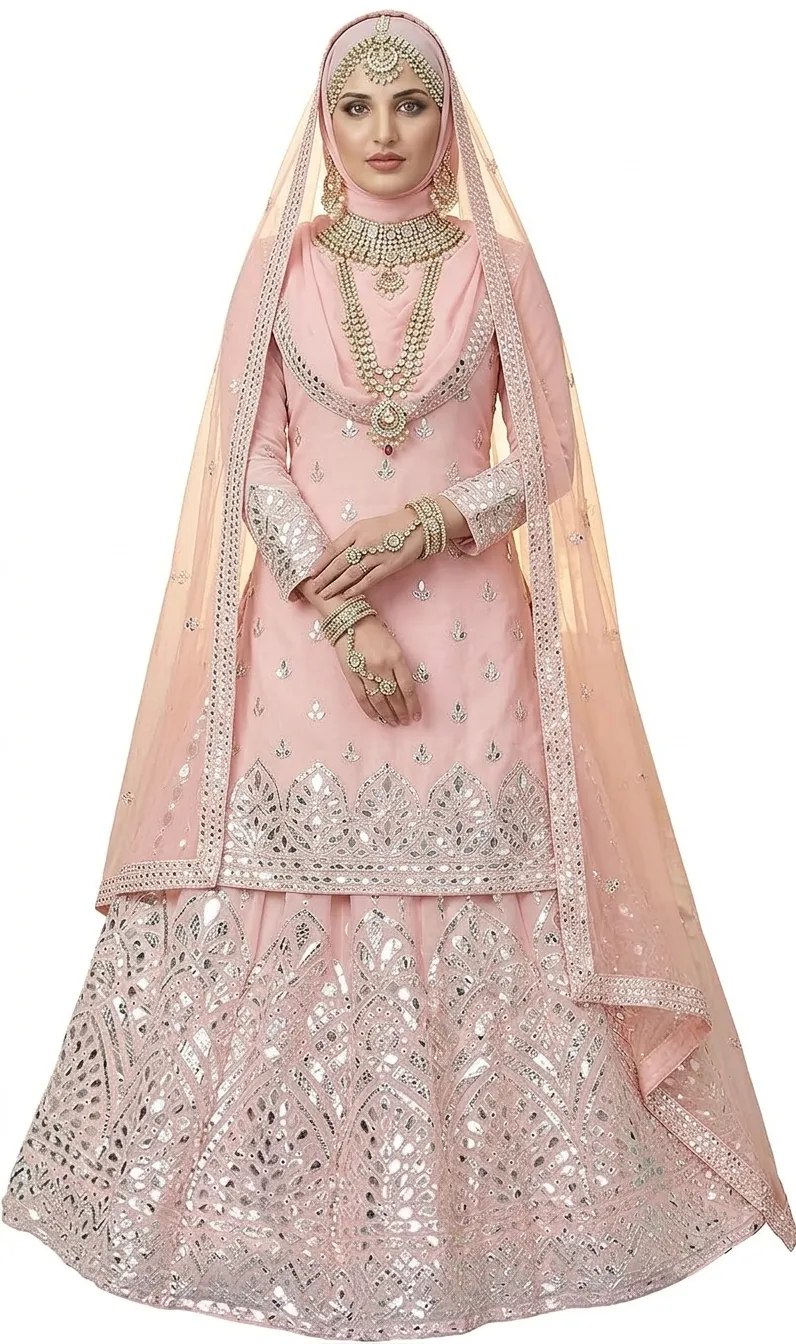
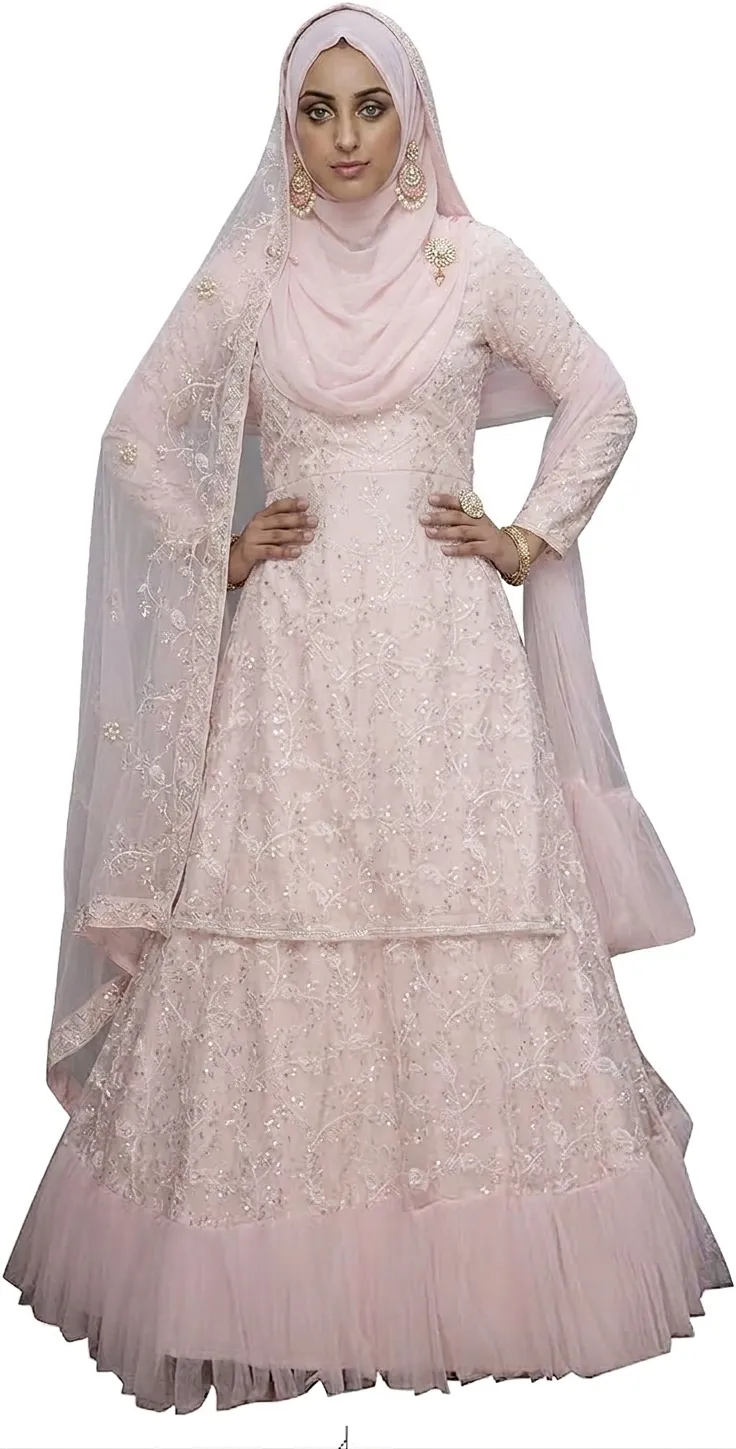
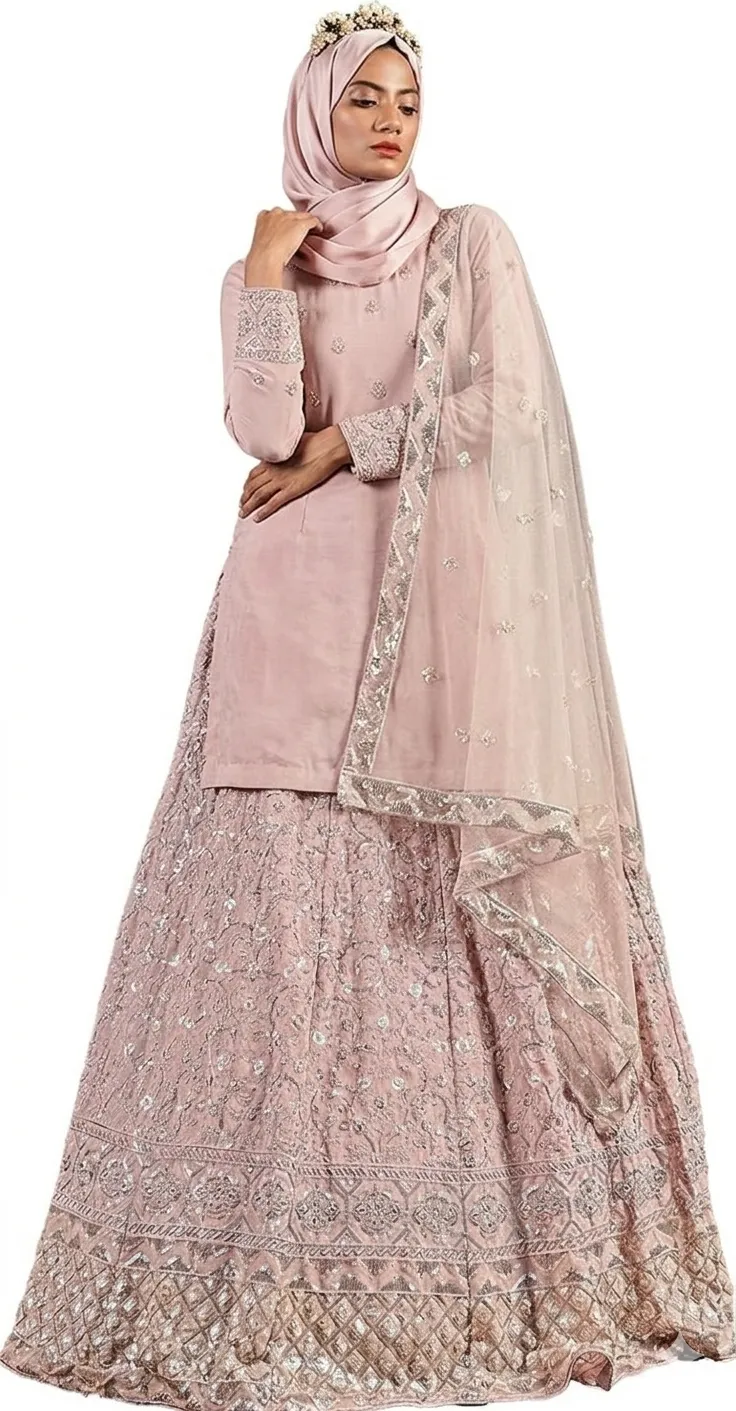
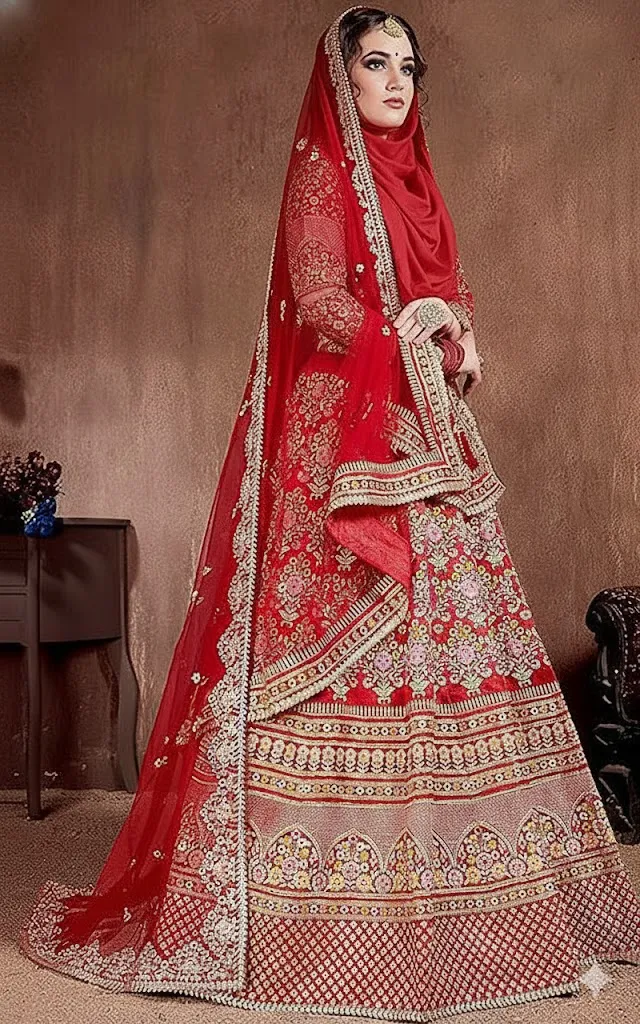
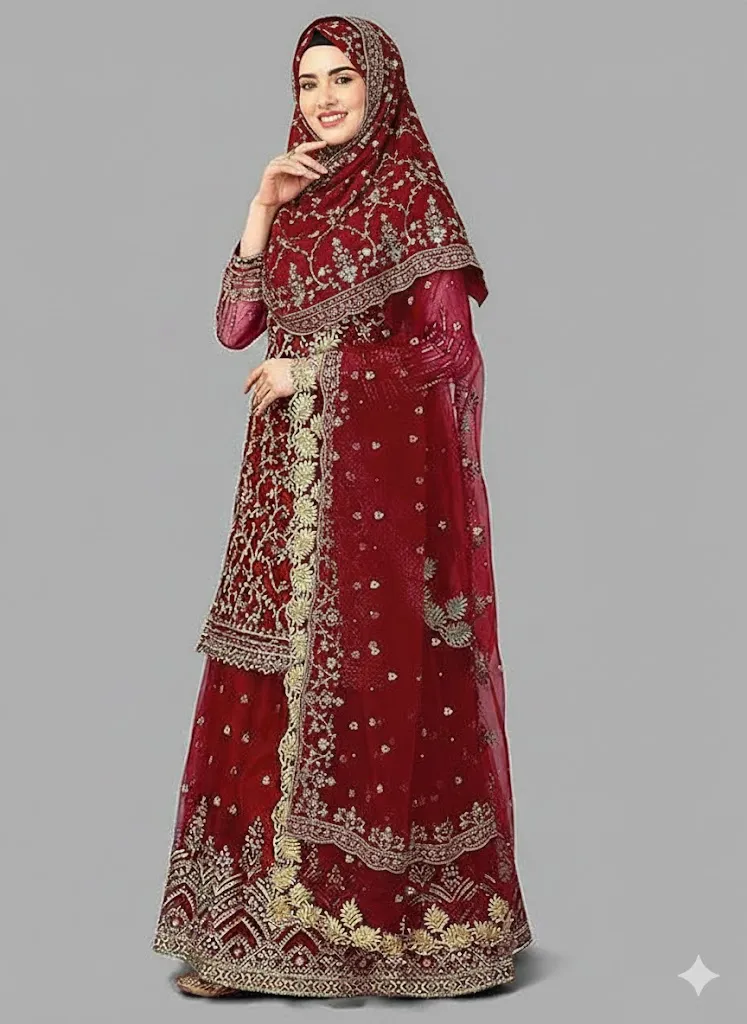
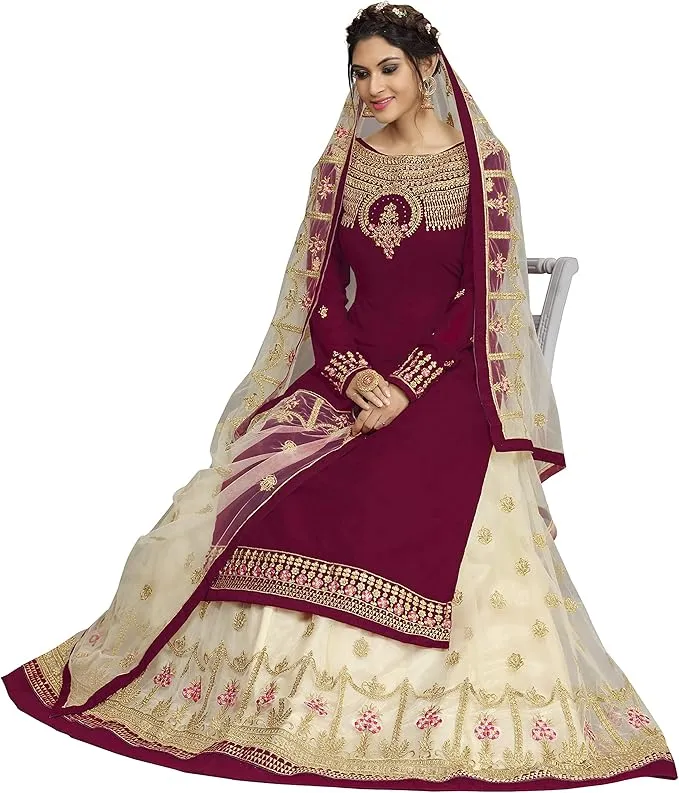
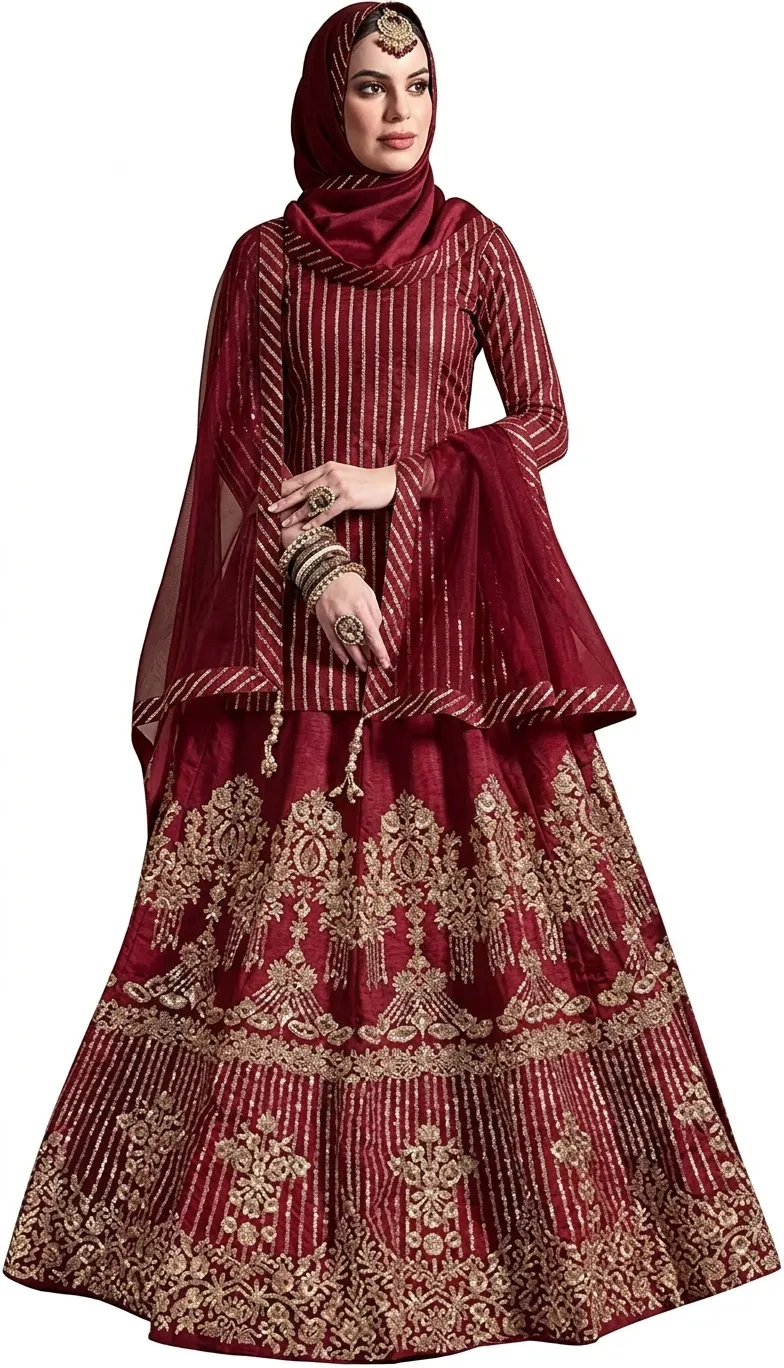
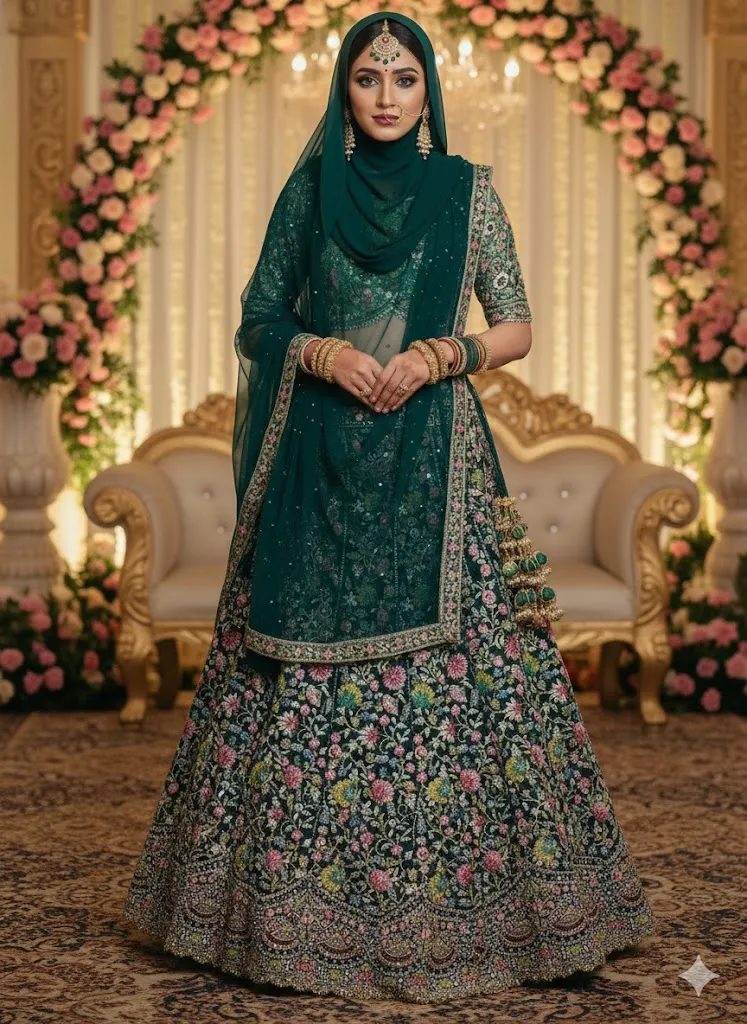
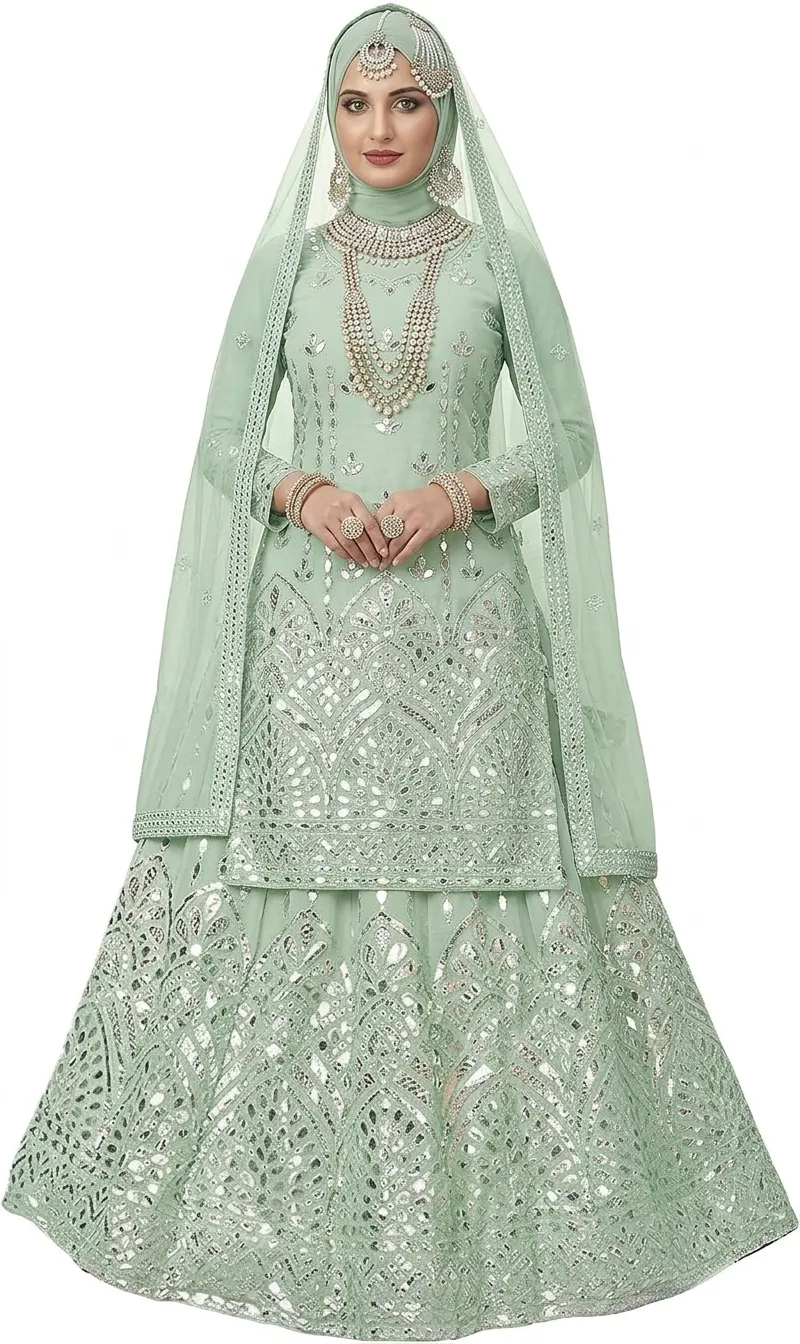
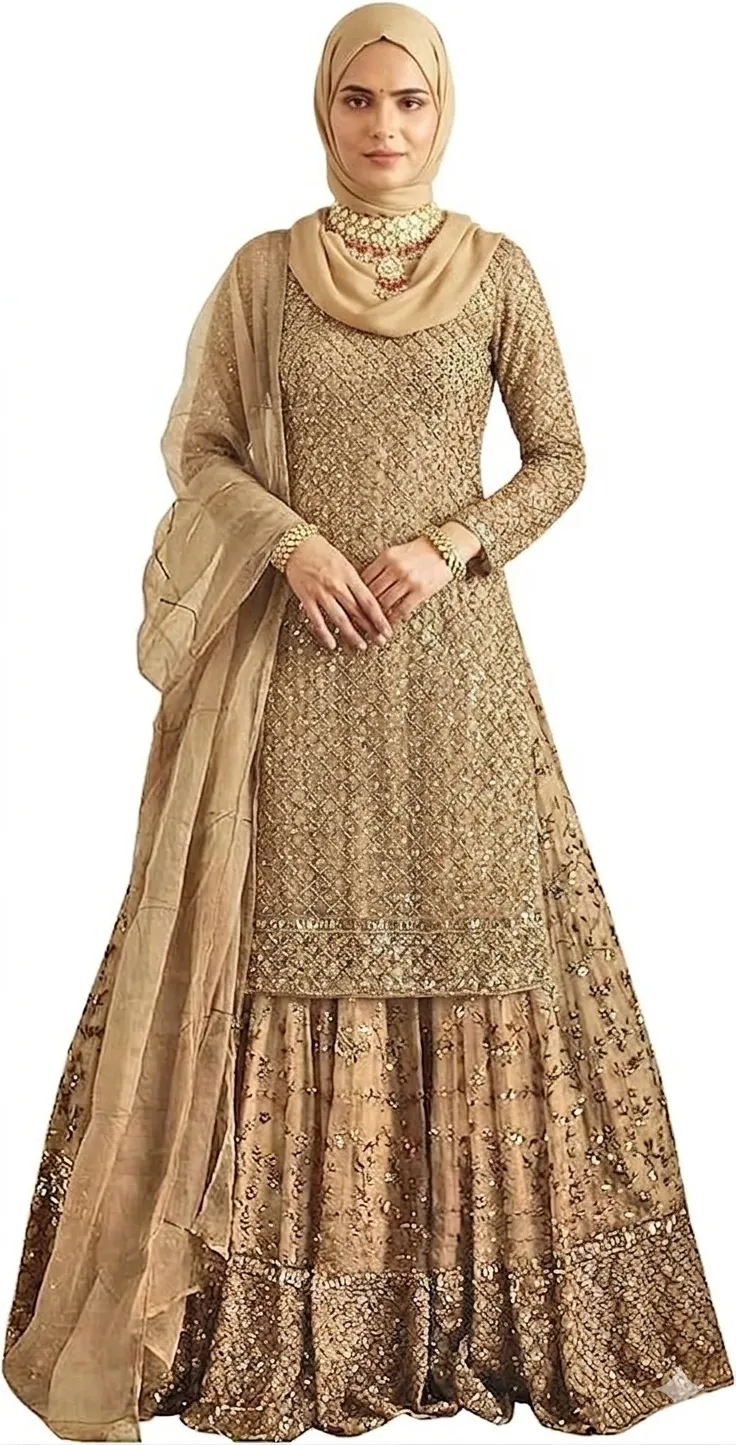
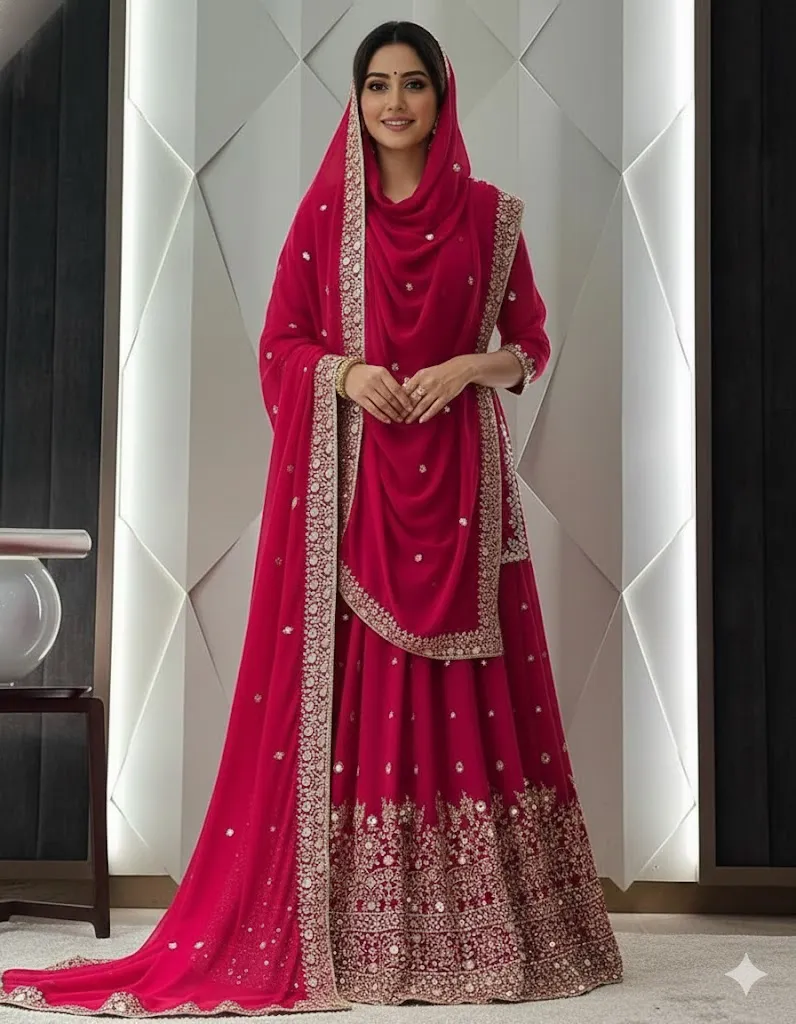
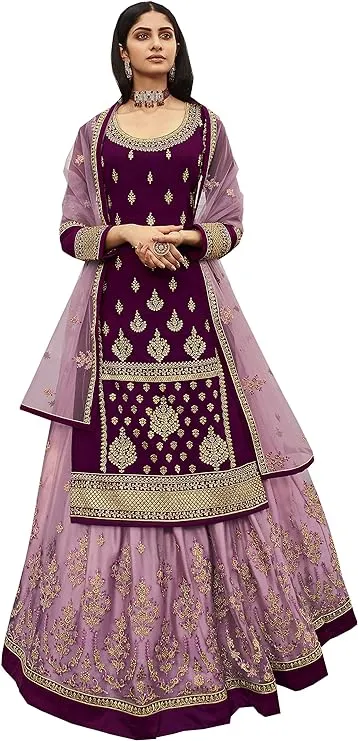
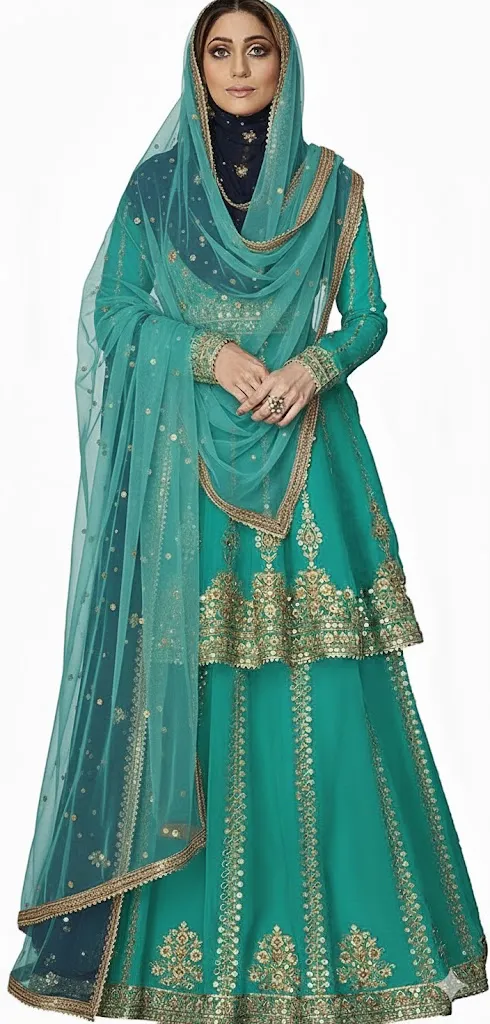
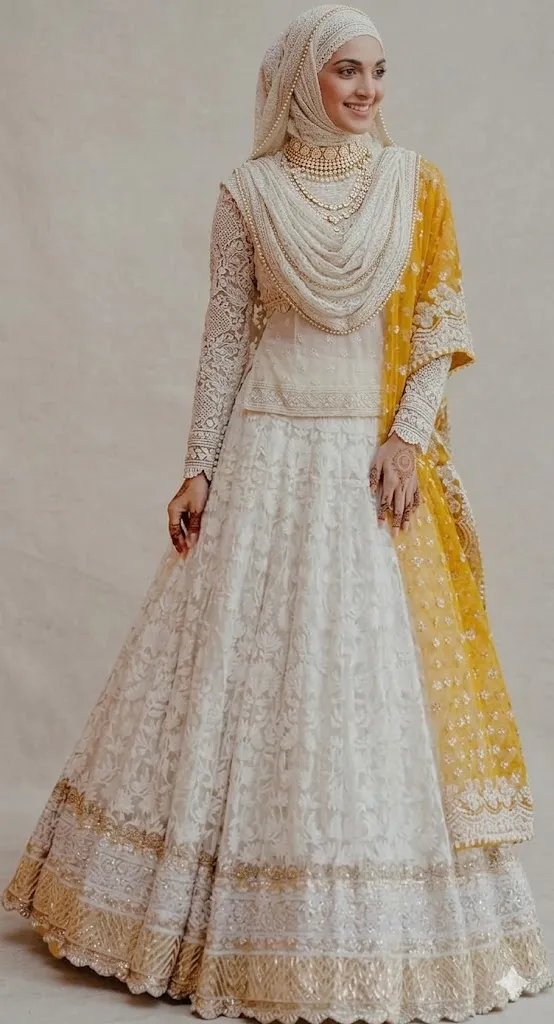
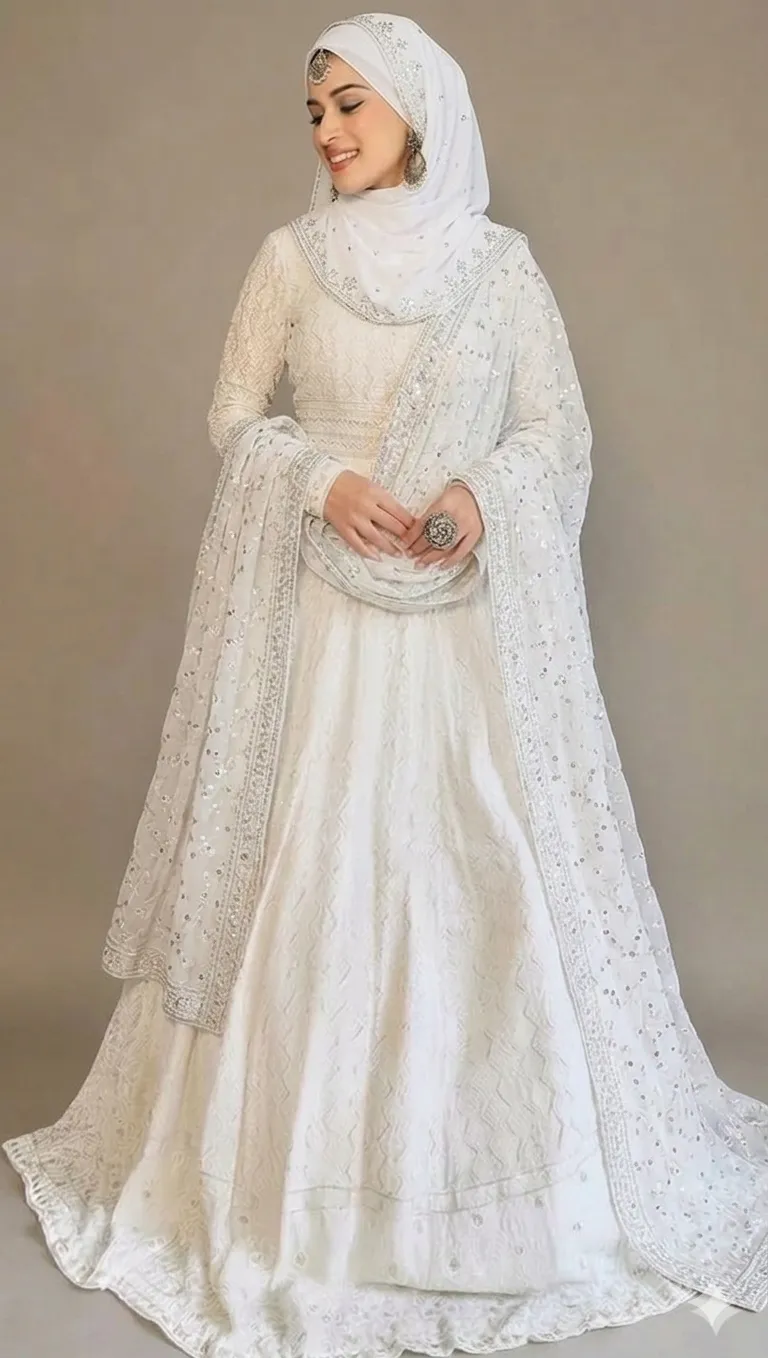
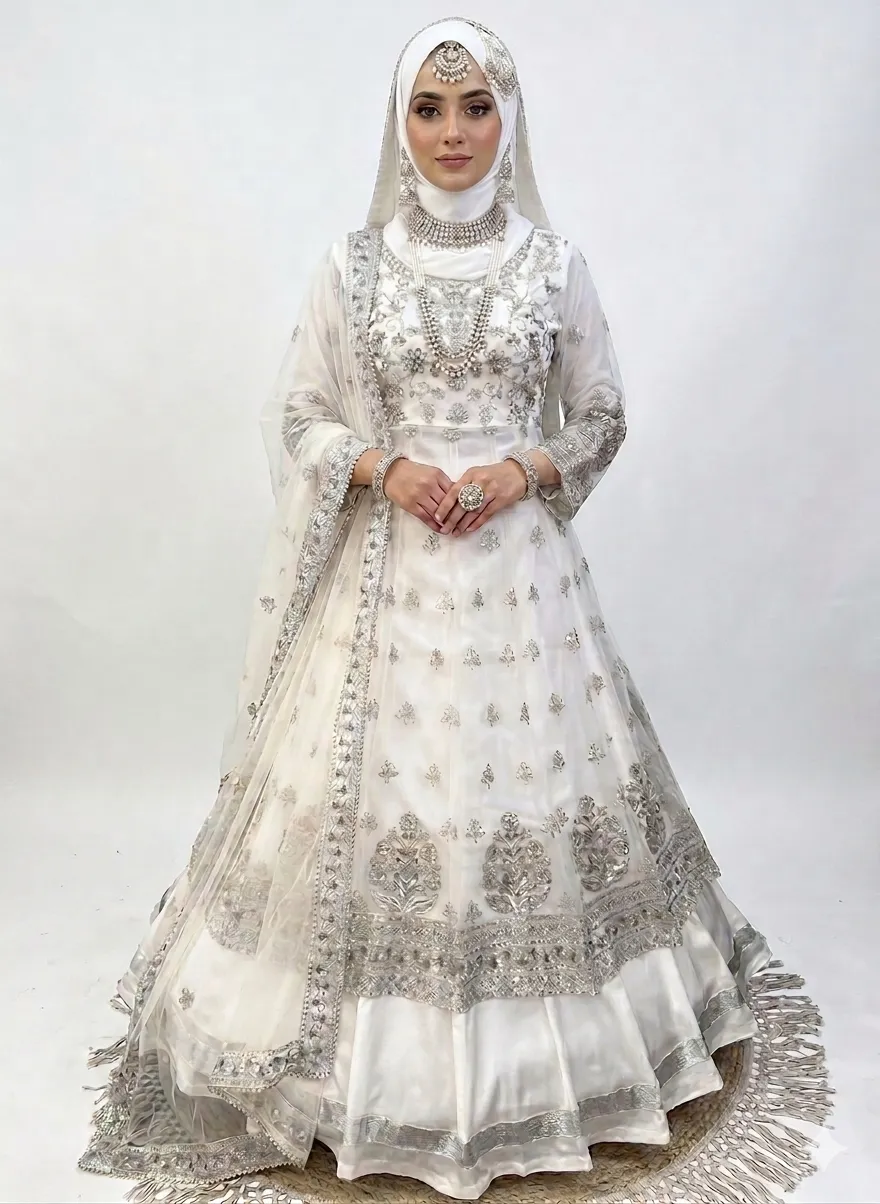
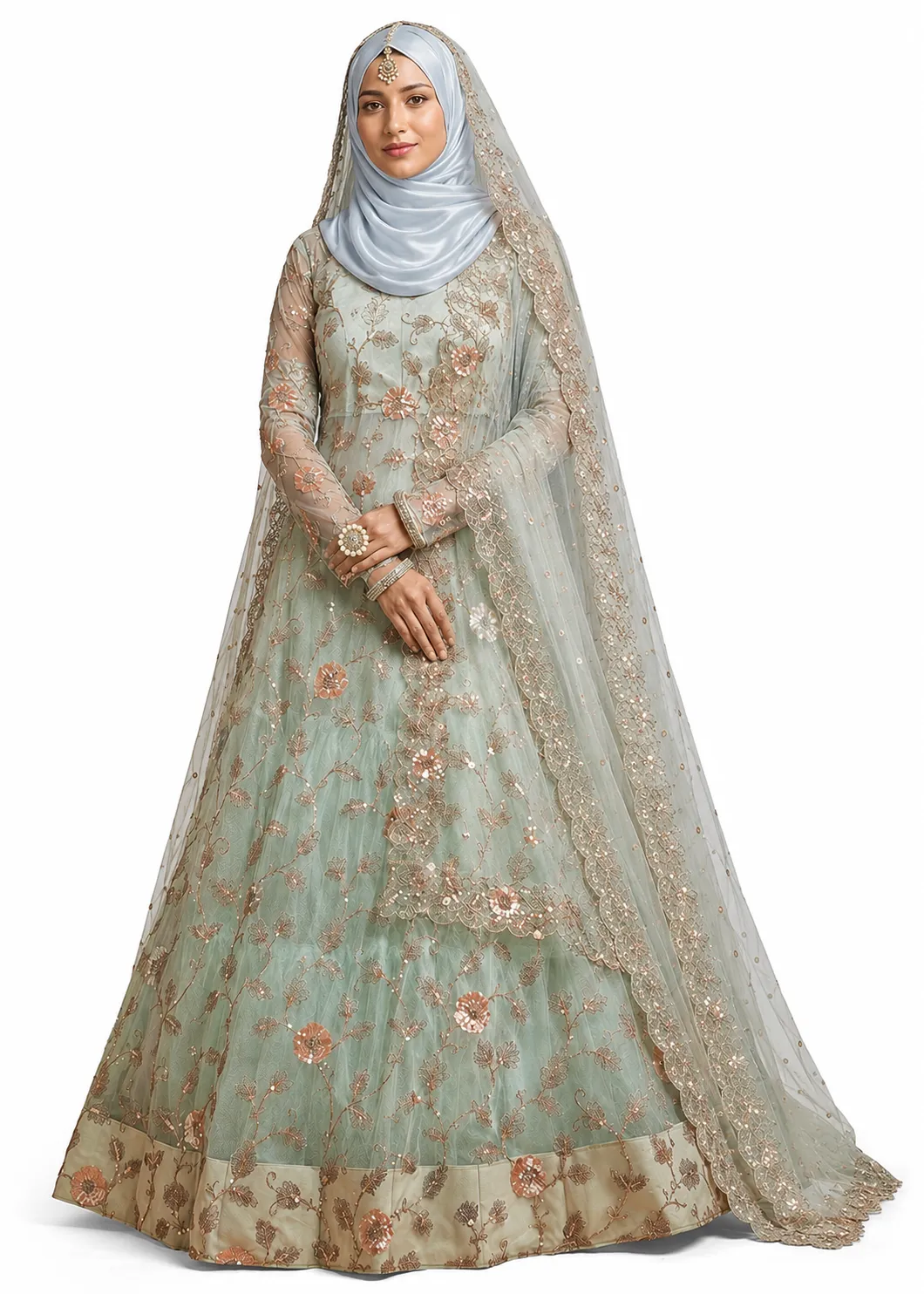
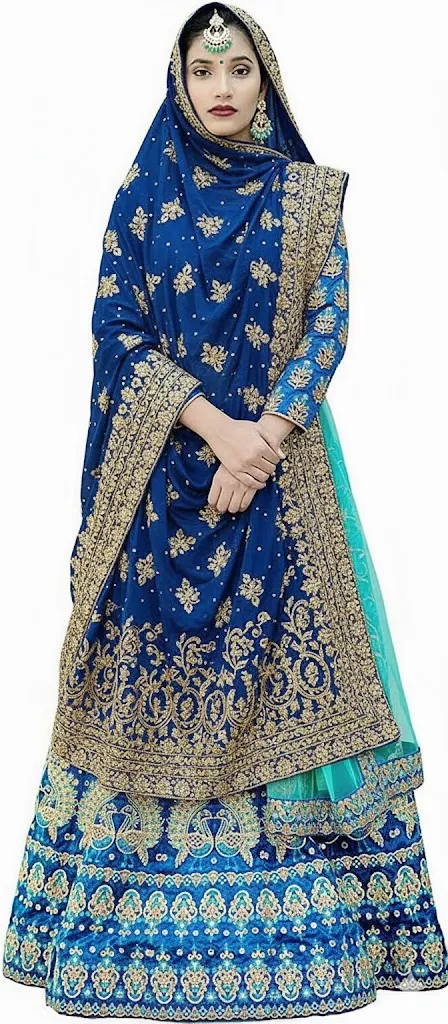
Muslims can wear a Muslim bridal lehenga — when styled with a modest long blouse and hijab, it is one of the most popular choices for in Islamic fashion for nikah ceremonies in American Muslim culture. Unlike a standard Indian lehenga with its short midriff-baring choli, a Muslim lehenga choli uses Desi fashion trends to pair the same luxurious flared skirt with a longer tunic or Muslim lehenga blouse design that fully covers the body in line with Islamic modesty. At Hijabi Bridal, we use AI images to help you visualize all our Amazon.com curated lehengas with hijab for weddings. READ MORE BELOW...
Is Lehenga Allowed in Islam?
Muslims can absolutely wear a lehenga for a Muslim wedding. According to Islamic modest fashion, clothing should cover the body without being form-fitting or revealing, and Muslim lehenga blouse designs achieve this through a longer blouse or tunic reaching at least to the hip, often to the knee, or connected to the skirt. This variation of South Asian clothing has used cultural exchange to become the defining choice in American Muslim culture for those who appreciate fashion diversity. We use AI images to help you imagine the Muslim bridal lehenga with hijab for a wedding with a long top.
Unlike the ornate Pakistani bridal lehenga — which typically features a mid-calf length blouse with heavy embroidery cascading over the skirt, a style rarely available through US retailers — the Muslim bridal lehenga as worn by American Muslims reflects an American influence with cleaner lines, shorter blouses relative to the Pakistani standard, and more accessible embroidery. The result is a nikkah look that feels both rooted in cultural exchange and fully at home in the US. If you're looking for a Muslim lehenga with price, click on any of the lehenga for Muslim wedding on this page. The price affordable and listed on Amazon.com.
Many Muslims pair their hijab with lehenga, then wear two bridal dupattas: one worn over the hijab to the back, and one draped over the shoulder for a layered, regal effect. This double-dupatta style shows cultural sensitivity to South Asian clothing fashion trends and has become one of the most photographed Muslim bridal looks in America. It is a direct expression of how the hijab bride with lehenga bridges Islamic values and fashion diversity in the US.
Is lehenga Hindu or Muslim?
The Indian lehenga and the Muslim lehenga share the same silhouette, but their cultural significance and traditional attire conventions differ in one essential way: the blouse. The Muslim lehenga traces its roots to the Islamic Mughal courts of the Indian subcontinent, where modesty in dress was a defining feature of court fashion, and long blouses still reflect that. The short, waist-defining choli is a later Hindu innovation, while a long, knee length blouse that characterizes the Muslim lehenga is the original and more historically authentic form of the garment. Cultural influences between Muslim and Hindu communities over centuries has blurred these distinctions in traditional attire, and sometimes Hindus wear long blouses and Muslims shorten theirs to hip-length, but the longer blouse still remains the clearest marker of Islamic clothing in South Asian weddings in the USA.
The only meaningful difference, then, is the blouse length, and the fact that Muslims wear a lehenga hijab style for weddings. This makes it truly Islamic. Pakistani fashion has spread South Asian wedding cultural influences across Islamic clothing, and people from many different background prefer its fabric choices and embroidery styles.
So a traditional Indian Lehenga features a short choli that leaves the midriff exposed. A Muslim Lehenga replaces the choli with a longer blouse, kurta, or tunic that keeps the stomach and back fully covered. Due to Muslim cultural influences, the skirt — its flare, its embroidery style, its fabric choice — is typically identical between the two, with regional variations, of course.
All the Muslim lehenga bridal wear featured on Hijabi Bridal from Amazon.com are either readymade Muslim lehengas with the longer blouse already included, or options with unstitched cholis that can be made longer. This site uses AI imaging to highlight the possibilities semi-stitched lehengas can offer if you want to view these wedding lehengas with hijab for weddings. US brides can shop Muslim lehenga designs with confidence, here, knowing the modesty requirement is always considered. Middle Eastern couture is found on our bridal caftan page.
What is a Muslim Wedding Dress Called?
There is no single Muslim wedding dress — Islamic bridal wear varies widely by culture. Among South Asian Muslim brides in the US, the most common choices are the Muslim lehenga with hijab for a wedding, the Indian sharara, and occasionally an Arabian abaya-inspired gown - the bridal caftan. The Muslim lehenga is the most popular choice for both the nikah ceremony and the walima reception, and is considered premier Islamic bridal wear and South Asian wedding attire for American brides. The South Asian influence on the American Muslim community has led to a rise in fusion styles — a bride might pair her lehenga skirt with a hip-length tunic, or have a tailor connect the blouse to the skirt, blending cultures in a way that reflects Muslim wedding traditions as they evolve within cultural wedding customs in the US.
The color a Muslim bride selects for her lehenga often reflects both heritage and personal expression. South Asian tradition leans toward maroon and red, but Muslim brides in the US increasingly choose champagne, ivory, blush, or blue for their nikah ceremony or walima reception. Whether its for the henna night or is the modern minimally embellished form for the nikkah, the Muslim bride lehenga look is a living testament to cultural exchange and the diversity of Islamic bridal wear in America.
How to not look fat in lehenga?
One of the best cultural fusion fashion looks with a slimming design is a lehenga made for Muslim women. Lehengas made in a modest fashion with a hip length choli cover the stomach and then flare so that the sight is drawn down. Muslim clothing naturally covers the stomach, back and limbs, which encourages body positivity, and between the embroidery and draped dupatta, the Muslim lehenga is simply plus-size friendly fashion for brides at its peak.
For plus-size friendly fashion, Muslim lehenga with simple designs are better. Muslim lehengas with simple embroidery smooth the silhouette better than does heavy embroidery, which can seem like chunky additions to the body. That modest fashion prefers simple designs is great because, for both American Pakistani clothing trends and Indian-American fashion in 2026, less embroidery in bridal fashion is better. This doesn't just apply to lehengas, but for sharara and wedding dresses simple monochrome or contrasting embroidery is the look for Muslim clothing in bridalwear 2026. Simple designs are also closer to the American Muslim women's style and preference, overall, where excessive embroidery might seem less elegant.
Hijabi Bridal Muslim clothing lehengas are slimming styles by nature and encourage body positivity when customized to cover the stomach. A tailor can make the looks on this page with a purchase of two lehengas curated on Amazon.com. Click on any lehenga to see how. They are typically inexpensive, and the color selection is wide to fit your preference.
Muslim Bridal Lehenga with Prices: What to Expect on Amazon?
Muslim bridal lehengas available through Amazon — all curated in our collection — range from approximately $80 to $200 depending on fabric and embroidery weight. This is significantly less than typical bridal lehenga prices and gives you room to purchase two lehengas for full modest styling options. Readymade georgette lehengas with embroidery and sequins typically fall under $100 and ship with Amazon. Heavily embroidered georgette and chiffon sets run under $200. All prices include the readymade blouse or unstitched choli, full dupatta, and skirt unless otherwise noted on the Amazon listing. For Muslim lehengas with hijab for weddings, as shown in our AI photographs, bridal hijabs are sold seperately in our Bridal Hijab collection, or your tailor can be instructed to create one.
What is the Average Price of a Lehenga?
The average price of a lehenga is $500. For a Muslim lehenga, a Pakistani lehenga with price can go all the way up to $10,000, if it's made by a fashion house designer. However, they can be found for significantly less. In the lower ranger, styles look very similar to the luxury clothing for bridal couture from Pakistani designers. The tailoring might be better, but the look is very similar. While the fabric quality and embroidery might differ slightly, wedding fashion tends to be for one time use and it's highly likely that anyone will notice the difference in a Muslim lehenga that's purchased from a designer and one that is not. True to US market trends for Muslim weddings, the garments from Amazon.com are minimally embroidered, use lace bodies, and are trimmed in silver or gold. The cultural significance of the match is sure to resonate this wedding season: in the current ecomomy, most brides prefer a lehenga under $300 in the same design style as one for $3000.
Frequently Asked Questions
Can Muslims wear a lehenga?
Yes, Muslims can wear a Muslim lehenga. The key is styling. A Muslim lehenga pairs the traditional flared skirt with a longer blouse or tunic that fully covers the midriff. When styled for a nikkah or Muslim wedding, with modest sleeves and opaque fabric, it is fully compliant with Islamic fashion. Many American Muslims complete the look with a bridal hijab and dupatta, creating a modern bridal look that honors both traditional bridal values and contemporary fashion. The Pakistani bridal lehenga — with its mid-calf blouse and heavy embroidery — is the more formal interpretation, but the Muslim lehenga as styled in American Muslim culture with a hip-length blouse reflects a distinct American influence that is equally valid and widely worn.
What is the difference between an Indian lehenga and a Muslim lehenga?
The difference between an Indian Lehenga and a Muslim Lehenga comes down to the blouse. The Indian Lehenga features a short choli that exposes the midriff, while the Muslim Lehenga uses a longer blouse, tunic, or kurta that keeps the body covered in line with Islamic clothing standards. The cultural significance of each reflects different traditional attire conventions — the short choli is a Hindu innovation, while the long blouse is the original form rooted in South Asian Fashion and Islamic Mughal court dress. The fabric choice, embroidery style, and skirt silhouette are typically identical. This distinction matters to the Asian American Community, where both styles are worn, and to fashion trends in the USA, where the Muslim lehenga has grown significantly in popularity.
What is a Muslim wedding dress called?
There is no single name for a Muslim wedding dress, as Islamic bridal wear varies by culture and region. Among South Asian Muslim brides in the US, the most popular choices are the Muslim lehenga, the Indian sharara, and the Arabian abaya-inspired caftan. The Muslim lehenga is the most common choice for the nikah ceremony and walima reception. It is a form of South Asian wedding attire that has been shaped by Muslim wedding traditions and adapted to cultural wedding customs in the US, making it the most recognized form of Islamic bridal wear among American brides.
Is the lehenga a Muslim or Hindu garment?
The lehenga belongs to both traditions, but its origins are Islamic. The Muslim Lehenga — with its longer blouse and full coverage — was developed in the Mughal courts of the Indian subcontinent, where Islamic clothing conventions shaped traditional attire for centuries. The short choli version is a later innovation more associated with Hindu bridal fashion. Today, cultural exchange means both Muslim and Hindu women wear lehengas, but the Muslim Lehenga with its longer blouse is the more historically original form, with deep cultural significance in South Asian Fashion.
How to not look fat in lehenga?
One of the best bridal looks for chubby girls is a lehenga because they pull the sight down to the flowing skirt. Lehengas with a hip length choli cover the stomach and start the flare of the lehenga so that curvy figures can take advantage of this highly feminine style without feeling exposed. Muslim clothing naturally covers the stomach, back and limbs, which encourages body positivity.
Are lehenga and choli the same thing?
Lehenga means a skirt and choli means blouse. The full term for a lehenga is lehenga choli, skirt and blouse. So if you're wondering what's the difference between choli and lehenga, know that one is a blouse and the other the skirt that make a wedding set.
What colors are traditional for a Muslim bridal lehenga?
Red and maroon are the most traditional colors in South Asian wedding attire for Muslim brides, particularly for the nikah ceremony. However, fashion trends in the USA have expanded the palette considerably. Muslim brides increasingly choose champagne, ivory, blush pink, sage green, royal blue, and gold — colors that reflect both personal style and the American influence on Islamic bridal wear. White Muslim lehengas have also grown in popularity. Our collection includes lehengas in all of these colors, all available on Amazon with US shipping.
Can I wear a Muslim lehenga for my nikah?
Yes, a Muslim lehenga is one of the most popular choices for a nikah ceremony among American Muslims. For the nikah, the outfit must meet Islamic modesty requirements: the blouse must cover the midriff, the fabric must be opaque, and the silhouette should not be form-fitting. A Muslim lehenga worn with a bridal hijab satisfies all of these requirements. It is a central part of Muslim wedding traditions in the US and is considered fully appropriate Islamic bridal wear for the nikah ceremony and walima reception alike.
Are Muslim lehengas available in plus sizes?
Yes. Many readymade Muslim lehengas on Amazon are offered in extended sizes. Hijabi Bridal blouse sewing patterns are available in sizes 14 through 30, including petite and tall options, and reflect the diversity of the Asian American Community we serve. Click any non-readymade lehenga in our collection to access the free blouse sewing pattern. Shararas and caftans are also excellent South Asian wedding attire alternatives for brides who prefer a more relaxed silhouette.
How much does a Muslim bridal lehenga cost on Amazon?
Muslim bridal lehengas in the Hijabi Bridal collection range from approximately $80 to $200, reflecting a wide range of fabric choice and embroidery style options. Readymade georgette lehengas with embroidery and sequins typically fall under $100 and are available with Amazon Prime shipping. Heavily embroidered chiffon and georgette sets run under $200. All sets include the blouse, skirt, and dupatta unless otherwise noted in the individual Amazon listing.