Jutti Collection
How Do You Break in Juttis?
The easiest way to break in your juttis is to wear them with a wet pair of thick, cotton socks, or two pairs of regular cotton socks. Walk around in the socks and shoes for a minimum of 20 minutes a day for at least three days. The heat and humidity from the wet socks against your feet will form them so that they'll be the most comfortable shoes you own! READ MORE BELOW...
What Is Jutti Called in English?
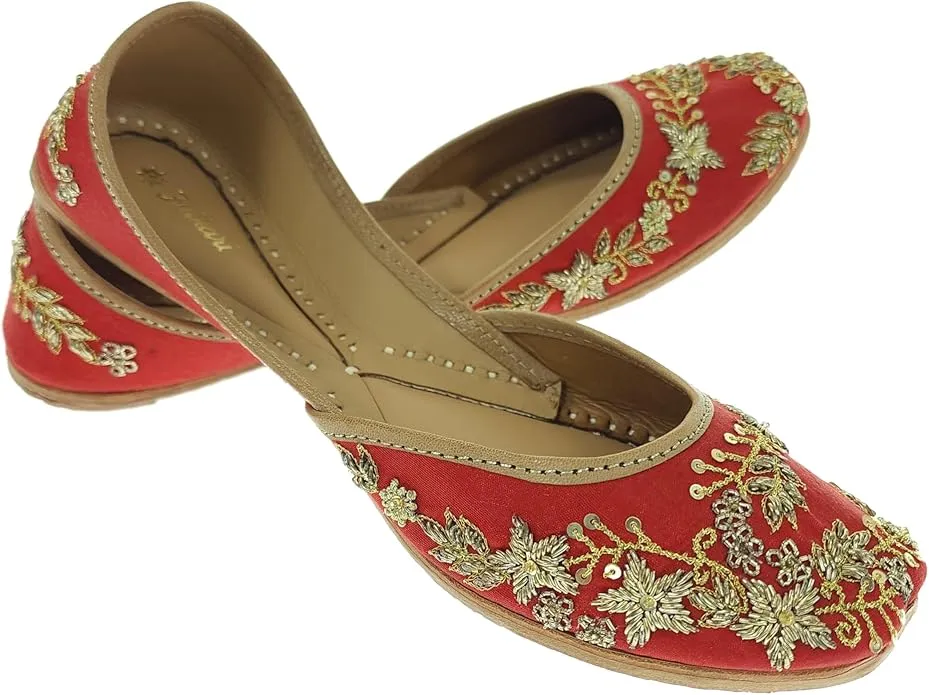
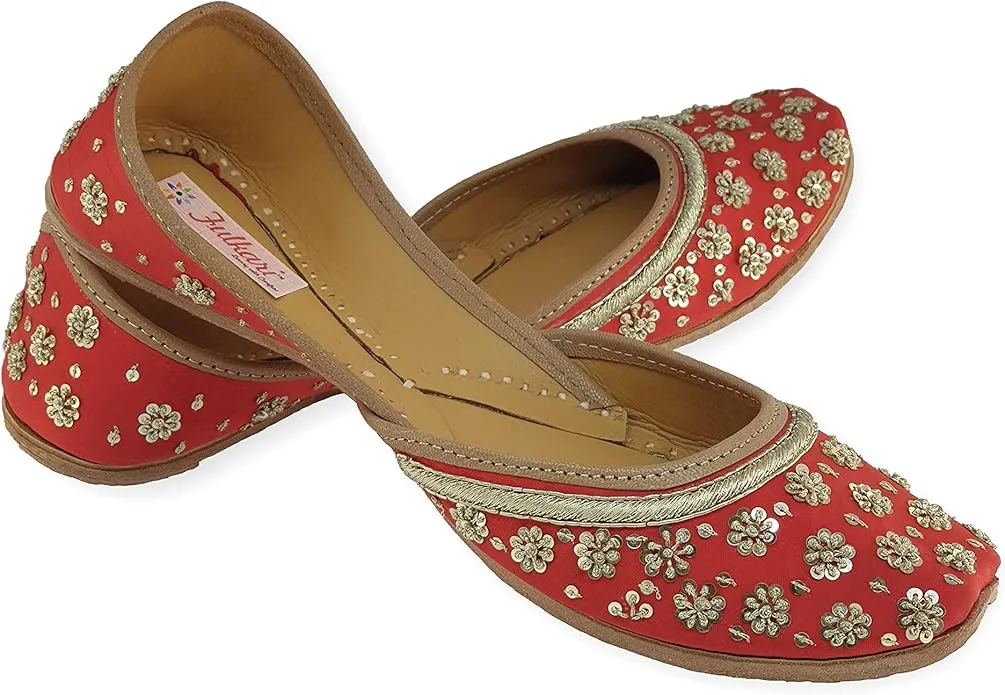
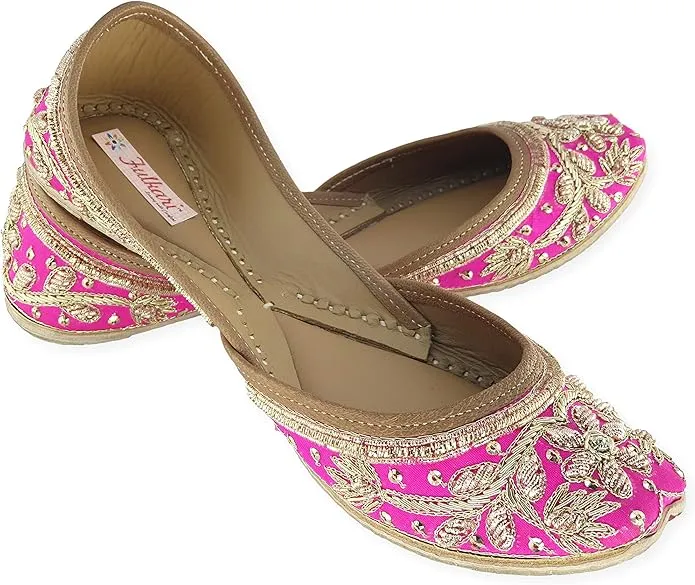
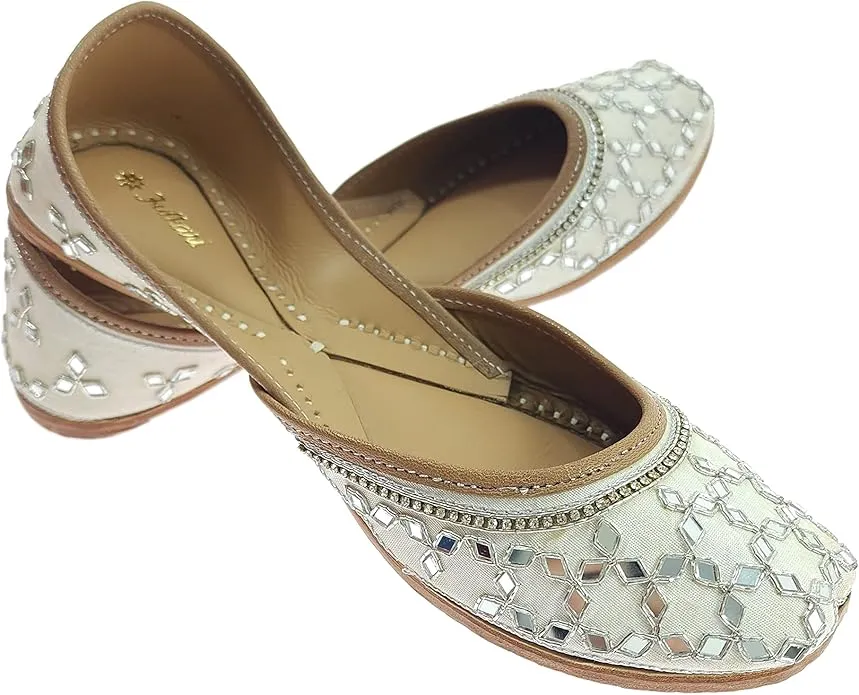
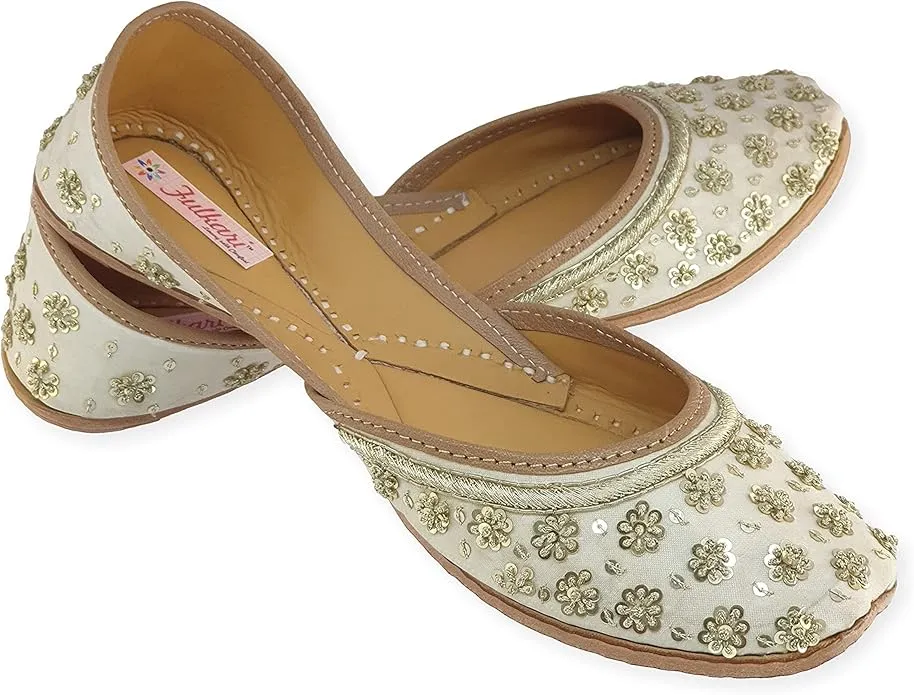
A jutti is most precisely described in English as a traditional flat-soled embroidered shoe from the Indian subcontinent — there is no single English word that covers it, which is why jutti itself has become the standard term in the US market. In South Asian culture and in Indian clothing retail, the word is used directly and without translation, the same way espadrille or mule is used in Western fashion. The closest English descriptors are Indian flat shoe or embroidered slip-on, but none captures the full character of what this footwear represents.
The jutti's closest relative in traditional Indian footwear is the mojari, and the two terms are often used interchangeably in US retail. The distinction is regional: a mojari refers to the Rajasthani version, with a longer pointed toe and a sole that curls upward slightly at the tip. A jutti in its strictest sense refers to the Punjabi fashion version — more rounded at the toe and associated with the Punjab region. In everyday US usage, mojari and jutti are treated as synonyms; most buyers use jutti as the umbrella term. A mojari is a jutti; not every jutti is technically a mojari. Understanding this distinction helps US shoppers navigate listings that use both terms for what is functionally the same style.
What a jutti and a mojari share is their construction: handcrafted, embroidered, and flat-soled. A quality jutti is assembled by hand by artisans working in leathercraft traditions that stretch back centuries. The upper is typically genuine leather — sometimes covered with silk or cotton fabric for embroidery — over a leather sole. These are not leather shoes built on a factory last; every handcrafted pair carries artisan labor in each stitch, which is why jutti culture resonates with US shoppers drawn to non-mass-produced footwear. In Punjabi fashion, the jutti carries cultural weight that no Western shoe equivalent achieves: a bride at her nikah wearing a bridal jutti is as intentional about her footwear as she is about her lehenga. A groom completing his sherwani with embroidered leather shoes is wearing traditional Indian footwear that has accompanied that outfit for generations. South Asian fashion accessories have entered mainstream US style, and the jutti's visibility in Indian clothing retail is one of the most consistent data points.
Which State Is Famous for Jutti in India?
Punjab is the Indian state most famous for jutti — and within Punjab, the city of Patiala is the single most recognized center of jutti craft. Patiala jutti has become its own style category: a type of Indian footwear characterized by heavily embroidered uppers, a flatter profile, and a broader toe than the Rajasthani mojari. This is the version most US buyers encounter when shopping for bridal jutti, and the one that has most thoroughly entered South Asian fashion internationally.
Punjab's association with the jutti goes deeper than commercial production — it is woven into the cultural heritage of the region. In traditional Punjabi weddings, a jutti is not optional footwear but an expected element of the complete bridal and groom look. The custom of jutti chupai (shoe hiding), where the bride's sisters conceal the groom's jutti and return it only in exchange for a negotiated sum, is one of the most well-known traditional wedding rituals in South Asian culture — and it exists because the jutti is the recognized, expected footwear for a Punjabi groom. This depth of traditional association is specific to Punjab in a way that has no equivalent in most other Indian states. The broader Punjab region — both Indian Punjab and Pakistani Punjab — has sustained jutti-making as a cottage industry for centuries, with artisan families in Amritsar, Ludhiana, and Lahore each specializing in specific elements: leather cutting, sole assembly, embroidery, and metallic thread work. Each pair of handmade shoes passes through multiple specialist hands before it is finished.
Rajasthan is the other major state associated with jutti, primarily through the mojari. Rajasthani leathercraft has a distinct regional identity — the curling toe tip and use of real gold and silver thread at the highest price points are specifically Rajasthani contributions to the broader jutti family. Jaipur and Jodhpur are the most recognized centers, and their handmade shoes are a significant part of the local craft economy. For US buyers, Punjab jutti offers everyday-to-formal versatility, while Rajasthani mojari tends toward more elaborate embellishment at the high end. The jutti's regional origins are increasingly part of how informed buyers navigate traditional Indian footwear.
What Are Punjabi Juttis Made Of?
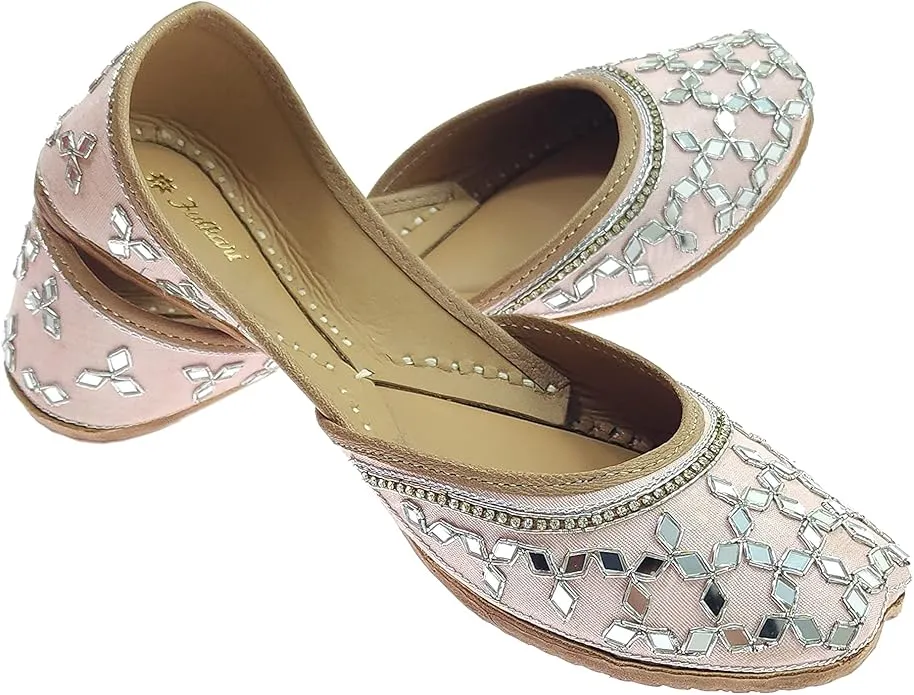
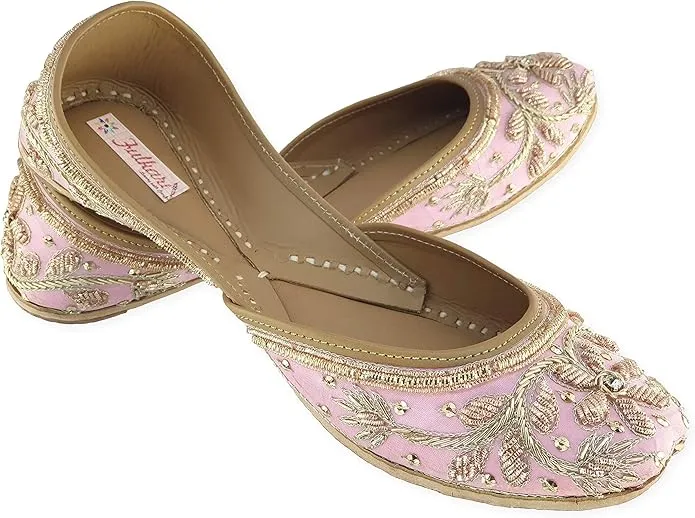
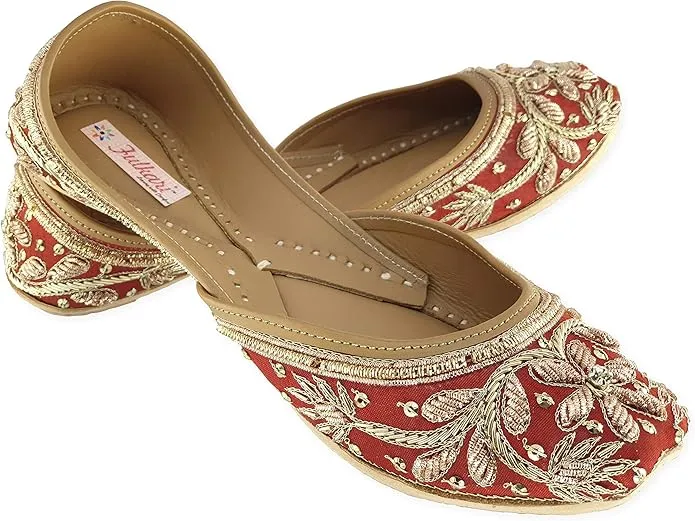
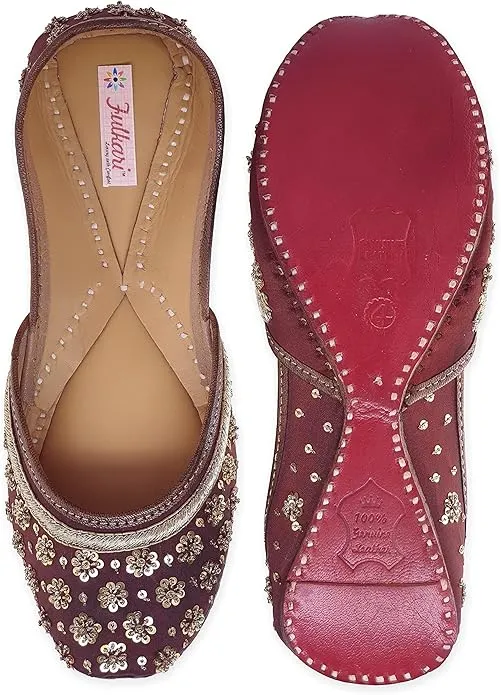
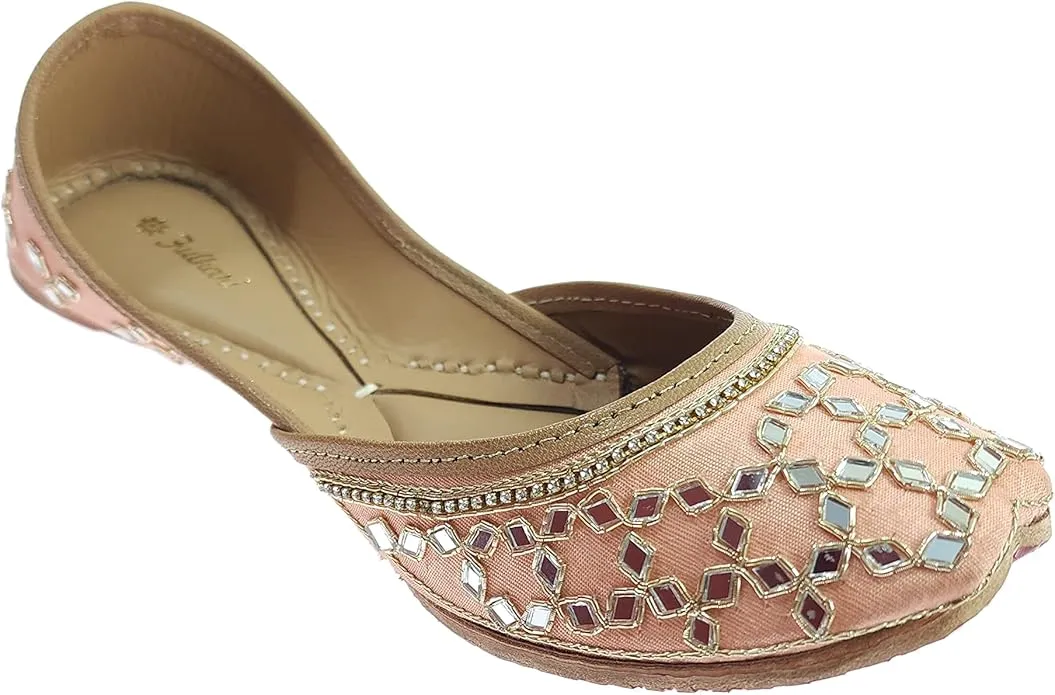
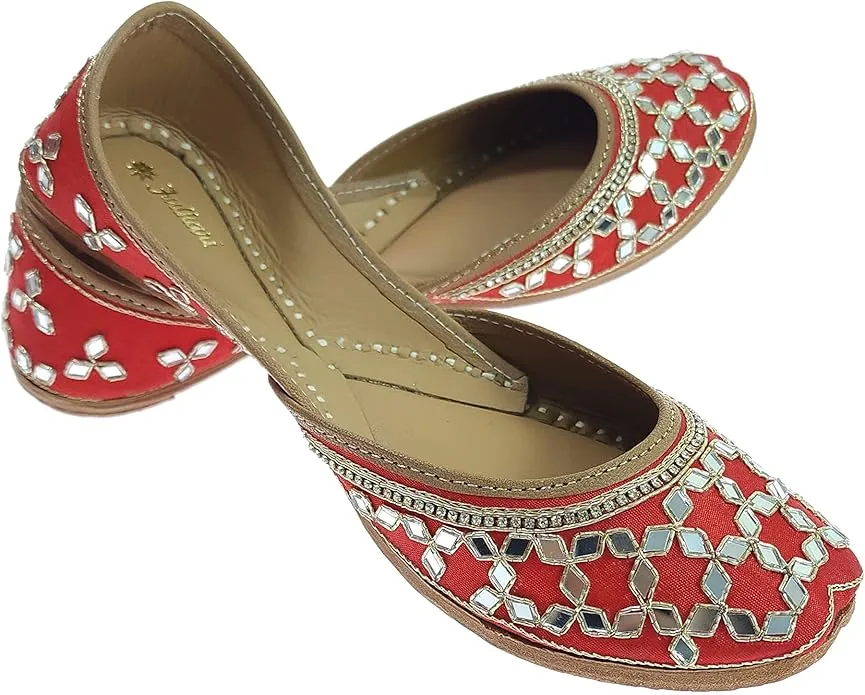
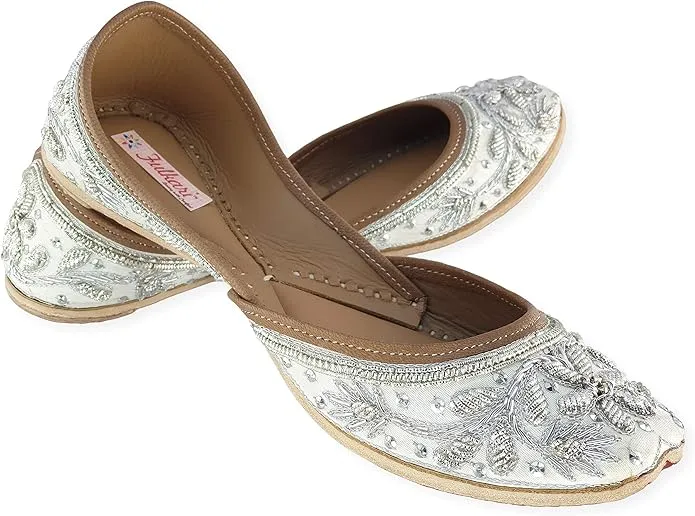
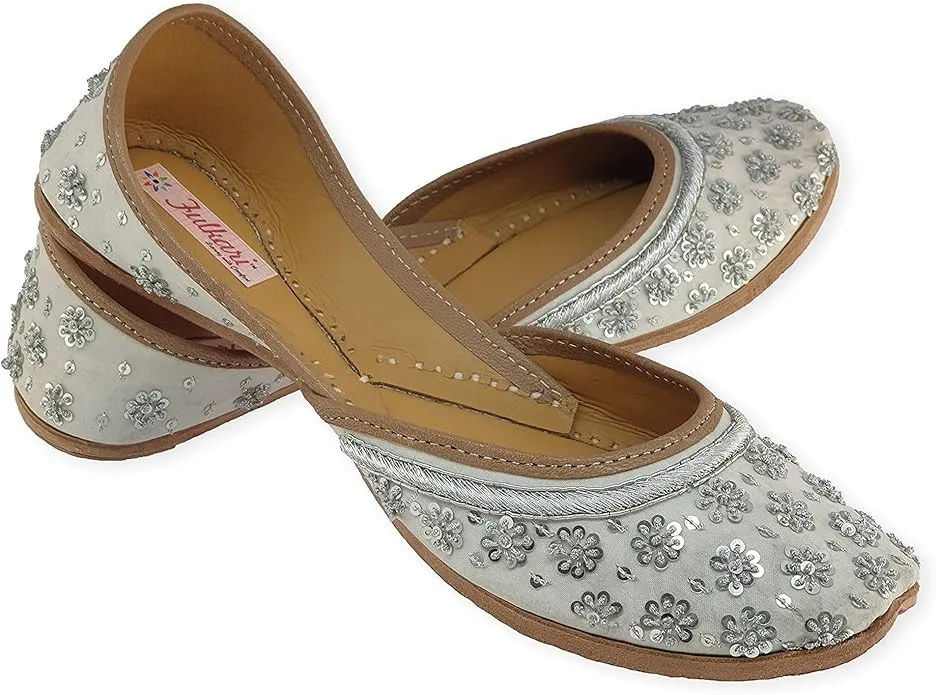
Punjabi juttis are made primarily from leather — tanned cowhide or buffalo hide for the sole and often the upper, with the upper sometimes covered in silk or cotton fabric to create a workable surface for embroidery. The construction involves a leather insole, a leather or rubber outsole, a fabric or leather upper, and the embroidery covering the surface — each assembled by hand in the process that defines authentic Punjabi jutti.
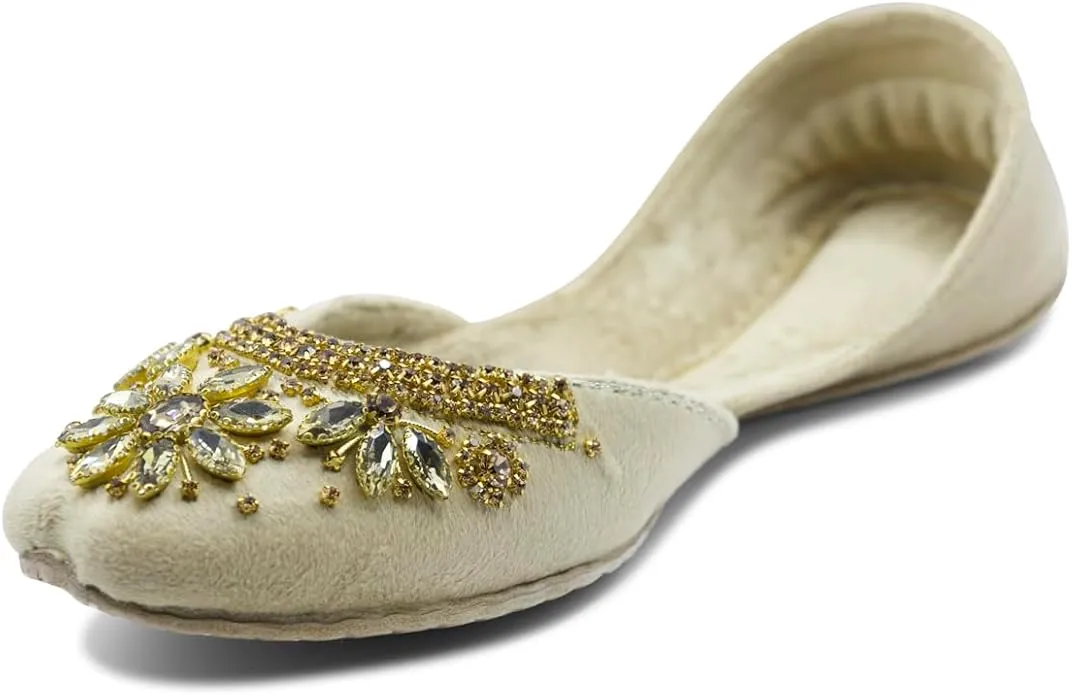
The embroidery is the jutti's most visually defining element and varies most across styles and price points. Traditional embroidery uses cotton thread in geometric or floral patterns — the most common form, producing the colorful, densely patterned surface of everyday and festive styles. At the bridal end, embroidery shifts to silk thread or zari (metallic thread), producing the gold shimmer that makes a handmade bridal jutti a genuine luxury item despite its modest price. The most intricate handmade styles incorporate mirror work, stone setting, and bead embellishment alongside thread embroidery — these traditional designs from Patiala and Amritsar are the most sought-after styles in the US for bridal ethnic wear. As South Asian culture has grown more visible in American fashion, this category of Indian footwear has followed, with US market demand driving production of more varied traditional clothing styles and price points.
The sole construction is equally important to wearability. A quality leather sole conforms to the foot over time — this is the mechanism behind the break-in process that the intro section addresses. A handmade sole that is stitched rather than glued lasts longer and molds to the foot more naturally. In the US market, a stitched leather sole is one of the key indicators buyers use to distinguish authentic handmade jutti from lower-quality alternatives. Construction quality as the primary differentiator in ethnic wear. Vegan leather options using synthetic PU uppers are now widely available, making the jutti accessible to buyers who avoid animal leather — the cotton thread embroidery and sole construction remain consistent with traditional Punjabi jutti craft, with only the upper material substituted. As fashion trends in the US market for ethnic wear have grown, demand for both leather and vegan jutti has expanded in parallel.
Frequently Asked Questions
How do you break in juttis?
You can break in juttis by wearing them for several days with thick, wet cotton socks. The humidity and heat from your feet will form the juttis exactly to your foot pattern and gait, making them the most comfortable pair of shoes you own.
What is jutti called in English?
A jutti is most accurately described in English as a traditional flat-soled embroidered shoe from the Indian subcontinent — there is no single English equivalent, which is why jutti itself has become the standard term in US retail. Its closest relative is the mojari, a Rajasthani version with a more pronounced pointed toe. In everyday US usage, mojari and jutti are treated as synonyms, with jutti serving as the umbrella term for both styles.
Which state is famous for jutti in India?
Punjab is the state most famous for jutti, with Patiala being the single most recognized production center. Patiala jutti is its own recognized style — heavily embroidered, flat-profiled, and broader-toed than the Rajasthani mojari. Rajasthan is the other major jutti state, known for the mojari style with its curling toe tip and elaborate gold and silver thread embroidery at the high end.
What are Punjabi juttis made of?
Punjabi juttis are made from leather soles and uppers — the upper is often covered with silk or cotton fabric to create a surface for embroidery. The embroidery uses cotton thread for everyday styles and silk thread or metallic zari thread for bridal and formal styles. A handmade jutti with a stitched leather sole is the highest-quality construction, conforming to the foot over time for a comfortable fit. Vegan PU leather alternatives are also widely available.
What is the difference between jutti and mojari?
A jutti is the Punjabi fashion version of the traditional Indian flat shoe — rounded or slightly pointed at the toe, associated with Punjab and widely used across South Asian culture for weddings and festivals. A mojari is the Rajasthani version — more pronounced pointed toe with a sole that curls upward at the tip. In US retail, both terms are used interchangeably, with jutti serving as the umbrella term for the broader category of traditional Indian footwear.
How should juttis fit?
Juttis typically run narrow and slightly small compared to US standard sizing. Most buyers are advised to size up by half to one full size when ordering. A new jutti will feel snug — the leather sole and upper are stiff before break-in and will conform to the foot over time with wear. For bridal wear, start breaking in your jutti several weeks before the ceremony so they are comfortable on the day.