Bridal Caftans Collection
What is the best bridal caftan for 2026?
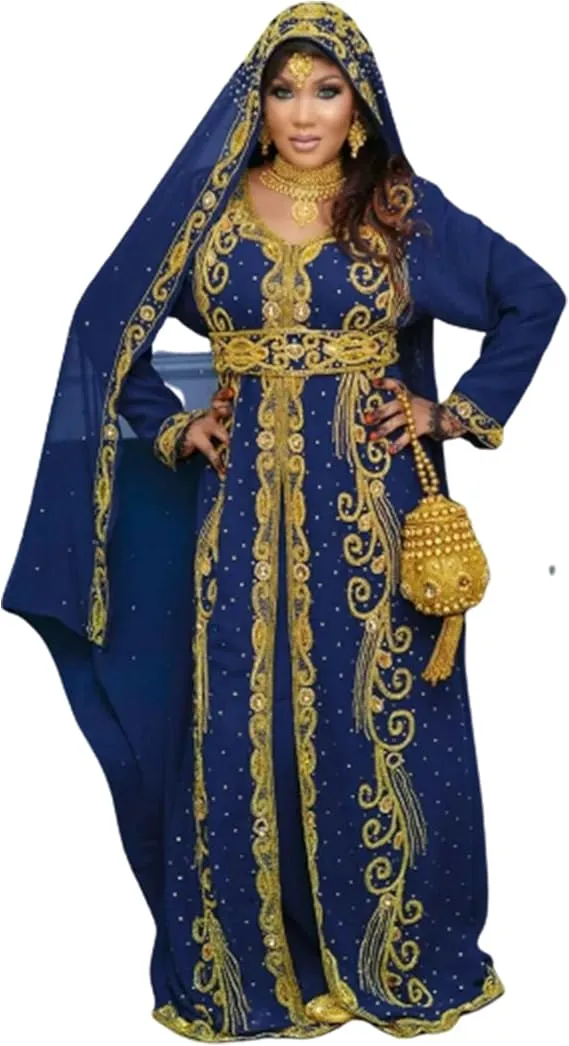
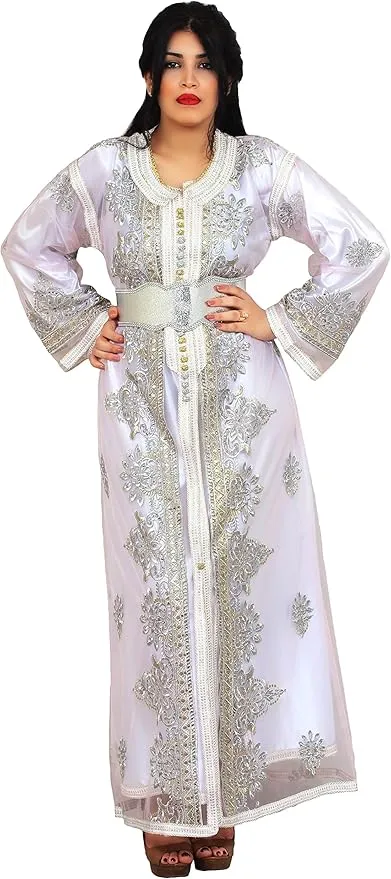
The embroidered Moroccan caftan (takchita) leads for formal nikah ceremonies. This Islamic bridal wear draws from Middle Eastern culture, featuring two layered pieces and heavy hand-stitched embroidery in gold or silver thread across richly colored or white fabric. The strongest bridal caftan trends for 2026 fall into four distinct styles — each suited to a different occasion, season, and aesthetic. READ MORE BELOW...
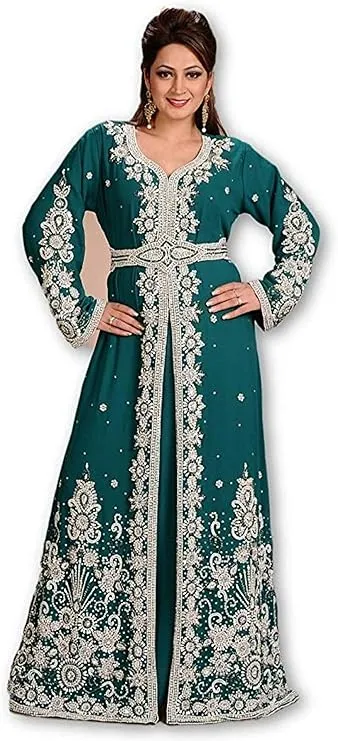
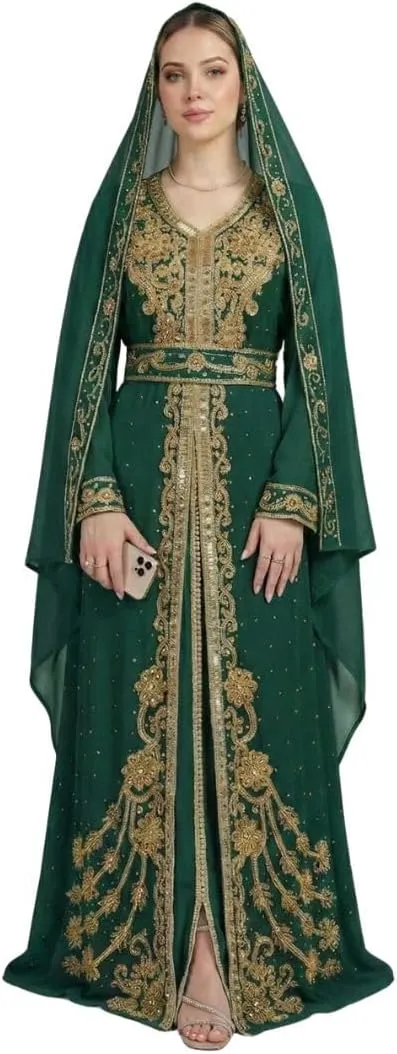
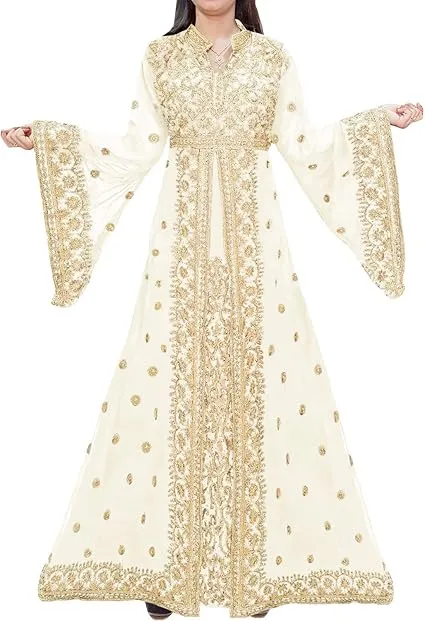
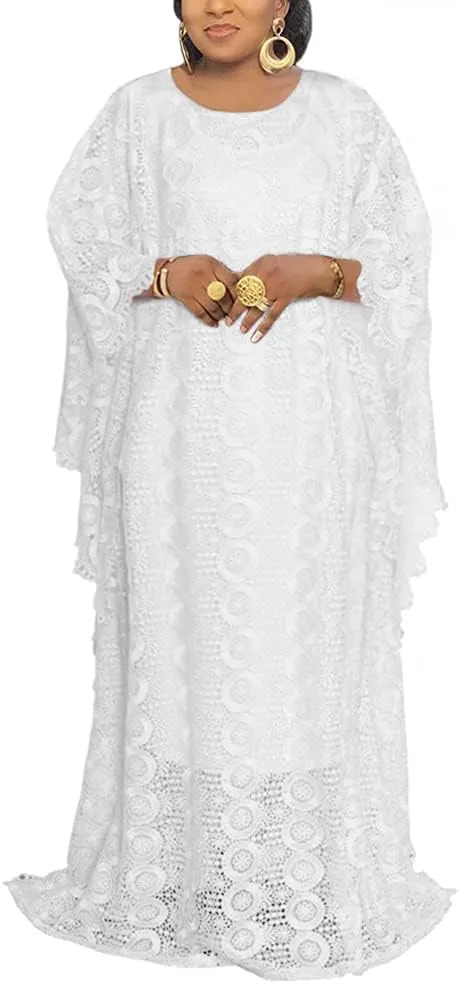
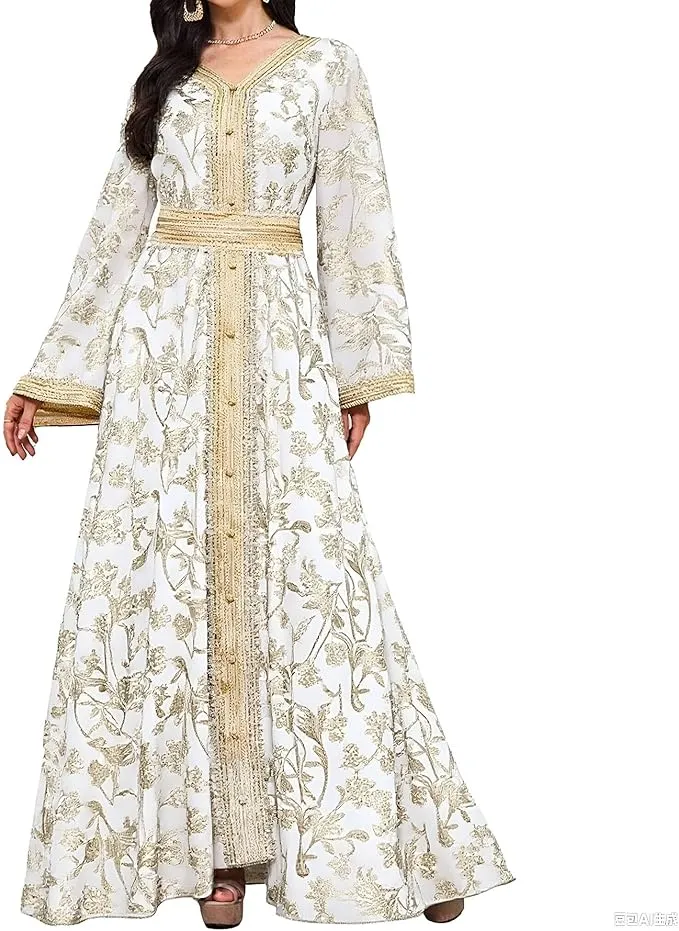
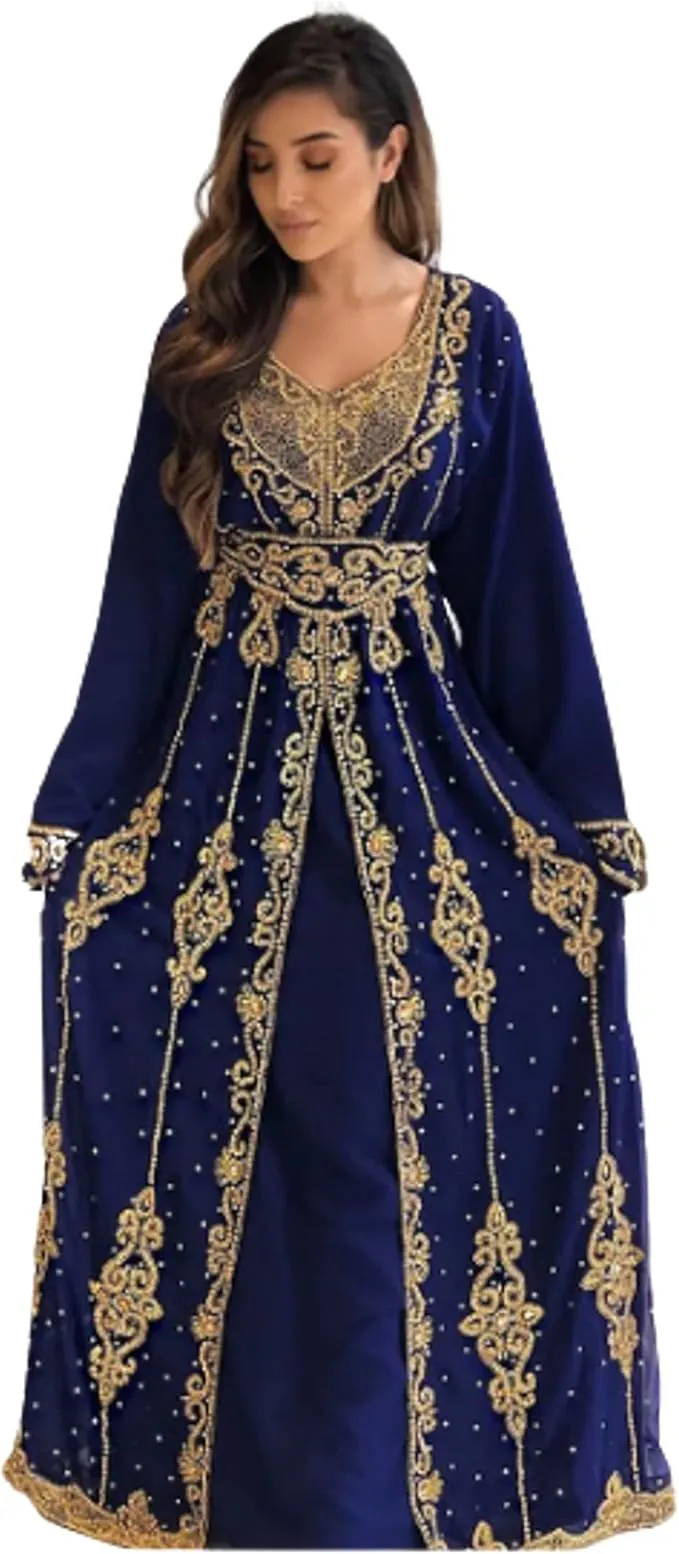
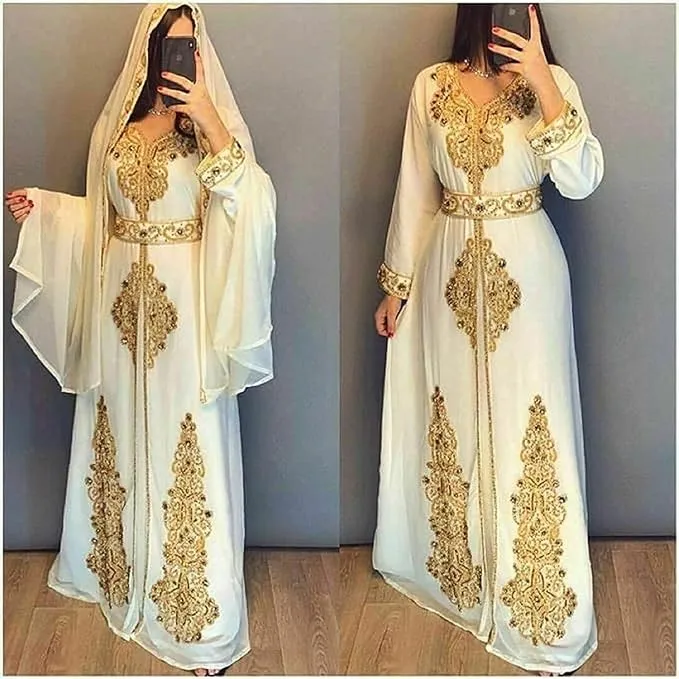
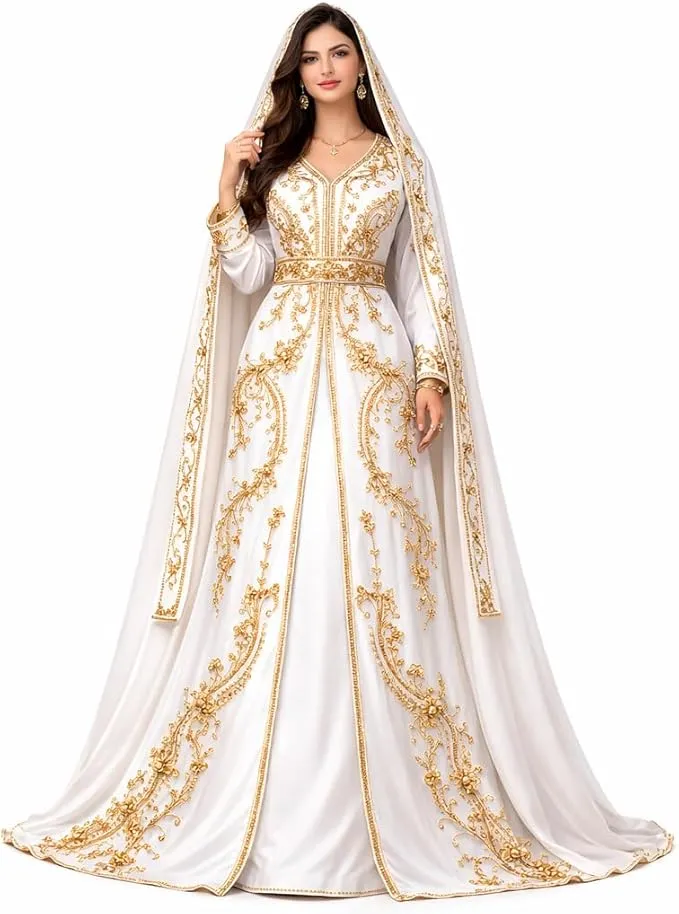
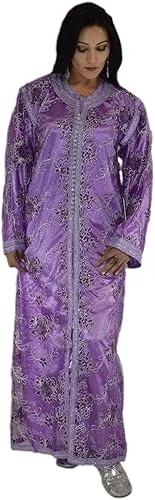
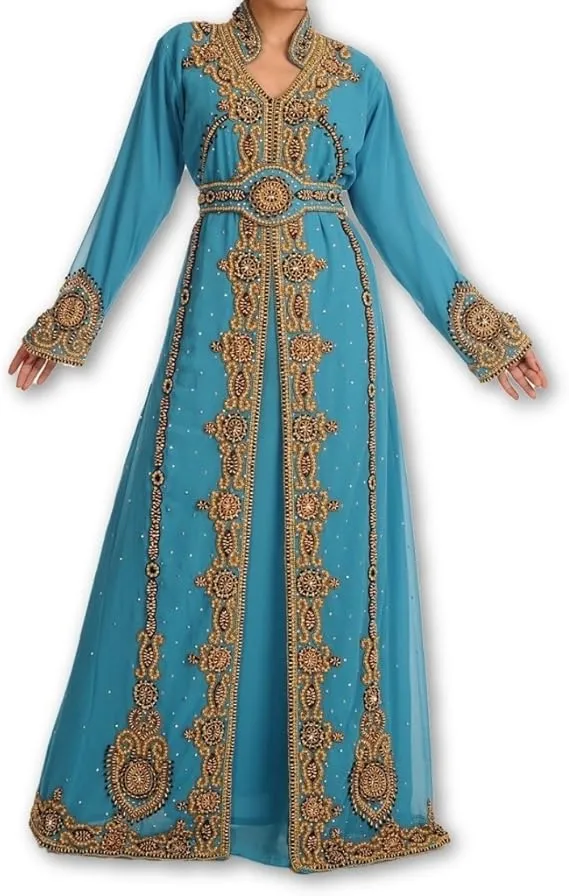
Best bridal caftan for 2026?
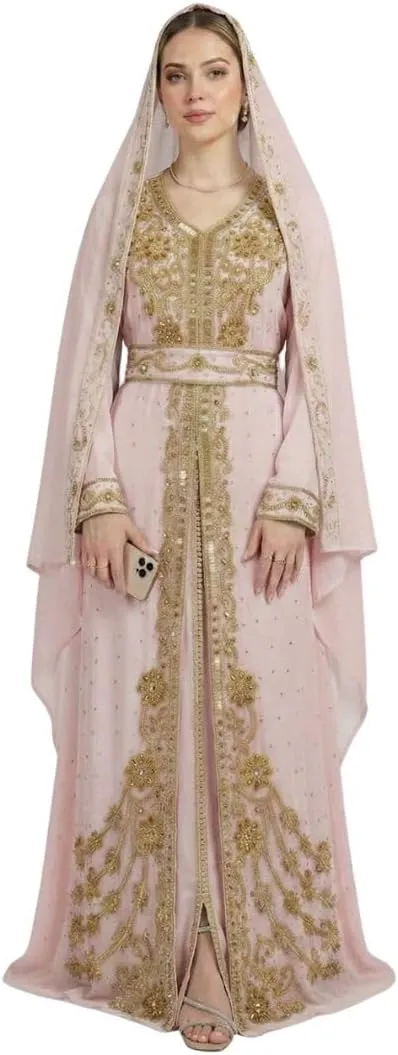
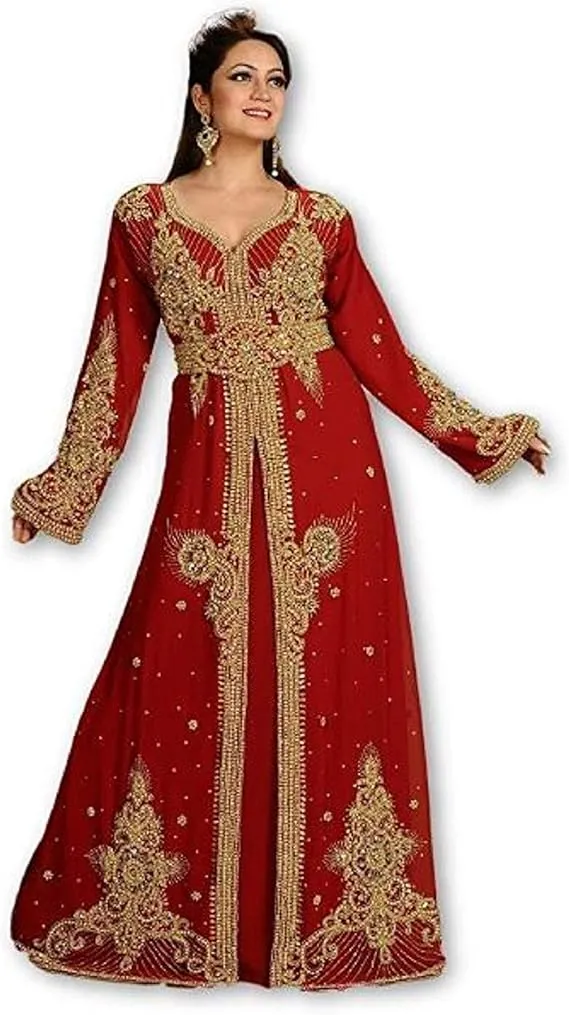
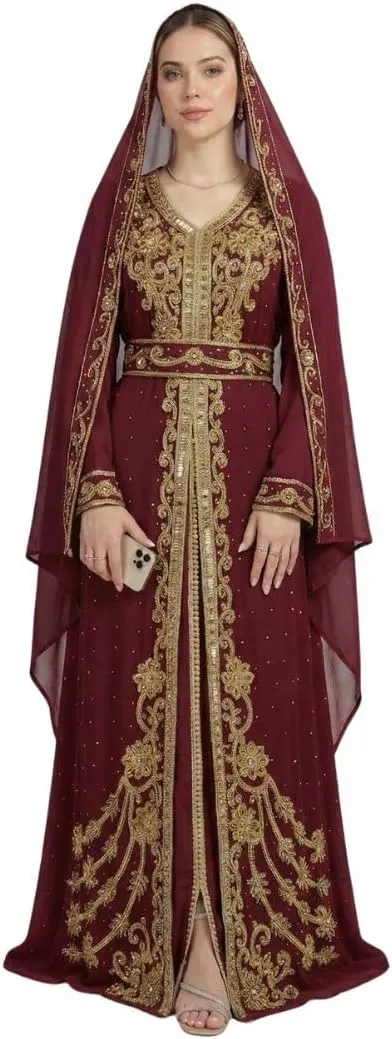
The Moroccan caftan takchita is the first of the four styles and the best bridal caftan for 2026. The embroidery on this traditional bridal caftan can take weeks to complete — common design elements include geometric patterns, floral motifs, and arabesque borders that carry the visual weight of a fully formal wedding dress. Bold colors — deep emerald, burgundy, royal blue — are prominent in this style and are increasingly chosen by US brides who want their Islamic wedding outfits to honor heritage rather than default to a bridal caftan in white.
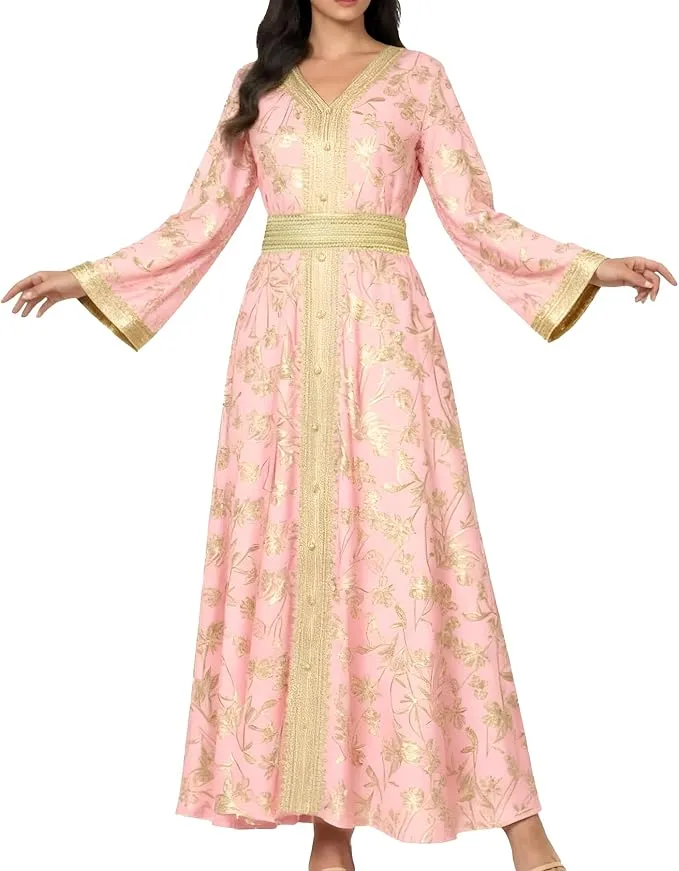
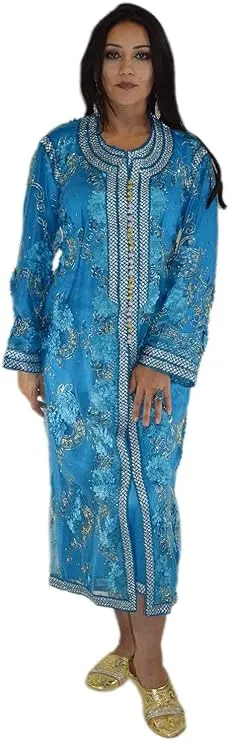
The second style is the pastel caftan, which leads for pre-wedding events and summer wedding trends for 2026. Soft blush, lavender, sage green, and powder blue dominate summer wedding trends for 2026 in the caftan category. For a beach wedding or outdoor summer ceremony, a caftan in chiffon or silk georgette is the most practical and photogenic choice — lightweight fabric that moves beautifully in outdoor settings. Pastel caftans in this style are also widely worn as wedding guest attire at Muslim weddings, making them a versatile purchase beyond the wedding day itself.
The bohemian style caftan is the third style, and has emerged as the top choice for destination weddings. Bohemian chic style in bridal caftans typically features loosely embroidered or printed lightweight fabric, an unstructured silhouette, and earthy or oceanic tones. For a destination wedding in a warm climate — beach, garden, or outdoor terrace — bohemian chic caftans in cotton or linen provide the comfort of casual wear with the visual impact of a formal wedding dress. This is the style most open to be custom made because the lack of structured embroidery means fabric, length, and color can be altered more easily.
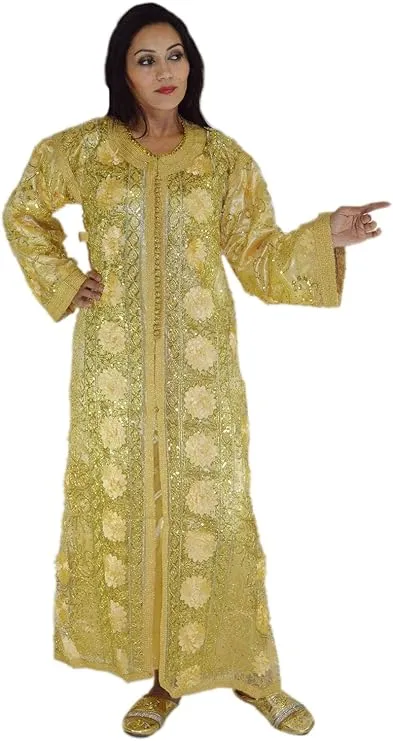
The Hollywood high fashion caftan rounds out the 2026 picture as the fourth style. This is the luxury fabric version of the caftan that can be custom made — typically in silk charmeuse, heavy satin, or metallic brocade — worn as a reception change outfit after the main nikah ceremony. These caftans are open to be custom made. It functions as both honeymoon fashion and wedding evening wear, crossing over naturally into post-wedding celebrations.
What is a bridal caftan?
A bridal caftan is a long, flowing Islamic marriage dress with centuries of history as a garment of ceremony and status across Middle Eastern, North African, and West African cultures. Because Islam spread out from these areas, abaya-style bridal caftans are considered indisputably Islamic and a universal choice for Muslim brides from every ethic background. It's also a size-inclusive Muslim wedding dress option available to US brides in 2026 and doesn't need to be custom made. Whether you are planning a nikah ceremony, a beach wedding, or a formal reception, a bridal caftan offers a culturally grounded alternative to Western bridal silhouettes.
It is typically floor-length, often cinched at the waist with a bridal belt, and worn with a matching or contrasting inner dress in the layered Moroccan caftan takchita style. Unlike a structured Western wedding gown, the bridal caftan dress drapes freely — its silhouette is created by the fabric itself rather than by internal construction. This makes it inherently customizable to the wearer's body and deeply modest Islamic bridal wear by design.
In the United States, the bridal caftan has moved well beyond a niche cultural choice. US Muslim brides from Moroccan, Lebanese, Algerian, Tunisian, and West African backgrounds have worn caftans as wedding dresses for generations. More recently, the caftan's ease, modesty, and visual drama have attracted brides from South Asian, convert, and mixed-heritage backgrounds who want a wedding dress that honors Islamic values while offering something visually distinct from the lehenga or anarkali. For a destination wedding, a beach wedding, or a pre-wedding event like a mehndi or engagement party, the caftan is increasingly the first choice rather than an afterthought - for bridalwear and honor dresses.
Luxury fabric guide for bridal caftans
Fabric is the single most important decision in a bridal caftan dress purchase. The right luxury fabric determines how the caftan drapes, photographs, breathes, and holds its embroidery — and it determines whether the caftan reads as a casual summer option or a formal wedding dress.
Silk is the gold standard luxury fabric for bridal caftans. It drapes with a fluidity that no synthetic fabric matches, photographs with depth and luminosity, and works across all seasons depending on weight. Silk charmeuse is especially popular for reception and Hollywood high fashion caftans, while silk chiffon suits the bohemian style, beach weddings, destination wedding, outdoor ceremonies and summer wedding trends. Silk is also the most customizable luxury fabric to dye, embroider, and alter to a custom design. It is also the most expensive boutique-style choice.
Georgette is heavier, but more accessible than silk, making it the practical luxury fabric Muslim wedding wear for mosque and indoor ceremonies. It's perfect for traditional winter nikkahs, holds up to heavy embroidery particularly well and layers beautifully in the takchita two-piece style and creates a bridal silhouette that moves with the wearer.
Velvet is the premier luxury fabric for traditional and winter wedding bridal caftans. Heavy velvet holds embroidery without puckering and carries a visual richness that reads as deeply ceremonial — it is the luxury fabric most associated with Moroccan and Lebanese traditional bridal caftan culture. For US brides planning a winter indoor wedding, velvet is the most impactful -and expensive- choice.
Brocade and jacquard are woven luxury fabrics with pattern built into the textile itself — a design choice that creates structure and visual complexity without requiring surface embroidery. Brocade is sometimes layered with organza for a heightened visual effect. Jacquard is more lightweight and can easily replace silk caftans for summer wedding trends. Brocade is popular for traditional culture-influenced caftans and in jacquard is perfect Hollywood high fashion styles where the fabric's own design becomes the statement.
Bridal caftans for beach weddings and destination weddings
The bridal caftan is arguably the ideal Muslim wedding dress for a beach wedding in the US bridal market. Its flowing, unstructured silhouette moves naturally in coastal breezes, its lack of a train avoids sand complications, and its modest coverage makes it appropriate for outdoor settings where a heavily structured gown would be impractical. For a beach wedding, silk and jacquard are the recommended fabrics — both breathe in heat and photograph beautifully against natural light.
For a destination wedding in a warm climate, the caftan's packability is a practical advantage over a structured wedding dress. A silk or chiffon caftan folds without permanent creasing, travels in carry-on luggage, and requires no steaming on arrival in most cases. This makes the caftan the most destination-friendly modest wedding dress option available.
US Muslim brides planning a destination wedding in Morocco, Turkey, the UAE, or West Africa increasingly choose a locally inspired caftan style that connects their Muslim wedding wear to the destination itself. A Moroccan bridal caftan worn at a Moroccan wedding location creates a cohesive visual story that a Western wedding dress cannot replicate. Several of our caftan styles in this collection are directly inspired by these regional traditions and are available on Amazon, some with US Prime shipping.
Plus size bridal caftans
The bridal caftan dress is one of the most genuinely plus size-friendly Islamic bridal dresses available for the US bridal market. Its flowing silhouette, whose only structure is a belt, is fundamentally flattering across a wide range of body types — it does not require the boning, structured seaming, or precise alteration that a conventional wedding gown demands. For plus size brides, this means a shorter path from purchase to wedding-ready.
Plus size caftan designs typically feature the same graceful silhouette as regularly sized caftans without restriction. The takchita layered style is especially popular among plus size brides because the outer layer falls well over curves. Bold embroidery and rich colors work particularly well on plus size caftan silhouettes — the visual weight of the embroidery draws attention to the design rather than the body.
All caftan styles in our collection for bridalwear or honor dresses are available in a range of sizes through Amazon without the need for a custom design. We recommend checking the size chart on each individual Amazon listing and reviewing seller notes about customizable sizing options before ordering.
Bridal caftans as wedding guest attire and honeymoon fashion
The bridal caftan's versatility extends well beyond the wedding day. As wedding guest or honor dress attire for a Muslim wedding, a caftan in a non-white color — dusty rose, sage green, champagne, or navy — is a universally appropriate choice that respects modesty requirements without competing with the bride. Many US Muslim women purchase a caftan specifically as wedding guest attire for summer and fall weddings, where the style's breathability and cultural resonance make it the most appropriate formal option.
As honeymoon fashion, the caftan transitions naturally from wedding celebrations to post-wedding travel. A silk or printed kaftan worn as an abaya or evening garment on a beach honeymoon functions simultaneously as modest coverage and effortless resort wear. The same caftan worn at a wedding reception can be repacked for a honeymoon destination without any styling adjustment — making it among the most cost-effective and customizable wedding purchases a bride can make.
Frequently Asked Questions
What is a bridal caftan?
A bridal caftan is a long, flowing Muslim wedding dress rooted in Middle Eastern and North African culture. It is typically floor-length, often cinched at the waist with a bridal belt, and made from fabrics like silk, velvet, georgette, or brocade. Unlike a conventional wedding gown, a bridal caftan requires no structured boning or complex alteration, making it one of the most immediately wearable and size-inclusive wedding dress options available to US brides, boasting little or no customization.
What is the best bridal caftan style for 2026?
The strongest bridal caftan styles are the embroidered Islamic wedding outfits for formal nikah ceremonies, the pastel caftan for summer wedding trends in 2026 and pre-wedding events, the boho chic style caftan for destination weddings and beach weddings, and the Hollywood high fashion caftan in luxury fabric for evening wear and honeymoon fashion. This choice is open to custom design. The right choice depends on the occasion, season, and the bride's personal aesthetic.
Is a bridal caftan a good choice for a beach wedding?
Yes. A bridal caftan is one of the best Muslim wedding dress choices for a beach wedding. Its flowing unstructured silhouette moves naturally outdoors and lightweight luxury fabrics like jacquard and silk georgette breathe in heat and photograph beautifully in natural light. For a destination wedding or beach wedding, a chiffon or cotton caftan is more practical than a structured gown.
What luxury fabric is best for a bridal caftan?
Silk is the gold standard luxury fabric for bridal caftans — it drapes beautifully, photographs with depth, and is the most customizable. Jacquard is a lighter alternative suited to beach weddings and destination weddings. Velvet is the best luxury fabric for traditional and winter wedding caftans, along with georgette. Brocade works well for structured reception styles.
Are bridal caftans available in plus sizes?
Yes. The bridal caftan is one of the most naturally plus size-friendly Muslim wedding dress options available. Its flowing silhouette is flattering across a wide range of body types without requiring complex alteration. Plus size caftan designs typically feature layered takchita cuts that create a graceful silhouette. All styles in our collection are available through Amazon with size charts and require little or no customization.
Can a bridal caftan be worn as wedding guest attire?
Yes. A caftan in a non-white color — dusty rose, sage green, champagne, or navy — is widely appropriate as wedding guest attire at Muslim weddings. It respects modesty requirements, suits summer wedding trends, and is culturally resonant in Middle Eastern, North African, and West African wedding contexts. Many US Muslim women purchase a caftan specifically as wedding guest attire for summer and fall weddings.
Can a caftan double as honeymoon fashion?
Yes. A silk or printed caftan transitions naturally from wedding celebrations to post-wedding travel as honeymoon fashion. It functions as modest coverage, resort wear, and evening wear simultaneously. The same caftan worn at a reception can be repacked for a beach honeymoon destination without any styling adjustment — making it one of the most customizable and cost-effective wedding purchases a bride can make.
Where can I buy a bridal caftan in the USA?
Bridal caftans are available through Amazon, where all styles in our collection are listed with US shipping. Our Hijabi Bridal collection includes Moroccan, Dubai, and African boubou caftan styles in georgette, jacquard and brocade embroidered fabrics across a range of colors and sizes.