Are Fake Nails Haram in Islam?
By Hijabi Bridal Team ·
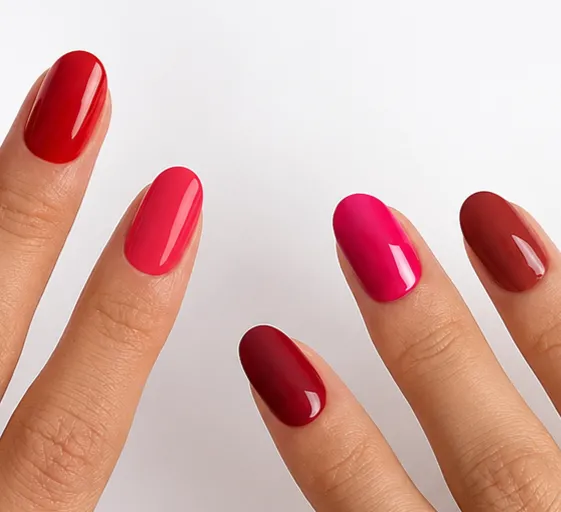
Are fake nails haram in Islam? Fake nails are not haram in themselves. What makes them a problem is whether they stop water from reaching your natural nails during wudu (ablution) and ghusl. Nails that block water and can't come off before you wash leave your purification incomplete, and without valid purification, your salat isn't valid either. Nails you can remove cleanly before washing don't have that problem. This guide answers the questions Muslim women ask most about fake nails, from acrylics and gel to press-on nails, praying with nails on, and wearing them during your period.
Are fake nails haram in Islam?
When women ask whether fake nails are haram, they're usually asking two questions at once. The first is about purification: can I still make wudu and pray? The second is about adornment: can a Muslim woman beautify her nails at all?
On adornment, Islam allows women to beautify themselves. Henna on the hands and nails has been part of Muslim beauty for centuries, and adornment at home, for a spouse, and among other women is part of everyday life. Cosmetic enhancements aren't forbidden simply for being cosmetic.
The real question is ritual purity. Under Islamic law, wudu is only complete when water reaches every part of the limbs being washed, including the fingernails. Anything that forms a waterproof layer over the nail, such as nail polish, glued-on acrylics or gel nails, acts as a barrier. If the barrier stays on while you wash, the wudu isn't complete, and a prayer performed without complete wudu isn't valid.
Is it haram to have fake nails in Islam?
Having fake nails isn't haram. Letting them come between you and your prayer is. Wudu is needed before prayer whenever it has been broken, and ghusl is needed after menstruation, after intimacy, and after postnatal bleeding ends. Both depend on water physically touching the skin and nails. That's why Islamic jurisprudence on personal grooming treats fake nails as a matter of hygiene and religious observance, not fashion trends. Nails that can't come off before you wash leave you choosing between your manicure and your salat, and that is where the sin lies.
Is wearing fake nails a sin?
Wearing fake nails isn't automatically a sin. Whether it becomes one depends on three things.
Purification. If your nails prevent a complete wudu or ghusl and you pray anyway, or you miss prayers because you can't take them off, the nails have become a problem. This matters more than anything else.
Intention and modesty. Modesty in Islam covers how a woman presents herself in public, not only what she wears. Neat, natural-looking nails sit comfortably within women's modesty. Very long, heavily decorated nails worn in public to draw attention don't. Cultural norms also shape what reads as modest: in some communities short neutral nails are ordinary, while in others any artificial nails stand out. Many Muslim women in the US and UK keep short, simple nails for everyday wear and save bolder designs for home, weddings and women-only gatherings. Social media influence and fashion trends in America and the UK tend to push longer, more elaborate sets, so it helps to decide what fits your own standard of modesty rather than what's trending.
Imitation and body modification. A hadith in Sahih al-Bukhari and Sahih Muslim prohibits adding hair extensions, and some Muslims extend that concern to fake nails. Religious interpretations differ here. Nails aren't hair, artificial nails are clearly cosmetic rather than an attempt to deceive, and they're temporary rather than a permanent body modification. Within the limits, Islam leaves women personal freedom in how they adorn themselves.
Can Muslims wear fake nails?
Yes, Muslims can wear fake nails as long as they don't prevent wudu and ghusl. In practice, the nails have to come off cleanly and quickly whenever you wash for prayer, then they can go back on afterward. That rules some options in and others out.
Salon nail extensions cause most of the difficulty, because the nail care industry is built around long-wear sets. Acrylic nails, gel nails, gel polish and dip powder all bond to the natural nail. They're designed to stay on for two to three weeks, and removing them takes soaking in acetone or filing, usually at a salon. You can't soak off an acrylic set before Dhuhr and reapply it before Asr, so for a woman who prays five times a day, wearing them means either an incomplete wudu or missed prayers. Many Muslim women only wear salon sets during their period and remove them before ghusl.
Salon sets also come with health considerations. Nail products sold in the US and UK are regulated as cosmetics, and the FDA's guidance on nail care products explains how their cosmetic ingredients should be used safely. Repeated filing and acetone removal can also thin and weaken natural nails, so nail salon safety is worth weighing alongside the religious question.
What type of nails are halal?
Two questions settle it for any type of nail: does it block water from reaching the nail, and can you take it off cleanly before every wudu?Nail type
Blocks water?
Removable before each wudu?
Works with daily prayer?
Regular nail polish
Blocks water? Yes
Removable before each wudu? Only with remover, and residue often stays
Works with daily prayer? No
Breathable nail polish
Blocks water? Disputed
Removable before each wudu? Only with remover
Works with daily prayer? Disputed
Gel polish
Blocks water? Yes
Removable before each wudu? No, needs soaking or filing
Works with daily prayer? No
Acrylic nails
Blocks water? Yes
Removable before each wudu? No, needs a salon or acetone
Works with daily prayer? No
Dip powder
Blocks water? Yes
Removable before each wudu? No, needs soaking
Works with daily prayer? No
Press-on nails with liquid glue
Blocks water? Yes
Removable before each wudu? Difficult, and glue residue stays
Works with daily prayer? No
Press-on nails with glue tabs
Blocks water? Only while worn
Removable before each wudu? Yes, in seconds
Works with daily prayer? Yes
Henna
Blocks water? No
Removable before each wudu? Not needed
Works with daily prayer? Yes
Henna stains the nail rather than coating it, so water still reaches the nail. For color, shine and shape, press-on nails applied with removable glue tabs are the other option that works with daily prayer. What makes them halal in practice is that the whole set comes off before wudu and goes back on afterward, so they meet halal beauty standards without asking you to give up your look.
Halal certification on a nail product usually speaks to its ingredients, such as the absence of alcohol or animal-derived materials, rather than whether water reaches the nail. Ingredients still matter to many women, so if you care about both, look for vegan nail options with clear labeling and pair them with removable glue tabs.
Is it okay to wear press-on nails in Islam?
Yes, as long as they come off before wudu. Press-on nails aren't haram; what matters is how they're attached.
Press-ons applied with liquid nail glue behave much like acrylics. The glue bonds to your nail, removal is slow, and residue left behind can still block water. Liquid glues also commonly use alcohol-based solvents. Press-ons applied with alcohol-free glue tabs peel off in seconds, especially after a little lotion or warm water, and leave the nail clean for washing. After wudu, dry your nails and reapply with fresh tabs.
For step-by-step sizing, application and removal, see our complete guide to halal press-on nails.
Is it haram to wear fake nails during your period?
No. Wearing fake nails during your period isn't haram, and it's one of the easiest times to wear them. During menstruation a Muslim woman doesn't pray, so she isn't making wudu for salat, and the water-barrier question largely falls away. Many women use these days to enjoy a fuller manicure as a bit of self-care.
There's one important catch: all nails, polish and glue residue must come off before the ghusl that ends your period. Ghusl, like wudu, requires water to reach the nails. If anything is still on when you bathe, your ghusl isn't complete, and you can't pray until it is. Press-ons on glue tabs come off in seconds before ghusl. Acrylics or gel applied mid-period may need a salon appointment timed to the end of your cycle.
Can I do my nails while on my period?
Yes. Nothing in Islamic law prohibits nail care, nail polish or fake nails during menstruation. Just plan to remove everything before ghusl.
Can we remove nails during periods in Islam?
Yes. You can remove fake nails during your period.
Can I pray if I have fake nails on?
It depends on when and how you put them on.
If you applied them before wudu, the wudu isn't complete, because water didn't reach your nails. Remove them, make wudu, then pray.
If you applied press-ons with alcohol-free glue tabs after wudu, your wudu stays valid and you can pray with the nails on until your wudu breaks. Before your next wudu, take them off.
For mosque etiquette, many women prefer short, understated nails for congregational prayer and keep more decorative sets for home, Eid and weddings.
Can I pray with press on nails?
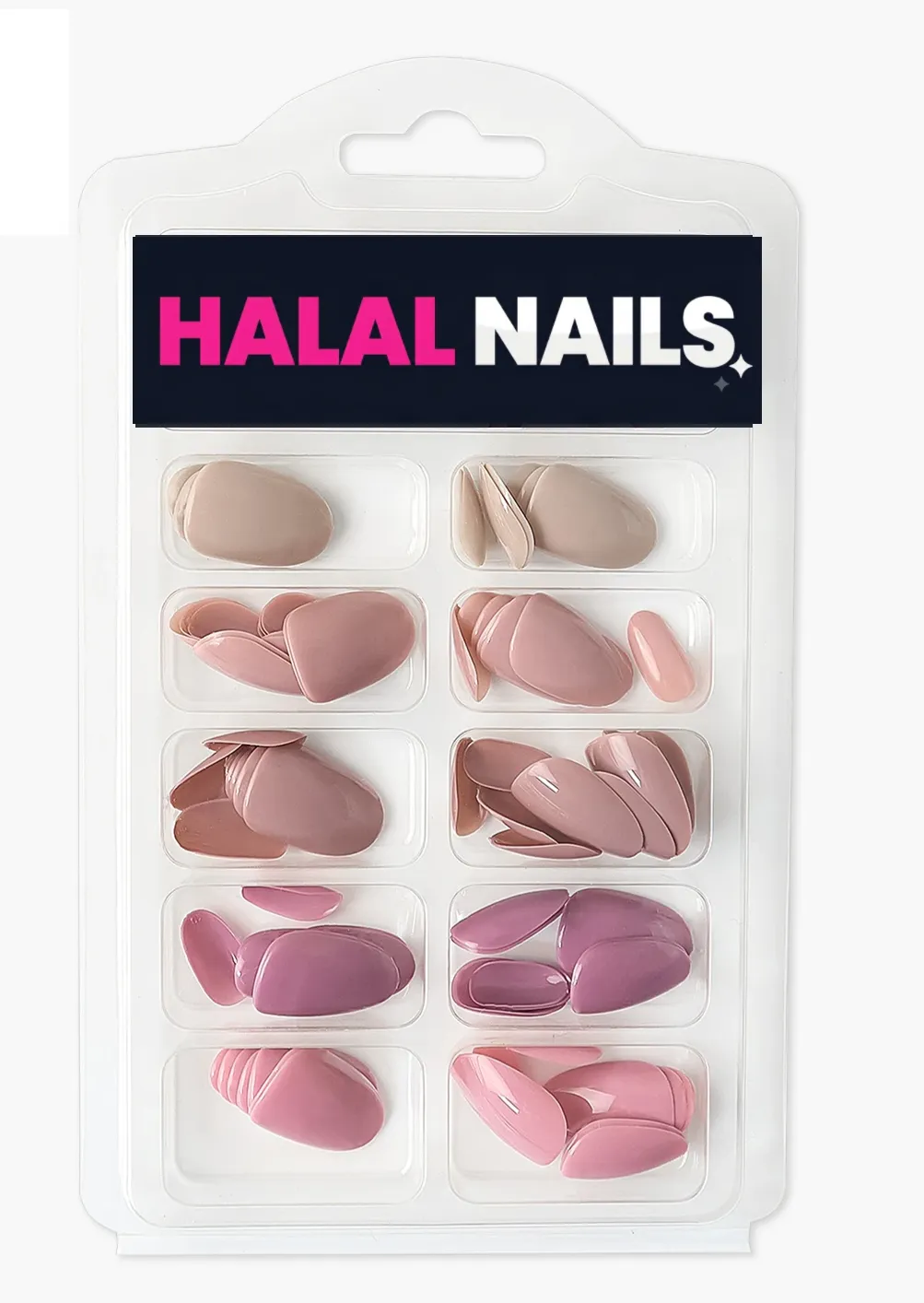
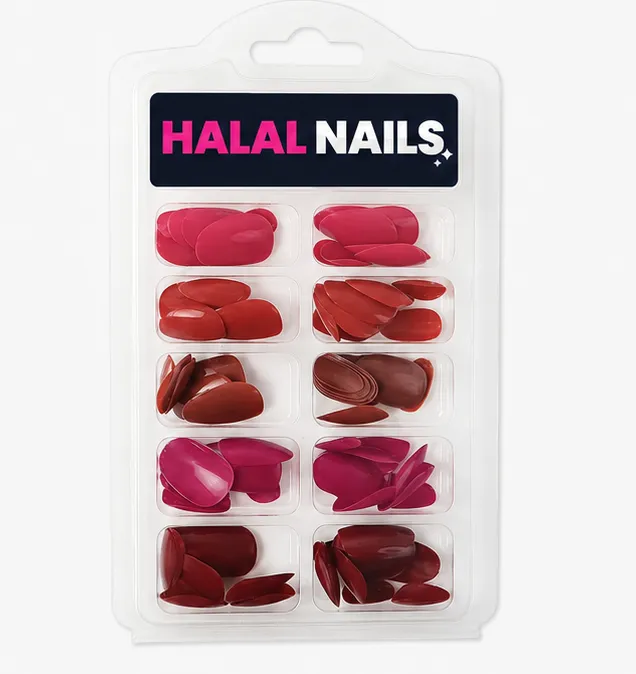
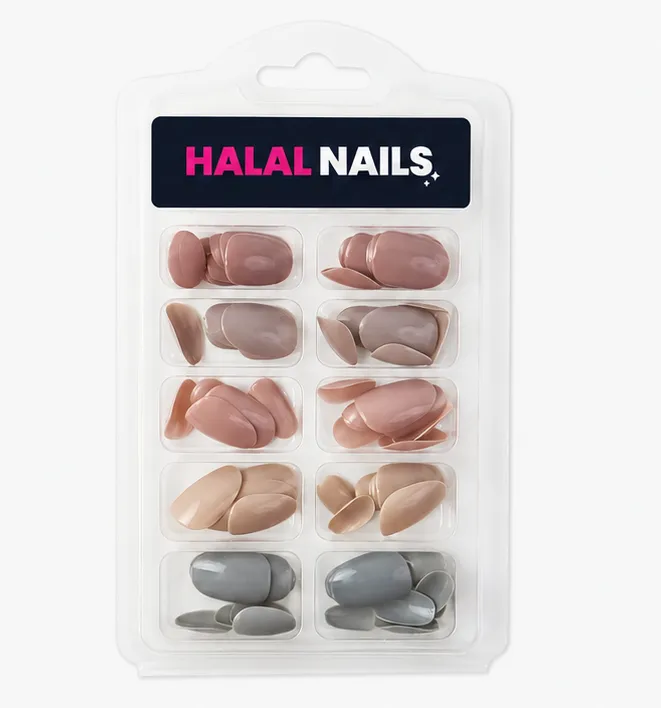
Yes, if you put them on after wudu using glue tabs, and remove them before your next wudu. That routine takes seconds with tabs and is practically impossible with acrylics or gel. Our Halal Nails press-on collection is made for exactly this: short, polished sets in Pink Neutrals, Cool Neutrals and Autumn Berries, each with Halal Nails Glue Tabs included that hold firmly through the day and release cleanly before wudu.
Whatever you wear, look after the natural nail underneath. The American Academy of Dermatology's nail care guidance recommends keeping nails clean, dry and trimmed, and the FDA explains how to use nail products safely if you also use salon products.
Frequently Asked Questions
Is it a sin to wear fake nails?
No, not in itself. Fake nails become a problem when they stop you from making a complete wudu or ghusl, when they lead you to miss prayers, or when they're worn in a way that goes against modesty.
Is it haram to wear fake nails in Islam?
Wearing fake nails in Islam isn't haram when you can remove them before every wudu and ghusl and wear them modestly. Salon acrylics and gel that can't come off before prayer are the main concern under Shariah.
Is it haram to wear fake nails?
No, as long as they don't block water from reaching your natural nails when you wash for prayer. Removable press-ons on glue tabs meet that condition; glued-on salon sets usually don't.
Is wearing fake nails haram in Islam?
Not when the nails are removable. The ruling turns on ritual purity: water has to reach the nail during wudu and ghusl, so choose nails you can take off in seconds.
Are press-on nails halal?
Yes. Press-on nails are halal when they're applied with removable, alcohol-free glue tabs and taken off before wudu. Liquid nail glue is harder to remove and can leave a water-blocking residue.
Are press on nails haram?
No. Press-on nails are one of the most practical halal cosmetics for women who pray, because they come off before wudu and reapply afterward. Across the US and UK Muslim populations, many women use them for Eid, weddings and everyday wear.
Are fake nails haram on your period?
No. During your period you don't pray, so fake nails don't interfere with wudu. Remove all nails, polish and glue residue before the ghusl that ends your period.
Can you do your nails while on your period?
Yes. You can do your nails, wear polish or wear fake nails during your period. Take everything off before ghusl so the water reaches your nails.
Can you pray with fake nails in Islam?
Yes, if you applied them after wudu with alcohol-free glue tabs. Remove them before your next wudu. Nails that were on before you made wudu mean the wudu isn't complete.