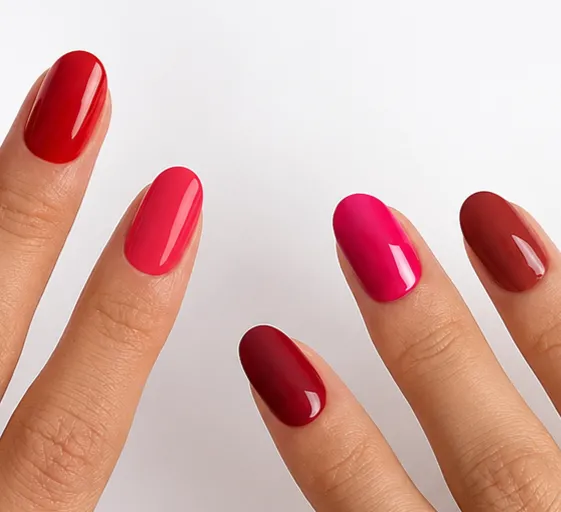
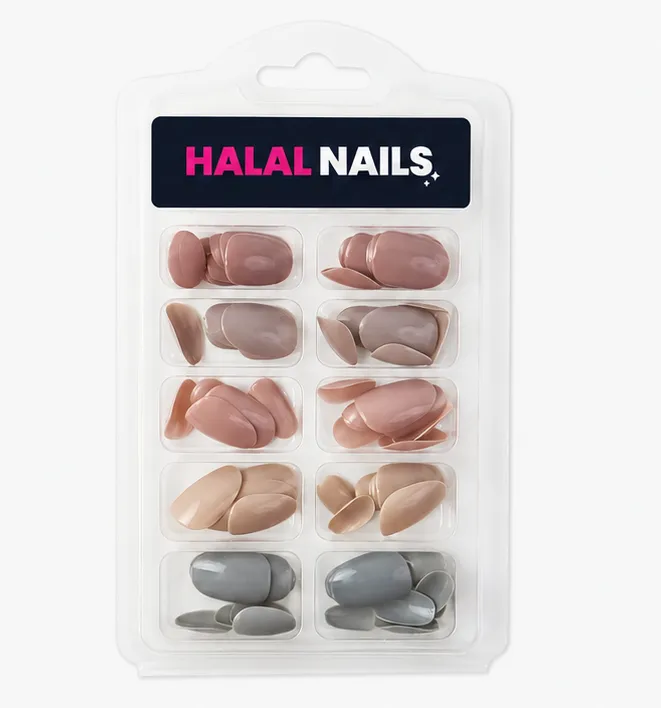
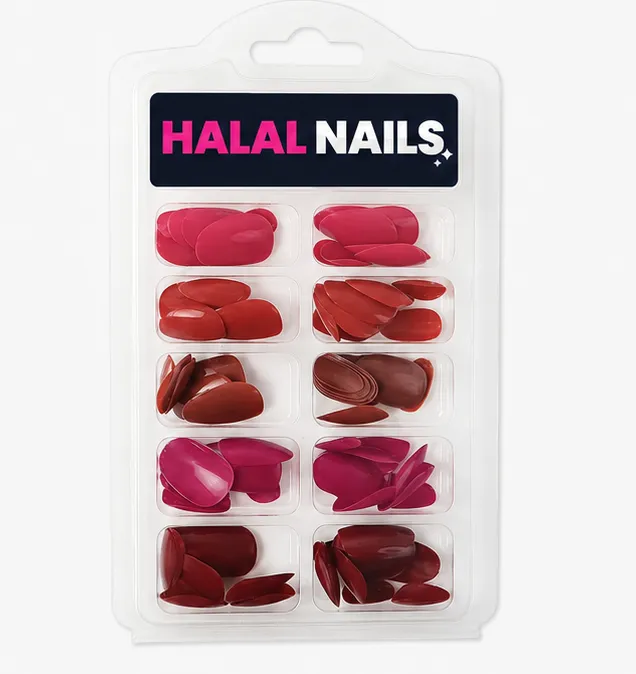
Halal Press On Nails: The Complete Guide for Muslim Women
By Hijabi Bridal Team · ·
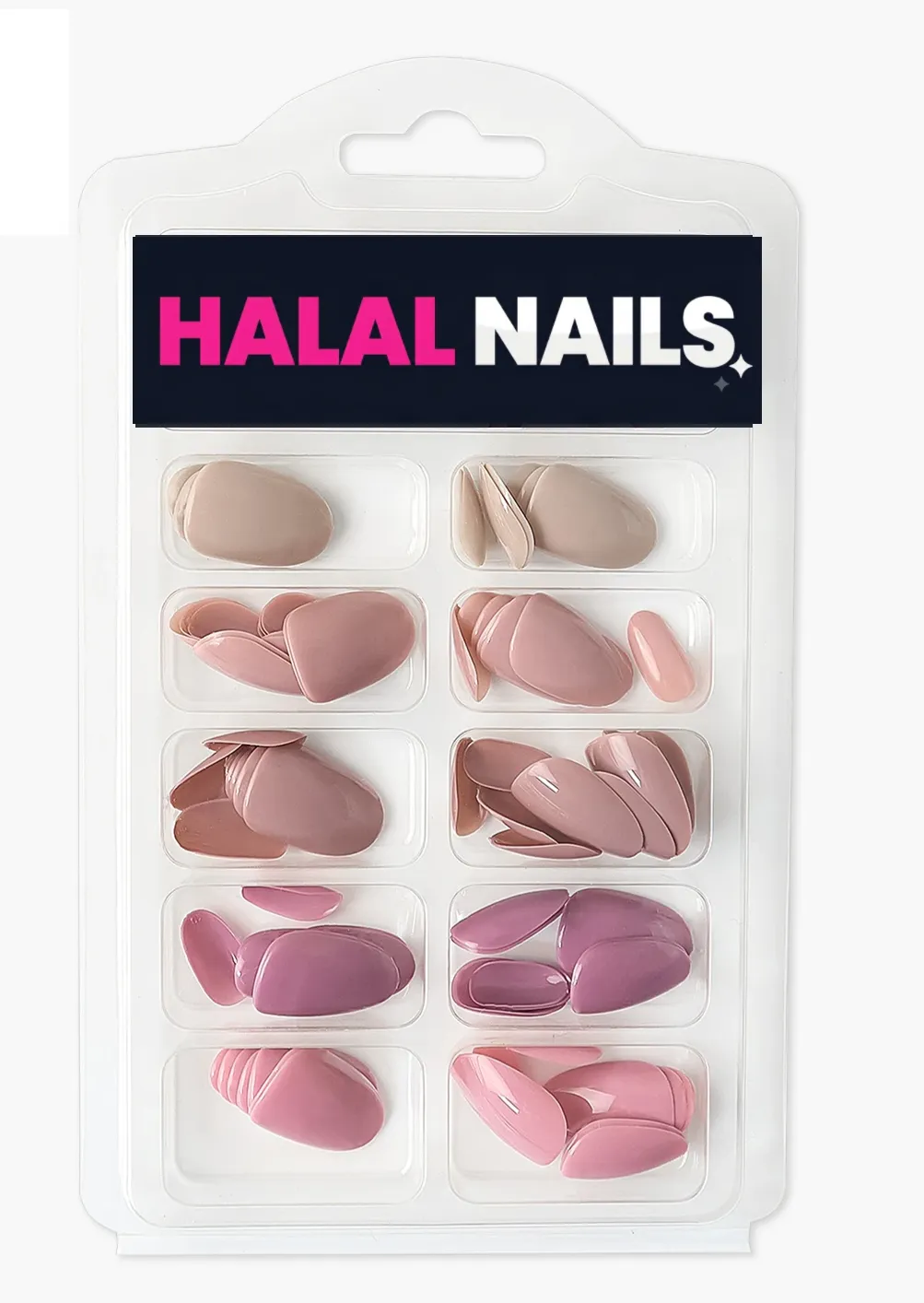
For Muslim women who want beautiful nails without compromising their wudu, halal press on nails have become a game-changer. Whether you're preparing for your wedding, an Eid, or you simply want to elevate your everyday look, halal nails offer a practical, salah-friendly path to stunning nail care and beauty. This guide breaks down everything you need to know — from common sense halal compliance to application tips — so you can make a confident, informed choice.
Shop All Hijabi Bridal Halal Press On Nails.
Quick answer: Halal press on nails are wudu friendly when you apply them with removable glue tabs, because they can come off before wudu with no residue and go back on easily. Salon acrylics and gel don't come off for daily wudu, and so-called halal nail polish has issues.
Jump to:
Are Fake Nails Haram in Islam?
If you're wondering is it haram to have fake nails in Islam, the central concern that makes wearing fake nails haram is the invalidity of wudu. Islam requires that water reach every part of the skin and nails touched during wudu. So you can't make wudu if there is a waterproof barrier on any part of the nail bed. Waterproof barriers are made by the traditional nail adhesives used with many fake nails, gel nail extensions, nail tips and acrylic nails alike. The difficulty of removing nail glue can make press-on nails a definite point of concern. There are halal fake nails online, press-on nails, and using them with wudu-friendly glue tabs is what gives them a halal status - so fake nails are halal when used with easy-to-remove glue tabs.
So, again, if you've been wondering is it haram to wear nails in Islam, know that they can be halal when they are wudu-friendly. Halal nails press on with adhesive tabs rather than permanent glue, can be removed quickly and cleanly before wudu and reapplied afterward. Because the tabs don't chemically bond to the nail or block water from reaching the nail bed when removed, they make press-ons the perfect removable nails for Muslims. This halal nail glue is like silicone and rubs off cleanly into a ball. When used with halal nail glue tabs, press-on nails don't have the same nail art restrictions as polish and other forms of fake nails.
So is it haram to wear fake nails in Islam? The key to halal status is removability: press-on nails don't compromise the integrity of your wudu when you use glue tabs to take them off easily. Nail glue and other chemical bonds can leave chunks and specks of residue that interfere with wudu. Halal nails press on with glue tabs, which are a nail glue alternative. The nails adhere firmly, and you can remove them in seconds - nail glue, however, makes the process way more difficult. Halal nails, when adhered correctly, allow you to have a professional, polished, nail look that looks like it's directly from nail salon services, without worrying whether it's a haram practice.
Regarding nail polish permissibility and Muslim beauty standards, we all know that nail polish forms a solid, impermeable layer. But even products marketed for halal nails as "breathable" or "water-permeable" have faced scrutiny in the US online market that makes them highly questionable cosmetic products. Halal nail polish brands are tested in laboratory conditions using machines and high jet water sprays to prove permeability, but these same conditions are not found in taps for wudu. So Islamic nail polish fails the question of impermeability during wudu for the US Muslim community. That's fine. This is where halal stick on nails offer a genuinely elegant answer in line with Islamic standards and hijabi beauty trends for Muslim women's nail care.
Are Muslims Allowed to Have Fake Nails?
Is it haram to wear fake nails in Islam? For fake nails to be allowed for Muslims, neither the application method nor ingredients should interfere with wudu. Some nails don't work for Muslims because they do not allow water from wudu to reach the nail bed or because their ingredients are haram. Most nail polish ingredients contain alcohol solvents to allow the product to mix well in the bottle and dry quickly once applied to your nails. The problem with this is that alcohol solvents can break the wudu. So making wudu "before" applying nail polish doesn't work either. Halal nails press on and don't contain ingredients that break the wudu. They are made of acrylic and plastic - simple ingredients that make them fine for use.
So are press on nails halal or haram? Press on nails can be used because of halal ingredients, yes, but their status also depends on how you wear them. For American Muslim women's lifestyle, we're not trying to look flirtatious in public with long, decorated nails. That can draw the wrong type of attention. For our nail care practices, short nails give a professional, feminine look and are the perfect removable nails for Muslims. When worn short, clip on nails for Muslims mimic the use of henna when worn on the nails as part of Islamic beauty standards, just in different colors. So while beautifully decorated nails mimic nail salon options for Muslim women in their private environment, our research shows that short, solid nails are more appropriate for use when you're following Islamic tenets regarding cosmetics.
Halal Nails: Can Muslims Wear Press-on Nails?
Muslims can use press-on nails as long as they aren't overtly flirtatious. Short nails look refined, but super long nails are suggestive of celebrity culture -not something that blends well with Islam. Halal press on nails, the short, solid color kind, are also machine-made and do not use slave labor. Cruelty-free nail products contribute to their status as halal.
Also, for press-on nails to be halal in Islamic practices, they should be wudu-friendly. When used with glue tabs, press-on nails are clip on nails for Muslim women. The glue doesn't embed in the nail to make removal difficult. Instead, it collects easily and rubs off like a little ball. So if you're wondering can I wear press on nails in Islam?, the answer is yes. A Muslim woman can remove her nails in seconds, complete her wudu with water flowing freely over her natural nails, and then reapply the press-ons afterward using fresh adhesive tabs.
For nail care, halal stick on nails are a dramatically more practical option than halal nail polish, too. Even in its permeable formulations halal polish remains a contested topic among scholars, even though it uses halal cosmetic ingredients for shariah compliance. With press-on nails, the halal compliance is structural, not chemical. The nails and glue tabs are made from simple acrylic. You don't have to trust a lab claim about water molecules; you simply remove the nail, wash, and reapply.
For the growing US Muslim population — estimated at 3.45 million adults according to Pew Research — women are increasingly seeking beauty products and practices that align with Islamic law, and the nail care category is no exception. Halal press on nails are the quick and easy solution to nail care that doesn't require a science degree to understand.
What nails are allowed in Islam?
Besides using press on nails with glue tabs as halal nails, there are other options for Muslim friendly nails. Of course, there are henna stains, which is the most traditional nail art in Islamic beauty standards. Then there are wudu nail rings, which are placed over the tips of the fingers. Press-on nails can be adhered to these rings instead of using glue tabs, and you can just remove the rings instead of removing the glue tabs. But while halal, they are difficult to position and can be painful to wear. Nail stickers are gaining traction for home and nail salon use. It's said they can be used with glue tabs also, but a UV light is required to mold them. Press on nails with glue tabs are the preferred halal fake nails when you're looking for ease and a durable variety of color.
Most USA halal nail salons are not carrying a yardstick to measure haram or halal. They either use halal nail polish brands, which aren't really halal because they aren't permeable to water, or some form of acrylic nails. If you go into a hijab friendly salon, you might find gel nails, acrylic nails, and nail polish, too, just make sure you can remove them easily for wudu. Things that say certified halal are usually just talking about ingredients. So if you're looking for Muslim friendly nails, remember that they need to come off easily so that you can pray. It's really simple. That's for daily use and Ramadan nail care.
Can a Muslim woman get her nails done?
The best way for a Muslim woman to get her nails done is simply to do your Islamic nail care at home with halal press on nails. Halal nail polish brands sell nail polishes made from halal ingredients to salons, but whether it's water permeable for wudu is another question. Most of the time, polishes in halal nail salons are tested with high jet sprayers in laboratories for breathability, not at home with a tap. So while it's laudable to have a prayer-friendly salon environment, your halal nails near me might not actually be ready for wudu and prayer. Who wants that worry?
Thankfully, some Muslim-owned nail salons in the US do Islamic nail care with henna, nail art inspired by Islamic culture. For those who want to use other colors, the answer is clear. Press ons with glue tabs are vegan nail options that allow you to meet American Muslim beauty trends easily. Henna stains don't have to be removed for wudu, but press on nails with glue tabs pop right off for wudu with a simple lotion application. They reapply easily. So you don't have to worry can Muslims do their nails. We have options!
Halal nails near me is a real burgeoning search as Muslim ladies seek out beautiful nails that are convenient. Yet the options are literally at their fingertips. As they've gained popularity, some halal nail salons now also provide press on nails with glue tabs as part of their services, which makes the right thing an easy choice. Regarding clip on nails for Muslim women, the beauty appeal is layered. Press-on nails deliver:
- Aesthetic versatility: From minimalist nudes to pastel colors and metallic designs, the design options are vast.
- Self-care on your terms: Beauty and self-care are deeply intertwined with personal dignity. Vegan nail options that are cruelty-free, made without slave labor, allow short, machine-made press on nails to fit well into the ideal of personal integrity.
- Faith Alignment: Press-on nails fit naturally into a Muslim beauty routine that honors both aesthetics and faith. There's no need to worry about nail polish ingredients being halal or not, as press-on nails are constructed from simple plastic and the glue tabs are similar to silicone. Plus they peel off easily. So can Muslim girls do their nails? Of course!
- Cost and convenience: The nail salon industry in the US generates over $8 billion annually, but quality press-ons cost a fraction of a professional manicure.
When placed correctly, press on nails rival salon-quality acrylics in durability, finish and color. The appearance is close to an actual manicure.
Can you do your nails while on your period?
Getting your nails done is halal during menstruation, when you don't make salah. Nail polish during this time is fine, as your Islamic purity isn't impacted and you don't have to worry about exposing the nail bed to water for wudu. The only issue is removing it thoroughly when it's time to pray again. Anyone who has used nail polish during that time of the month can testify to noticing tiny spots of color left on the skin or nails after bathing. How many times have we had to bathe and pray again for the sake of using nail polish! Personal grooming is a part of Islamic beauty standards, but nail polish can make life extremely difficult. Are fake nails haram on your period? Certainly not! Halal press on nails provide the easy way out when you want polished confidence at any time. They apply and remove easily whenever you're ready.
For the rest of the month, Islamic guidelines with regards to purity apply to everyone. So if you want your nails done, it's important to look for halal cosmetics. Halal nail polishes are only water permeable under lab conditions, not at home, so you know. Nail polish can be removed with nail polish remover before wudu, but reapplying the polish over and over again is not just difficult, but a waste of product. (Plus regular nail polishes contain alcohol, so you can't apply them after wudu anyway.) With press on nails, you can unstick them, wash and use new glue tabs to re-apply the same nails in a matter of minutes with no drying time. They are fully reusable! Find out more how to reuse press on nails here.
Enjoy your new look and rest assured that you can wear them at any time of the month.Is Halal Nail Polish Really Halal? Can Muslims Wear Halal Nail Polish?
Halal nail polish is not actually halal, even if it claims to be water permeable or a breathable formula. Halal nail polish goes through its certification processes based on permissible ingredients and high jet water sprays that prove permeability in a laboratory. However they are not water permeable at home under tap water. So if you're wondering is breathable nail polish actually halal, they are halal in the ingredient sense, but not for wudu.
If you're wondering can I pray with halal nail polish on, the only prayer-friendly halal nail polish is the kind that peels off, if you're able to remove it thoroughly with no residue before wudu. Islamic beauty standards require wudu friendliness for nail products. Henna nail stains meet this qualification, of course, and are great for Eid celebrations and Ramadan beauty prep. For everyday use, press on nails used with wudu friendly nail glue, are the best alternatives for halal nails. The glue removes easily and cleanly without needing a polish remover. Then you can re-apply the same nails with fresh glue tabs after wudu. Way easier than nail polish, even the peel-off kind.
How to Use Press-On Nails in a Halal-Compliant Nail Care Routine
A thoughtful nail care routine makes halal press on nails on both practical and sustainable. Before starting, remember to choose adhesive tabs over nail glue. For halal compliance, adhesive tabs are your best friend. They allow press-on nails to be removed and reapplied multiple times, just using fresh glue tabs. Here's how to apply your Muslim nails:
- Step 1: Choose Your Nail Sizes. Our press-on Muslim nail packs come with multiple size nails. Choose the nail sizes that are a teensy bit smaller than your actual nail if the fake nails are square. Otherwise they might appear too large and a little chunky. Oval, almond and coffin shapes naturally look like salon acrylics without adjusting the size, as they have a taper. Applying your press-ons like gel nail polish, leaving slight room on the sides of the nail bed free from polish, makes the nails look more delicate and feminine.
- Step 2: Prep Your Natural Nails. Clean, thoroughly dry nails are the foundation of good glue adherence.
- Step 3: Apply the Glue Tabs and Nails. To get the best look, use the nail itself to push back the cuticle. This way your nail base will have the same shape as the upper part of the nail. Place the glue tab close to the cuticle and press the nail on top for a few seconds. You'll have a seamless finish that appears to glide out from the fingertip.
- Step 4: Remove Before Wudu. Soak your nails in water or use lotion and the nails will come right off, or you can peel off your press-on nails gently from the side. Read more about how to remove press on nails. Complete your wudu, allowing water to flow freely over your natural nails.
- Step 5: Reapply With Fresh Tabs. After wudu, thoroughly dry your nails and reapply the press-on nails using new adhesive tabs.
- Step 6: Give Your Natural Nails Rest Days. Healthy nail care means protecting the natural nail. Build in days without press-ons to let nails breathe.
Halal nails: What Are Wudhu-Friendly Nails?
Halal press on nails are wudu friendly press on nails but only when you can take them off easily. It's not really the nails, but the glue that makes nails wudhu-friendly. Not all nail glues allow you to take off your nails easily for wudu. Halal Nails Glue Tabs allow the nails to slide off with a lotion application so you can make wudu immediately without worrying about any residue that's left behind.
Wudu friendly press on nails are a form of nail care that allows water to reach the natural nail during wudu, so a Muslim woman can perform the Islamic prayer without compromising hygiene in Islam or ritual purity. Being easy-to-remove is what makes press on nails wudu friendly nails. Halal nail extensions have evolved so that Islam compliant nail products can be both stylish and fully compatible with modest fashion and Islamic regulations around wudu and daily salah. For halal nail care in 2026, salah friendly nails often mean avoiding traditional gel or permanent acrylics and so-called halal nail polishes and instead choosing halal nail press ons with easy-to-remove glue tabs. These press on nail options are popular because they come in all colors yet remove easily to let water reach the nail surface for proper wudu. In Muslim American culture, women can maintain their beauty standards by using Muslim fake nails that are easy to remove and clean, ensuring their wudu is valid. Wudu friendly nail products help women who want both beauty, modest fashion and compliance.
To build a truly wudu friendly nail set, many women choose Muslim fake nails that can be removed and re‑adhered within minutes. So if you're shopping online with Hijabi Bridal's dedicated halal press on nails collection, remember the goal of salah friendly nails in Muslim American culture stays the same: a clean, modest, and beautiful manicure that supports both beauty standards and regular Islamic prayer without any conflict that comes from not knowing whether your permeable nail polish is actually halal or not.
Some nail polishes also claim to be wudu friendly, but this isn't the case. Water permeable nail polish is said to be for salah friendly nails, as it claims to let moisture pass through. However, their testing process uses high pressure spray facilities in a laboratory, conditions which can't be mimicked during wudu. Ladies need viable halal nail care in the US Muslim community that seriously prioritizes wudu friendly nail compliance.
Can I Pray if I Have Fake Nails on?
Wondering can Muslims pray with fake nails on? Well, just make sure they come off cleanly for wudu. Then you don't have to worry can you make salah with fake nails. The water from wudu has to reach your nail bed, so use glue tabs when you adhere your press on nail types, as they come off easily with a lotion application.
If you're at home, there's no problem making the Muslim prayer with fake nails, even if they are long and decorated. For mosque etiquette, though, it's better to adhere to Islamic modesty and keep your nails short. Short, halal press on nails are perfect for Ramadan observance in your Muslim community, or for any time, as long as you remove them to meet your wudu requirements. With glue tabs, it's easy to keep your nails in alignment with halal beauty standards.
There's no nail polish compatibility in this, though, because halal nail polish isn't tested for permeability using a tap, but a high pressure water machine instead. So you can't make a wudu with nail polish unless you remove it first. You can't pray in Islam if you're wearing nail polish because you don't have a wudu.
Similarly, if you're wondering can you pray with fake nails if you have a wudu already, you can, if the glue doesn't contain alcohol. If you used liquid glue, you'll have to work hard to remove all the residue to make another wudu.It's best to use our Halal Nails Glue Tabs. They are plain acrylic - no alcohol- and they remove cleanly and easily.
Is there halal acrylic nails?
Not from the salon, no. Salon acrylic is applied directly to your natural nail and built to stay for weeks, then filed or soaked off in acetone. The removal process is long and can leave a residue, so they aren't suitable for daily wudu. That is why there is no truly halal acrylic set, however it is labeled. The halal answer is a different kind of nail altogether: press-on sets applied with glue tabs, which come off whenever you need them off. That is what women searching for salah friendly nails really want. Ordinary nail salons build sets to stay put, which suits neither Muslim-friendly beauty services nor a prayer schedule, so Islamic nail care starts with removability.
So if you're wondering are Muslims allowed to have acrylic nails, the answer is no, not while praying. They are not forbidden for being cosmetic: Muslim women can wear fake nails and nail polish for beauty when not praying. Halal fake nails are simply nails designed to come off when you are praying. Beauty standards in Islam leave room for neat, modest nail care, and Islamic beauty trends, from henna to short, soft shapes, show how style and prayer fit together. Many women wear salon sets only during their period, when they are not praying, and remove them before ghusl. What to avoid are haram practices, like praying with a barrier on your nails. Salon services that bond acrylic to the natural nail are the usual trouble spot, and halal certification on cosmetic products speaks to ingredients, not to whether water reaches the nail.
And if you're wondering is wudu valid with acrylic nails, no, not while they're on. Wudu friendly nails and water friendly nails let water reach the natural nail; bonded acrylic is waterproof and has no water permeability. Islamic prayer needs a complete wudu, so salat preparation means bare nails, or press-ons you take off first. Nail hygiene supports that: clean, dry nails beforehand, plus nail care tips like pushing back cuticles gently instead of cutting them. Nail care for Muslims during Ramadan preparation, and for all the salah requirements, comes down to removability. Halal beauty and Muslim beauty standards, including Muslim women's beauty routines, are happiest with the Halal Nails press-on collection: press-ons on glue tabs that come off when you need them to. For the full comparison, see press-ons vs. acrylics vs. gel nails.
Is It a Sin to Wear Fake Nails?
Worried is it a sin to wear fake nails in Islam? Fake nails aren't haram in themselves. If you're wondering can Muslims wear fake nails, it depends on how you use them and whether they disrupt your wudu. If your intention when wearing fake nails is to look more polished and feminine, the nails aren't haram. If your intention in wearing them is to draw attention and flirt, then they become haram. If you want to make sure you uphold halal beauty standards with regards to fake nails and modesty, use nails that are short and feminine - not flirtatious.
Islamic law does have restrictions when it comes to cosmetic enhancements and permanent body modifications. Fake nails, however, are temporary and not meant to be permanent.
So are Muslims allowed to have fake nails? With regard to wudu, fake nails in Islam are definitely a sin if they prevent you from praying. In Islam, praying requires having a proper wudu, so if your nail care leaves any barrier or residue over your natural nails, you can't make wudu with it. So be mindful when wearing fake nails in Islam so that it doesn't become a sin.
Halal Press On Nails for Cultural Events and Holidays
The demand for halal press on nails spikes around cultural events and holidays — Eid al-Fitr, Eid al-Adha, Ramadan celebrations, and Muslim weddings are all occasions when beauty is at the forefront. American Muslim women navigate a unique intersection of American beauty standards and Islamic values, and press-on nails sit squarely at that crossroads.
During Ramadan, for instance, the five daily prayers take on even greater significance. Having a nail care system that genuinely supports proper wudu — rather than creating anxiety about validity — allows women to focus on worship rather than logistics. For weddings, press-on nails can easily match bridal looks, offering an alternative to gel or acrylic sets that would require salon removal.
According to research from the American Academy of Dermatology, proper nail care — including keeping nails clean and avoiding harsh adhesives — supports long-term nail health.
Article Facts & FAQ
Are press-on nails halal for prayer?
Yes, as long as you remove them before wudu. Islam requires water to reach the nail bed during ritual purification. Press-on nails removed before wudu make this easy and fully achievable.
Can I reuse press-on nails after wudu?
Yes. With adhesive tabs, press-on nails can be removed and reapplied multiple times. Replace the tabs, not the nails.
Is nail glue halal?
The permissibility depends on use. Permanent nail glue makes removal difficult and chemically bonds with the nail, which can compromise wudu; adhesive tabs are the preferred option for a halal nail care routine as they bond physically and are easy to remove.
What manicure is halal?
The best way to get a halal manicure is to do your own Islamic nail care at home with halal press on nails. Neither gel nail polish, breathable nail polish nor water-permeable nail polish meet the standard for Islamic nail care as they do not allow water from a basic wudu to reach the real nails. They are tested with high-pressure water sprays, not with tap water pressure. Acrylic nails aren't permeable either. As wudu-friendly nail products, press ons are vegan nail options that allow you to meet American Muslim beauty trends easily. Compare press ons vs. acrylics vs. gel nails here.
Are halal press on nails the same as regular press-on nails?
The nails themselves are typically the same product. "Halal" in this instance refers to how you use them — specifically, removing them easily before wudu.
What nail care steps support halal compliance?
Use adhesive tabs (not permanent glue), remove nails before prayer, perform wudu with water flowing freely over natural nails, and reapply after. Regular nail care and hygiene keep your natural nails healthy underneath.
Can I wear press-on nails during Ramadan?
Yes. Many Muslim women wear press-on nails throughout Ramadan because they're easy to remove for wudu and the increased number of prayers. They support both beauty goals and proper wudu.
Are fake nails Wudu friendly?
Wudu friendly nails are manicures that allow water to reach the natural nail during wudu, so a Muslim woman can perform prayer without compromising hygiene or ritual purity. Halal nail press ons, also known as wudu friendly nails, usually come in the form of easy‑removal press‑on nails.