Why Bridal Lehengas are Islamic (And How to Cover Your Belly)
By Hijabi Bridal Team · ·
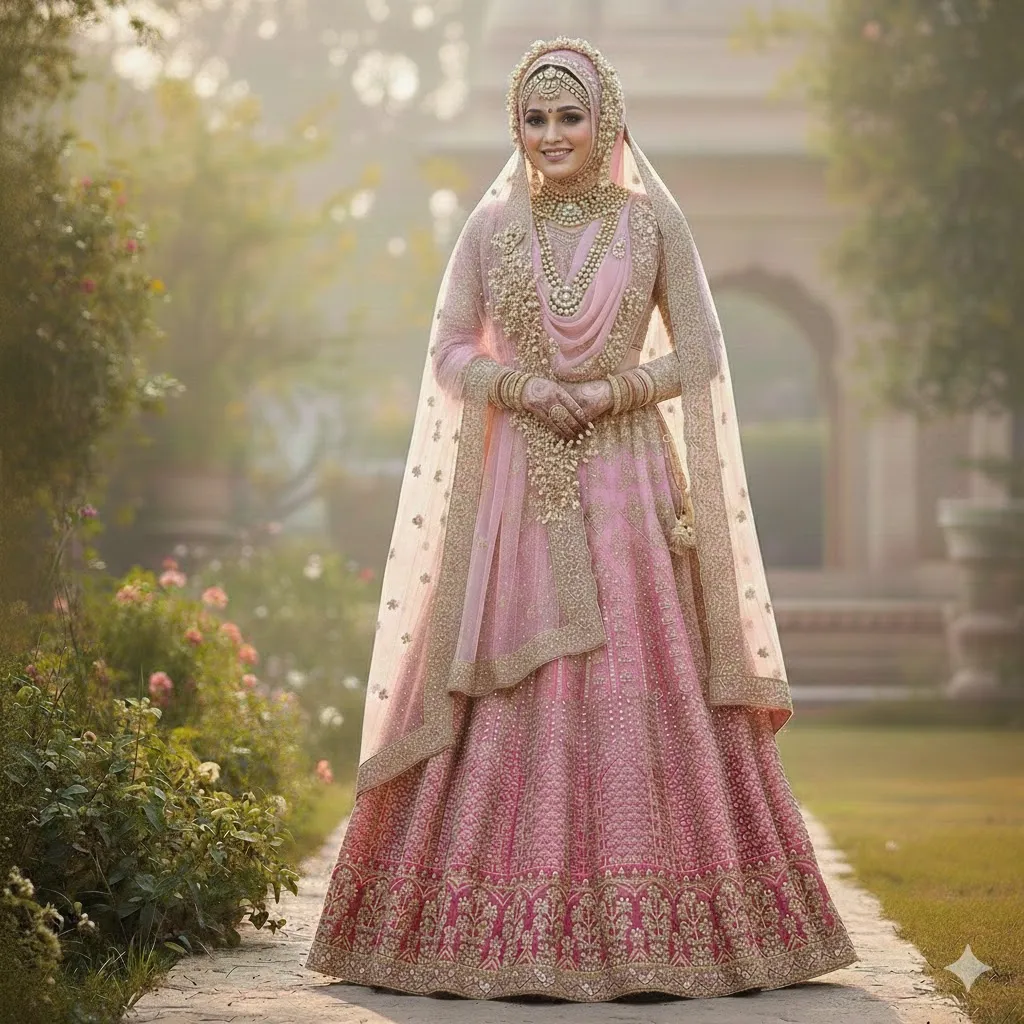
So you’ve found the perfect outfit, but the belly isn't covered! A lehenga with a covered stomach is an idea, but they aren't easily found.
But wait. Why do we even have Indian wear on an Islamic site? Well, that’s a great question! Lehengas are actually Muslim attire, but they have been altered.
Can Muslims Wear Lehenga?
Muslims can wear lehenga as long as the blouse or shirt is long. It should at least come to hip length, but it can actually fall under the knee. At Hijabi Bridal, we consider the bridal lehengas to be Islamic when they come with an option to make the blouse hip length, at least, or when the blouse fabric is an unstitched meter so you can make it yourself.
If you're going to have your Islamic bridal lehenga tailored, we recommend purchasing two so that you have enough fabric for sleeves and a shirt as long as you like. The skirts for these are semi-stitched, so you can pair two skirts as one for a super full bridal look. We've curated all our Muslim bridal lehengas online from Amazon to make sure they meet the requirements mentioned here. Browse our selection of wedding lehengas for Muslim brides, and don't forget to search by color!
Is the Lehenga Indian or Pakistani? Islamic Influences
Back to the history. Islamic influences have been profoundly impactful in India, particularly following the arrival of Islamic rulers and traders in the Indian subcontinent around the 12th century. Then because India was ruled by Muslims for centuries, Hindus adopted Muslim dressing styles. Pakistan later separated from India, so the lehenga can be said to be Indian and Pakistani, both.
However, because most modern options are not lehengas with a covered stomach, we have to scour search results for Muslim bridal lehengas online. One of the reasons Hijabi Bridal exists is so that you can find your Islamic bridal lehenga easily and have it shipped to your door from Amazon. The subcontinent is still the primary source of cotton and silk fabrics, embroidered gowns and Islamic wear. Luckily all this has made its way to the West.
What Culture is the Lehenga From? A Fusion of Styles
One of the most prominent periods of Islamic influence on Indian dress styles began with the establishment of the Mughal Empire in the early 16th century. The Mughal rulers, originally from Central Asia, brought with them a unique cultural heritage that left a lasting imprint on Indian clothing. The lehenga originated under these Muslim rulers.
Mughal fashion blended Persian, Central Asian, and indigenous Indian elements, resulting in a distinct and opulent style. The most notable attire from this era is the Angrakha, a traditional upper garment worn by both men and women. This tunic, characterized by its asymmetric opening and flowing fabric, became a staple in Mughal dress and continues to influence Indian fashion.
Textiles and Embellishments
Islamic influence also permeated the textiles and embellishment techniques used in Indian clothing. The Mughals introduced new materials, such as luxurious silks and fine muslins, as well as intricate embroidery styles, including zardozi and chikankari for Islamic bridal lehengas.
How Do I Make Adjustments to Create an Islamic Bridal Lehenga?
This will depend on how your blouse and full skirt arrive.
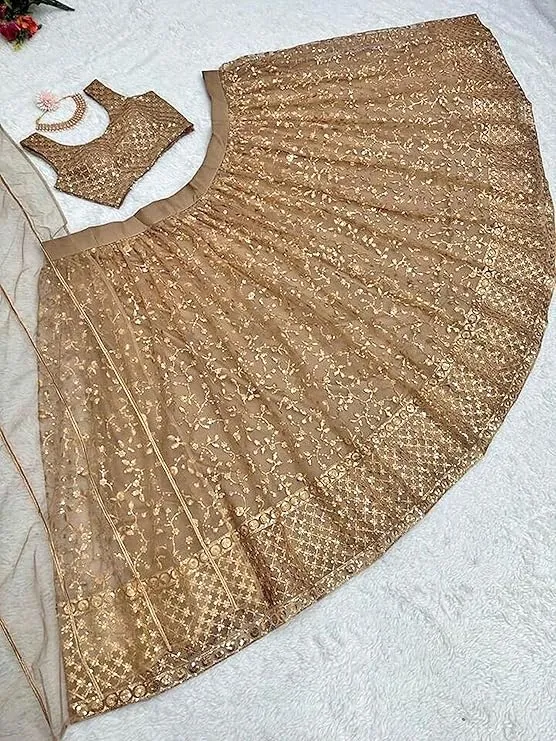
To lengthen the blouse for a lehenga with a covered stomach, consider purchasing two lehengas and use part of the extra blouse or dupatta material to lengthen your blouse. You can use extra dupatta or blouse material to construct sleeves for your Islamic bridal lehenga, but of course, you need a tailor to do this.
Lehenga Skirt
If your skirt comes semi-stitched, you’re in luck. You can sew two skirts together easily by the seams that are already there. This works particularly well if you’re plus-sized or just want a fuller bridal skirt for your Islamic bridal lehenga.
Before you buy, consider matching up accessories for your lehenga—including jutti, double dupatta and jewelry—before you buy. We've matched everything by color to make this step easy!
Enjoy your wedding preparation.
Lehenga Style: Frequently Asked Questions
Q. Can Muslims wear a lehenga for their wedding?
A. Yes, Muslims can wear a lehenga as long as it is styled modestly. At Hijabi Bridal, we consider a bridal lehenga to be Islamic when the blouse is tailored to at least hip length to cover the midsection. This often requires using extra unstitched fabric or purchasing two sets to ensure there is enough material for a longer shirt and full sleeves.
Q. Is the lehenga originally an Islamic garment?
A. The lehenga has deep Islamic roots, originating under the Mughal Empire in the 16th century. Mughal rulers brought Central Asian and Persian influences to India, creating a fusion of styles that emphasized elegance and modesty. While modern versions often feature short blouses, the original concept was a modest wedding dress for Muslim brides.
Q. How can I cover my belly in a bridal lehenga?
A. To create a lehenga with a covered stomach, you can lengthen the blouse (choli) by using a meter of unstitched fabric or by repurposing material from a second matching lehenga set. Additionally, wearing a non-sheer dupatta draped over the midsection or back can provide extra coverage while maintaining a traditional bridal look.
Q. How can I make a semi-stitched lehenga skirt fuller?
A. If your lehenga skirt comes semi-stitched, you can achieve a super full, royal bridal look by sewing two skirts together along the existing seams. This is a great solution for plus-sized brides or anyone wanting more volume. Adding a full-length petticoat underneath will also help the Islamic bridal lehenga puff and flow correctly.
Q. What are common Islamic embroidery styles for bridal lehengas?
A. Two prominent embroidery styles with Islamic origins are Zardozi and Chikankari. Zardozi involves intricate metallic thread work, often in gold or silver, while Chikankari is a delicate white-on-white embroidery originating in Lucknow. Both techniques were popularized by Mughal influence and remain staples of modern Islamic bridal wear.