Is Lehenga Allowed in Islam? Muslim Lehenga With Price Guide
By Hijabi Bridal Team ·
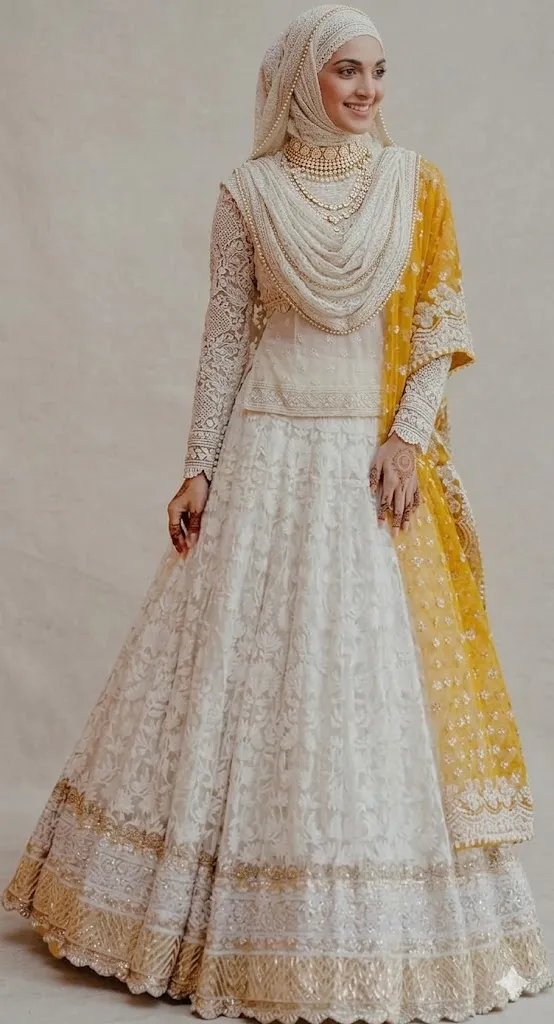
A lehenga is allowed in Islam, provided the blouse (choli) reaches at least the hip and the back is fully covered, and on Amazon, a Muslim lehenga can be found at great pricing. Every item on this page is sourced from Amazon, which lists each Muslim lehenga with price. The look accessible at every budget.
Is Lehenga Allowed in Islam?
For a lehenga to be allowed in Islam, the short, waist-baring choli should be made longer. What Islam requires is that women's clothing cover the awrah — the body except for the face and hands — in fabric that is not transparent and a fit that is not form-revealing. A lehenga styled with a modest blouse satisfies every one of these requirements. This question matters to thousands of Muslim women in the United States who love the lehenga's beauty and cultural significance but want to be certain their clothing choices honor their faith. The answer from Islamic scholarship is consistent: Islam does not prohibit any specific garment by name, and certainly not the classic lehenga which comes from the Islamic Mughal empire.
The lehenga's flared skirt is inherently modest — it is full, non-clinging, and floor-length. The dupatta adds coverage at the chest, shoulders, and head when styled as part of the hijab. The only element of the standard lehenga that conflicts with Islamic requirements is the short choli. Extend that blouse to the hip or lower, close the back, and the lehenga is not merely permitted in Islam — it is one of the most beautiful forms of religious attire available to Muslim women today.
In Islam, clothing is judged by its function, not its cultural origin. A lehenga that covers is modest Muslim women's clothing. A lehenga that exposes is not. The garment itself is neutral; the styling makes the difference.
The Mughal Roots of the Lehenga in Islam
The lehenga did not originate outside Islam and get adopted into it — it developed within Islam, in the Mughal courts of the Indian subcontinent. The Mughal Empire, which ruled from the early sixteenth century, was a Muslim dynasty, and the formal dress of Mughal women included long, fully covering blouses paired with full skirts and draped scarves — the direct ancestors of today's lehenga ensemble.
In its original Mughal form, the lehenga was religious attire in the sense that it reflected the cultural norms of a Muslim court: covered, layered, embroidered, and dignified. The short blouse is a twentieth-century modification that moved the lehenga away from those cultural norms. Wearing the lehenga with a long, modest blouse is not a compromise with Islam — it is a return to the garment's original Islamic identity.
This history matters for Muslim women navigating the question of whether the lehenga belongs in their wardrobe. It does. It always has. The cultural norms of South Asian Muslim dress have always included the lehenga, and the scholars who have accepted it as appropriate Muslim women's clothing do so on exactly these grounds.
Can Muslims Wear Lehenga?
The lehenga is not only permissible for Muslim women to wear but is a deeply rooted staple of Islamic history in the Indian subcontinent. While some modern observers may associate the lehenga primarily with other faiths, its evolution is a testament to the cultural exchange that flourished during the Mughal era. In this historical context, Muslim women created the lehenga to align with Islamic traditions of modesty, creating a silhouette that featured a long tunic (choli) and a voluminous skirt - the lehenga. Today, this tradition continues as wedding attire, while Hindus primarily use short cholis and Muslims use cholis that are at least hip length - a perfect balance of religious freedom with regal, ethnic wear.
The Mughal Influence and Modest Fashion
The origins of the lehenga in South Asian culture are inextricably linked to the Mughal courts, where Persian aesthetics met local craftsmanship. Unlike the shorter midriff-baring versions often seen in mainstream cinema, the traditional Muslim lehenga was designed as a masterpiece of modest fashion. It typically includes a long-line top that drifts past knee length and a heavy dupatta that provides additional style. Because this style of clothing was pioneered within an Islamic framework, there is no conflict regarding cultural sensitivity; rather, it is a reclamation of a classic heritage. Muslim women choosing a lehenga for their wedding attire are participating in a centuries-old legacy of elegance.
The lehenga serves as a bridge between historical grandeur and modern needs. In the realm of modest fashion, the lehenga offers a level of sophistication that few other garments can match. By utilizing high necklines and full-length sleeves, the lehenga respects Islamic traditions while allowing for the heavy gold and silver embroidery expected of a bride. This cultural exchange between Persian motifs and Indian silhouettes created an ethnic wear category that remains the gold standard for many families today.
Modern US Fashion Trends and Online Shopping
In the contemporary landscape of US fashion trends, the lehenga has seen a massive surge in popularity among the American Muslim diaspora. Brides express their identity through diverse ethnic wear, and the lehenga remains a top choice for its versatility and grandeur. With the rise of specialized online shopping, finding a Muslim lehenga online has never been easier. Brides can now customize their wedding attire to ensure it meets specific Islamic traditions, such as higher necklines and full sleeves, without sacrificing the intricate embroidery that defines the lehenga style.
The convenience of online shopping has also fueled a broader cultural exchange. You can now browse a vast array of Muslim lehenga online options that cater specifically to the requirements of modest fashion. These garments often feature heavier fabrics and layered silhouettes that honor the dignity of the wearer. Whether you are looking for a Muslim lehenga online for a nikah or a walima, the digital marketplace provides access to designers who understand the nuances of South Asian culture and the specific needs of Muslim women. This accessibility ensures that US fashion trends continue to be shaped by the beautiful diversity of the Muslim community.
Choosing the Right Style
When searching for a Muslim lehenga online, focus on the 'long choli' or 'kurti' Indian clothing style to ensure the look remains classic and modest. This specific iteration of Indian clothing has stood the test of time because it respects the wearer's values while showcasing the peak of ethnic wear artistry. Religious freedom includes the right to wear whatever type of bridal attire suits the personal and spiritual needs of the individual, provided it aligns with Islamic traditions with regard to all-body coverage. The lehenga is a perfect example of how South Asian culture can be adapted to serve those needs without compromising on style.
Ultimately, the lehenga is a symbol of how modest fashion can be both breathtakingly beautiful and culturally significant. Brides can confidently wear a lehenga as a proud expression of their faith and their roots. As Muslim women continue to navigate the world of online shopping for their big day, the lehenga remains a timeless choice that honors cultural sensitivity through its historical Islamic origins. It is a garment that truly represents the heart of South Asian culture while meeting the modern standards of US fashion trends.
The Blouse Rule: What Hip Length or Longer Means in Practice
The practical standard for a lehenga blouse that meets Islamic requirements is straightforward: the front and back of the blouse must reach at least the hip, covering the stomach and lower back completely. This is the minimum. A blouse that falls to mid-thigh or the knee provides more complete coverage and is the preferred choice for formal religious attire occasions like the nikah ceremony or walimah reception.
The back is as important as the front, and it is the detail most commonly missed. Many modified lehenga blouses are lengthened at the front but still feature a low or open back. For Islam compliance, the back must be fully covered — no open panels, no sheer inserts, no low cuts. A blouse that is hip length in front and fully closed at the back is the non-negotiable standard for Muslim women's clothing.
Hijabi Bridal's free choli sewing pattern — linked on every lehenga product page — produces a blouse to exactly these specifications: hip length or longer, full back coverage, long sleeves, and a modest neckline. The pattern is designed to be made in the same fabric as the lehenga skirt for a seamless, fully coordinated modest look. It can be taken to any tailor or used by an intermediate home sewer.
How to Alter a Lehenga for a Longer Lehenga Choli?
There are two practical alternatives to create a longer choli. The first is to purchase two sets of the same lehenga and use the extra fabric to construct a longer blouse using the free choli pattern. Two semi-stitched skirts can also be joined for a fuller silhouette — a useful approach for brides who want maximum volume in their lehenga skirt.
The second option is to wear a long modest inner blouse in a matching or tonal fabric beneath the original choli. The inner blouse covers the stomach and back while the outer choli sits over it, preserving the embroidered detail of the original design. Silk or polyester satin in a closely matched color and pattern creates the smoothest base layer and avoids visible bulk at the waist.
Both approaches are widely used among Muslim women in the United States and are accepted solutions within the cultural norms of South Asian Muslim communities. The goal is coverage; the method is flexible.
Muslim Lehenga With Price: What to Expect at Every Budget
Below is what the Muslim lehenga with price landscape looks like in the USA in 2026 for Pakistani-American fashion. One of the most common questions after the modesty question is the Islamic clothing price question — and the good news is that a beautiful, modest lehenga is available at every budget level for Muslim women, even under $200.
Budget: Under $200
The most accessible Muslim lehenga with price options — typically between $80 and $200 — are semi-stitched lehengas and readymade lehengas with a knee length choli in polyester georgette, net, or chiffon with machine embroidery. The increase in online shopping for Muslim lehengas makes these lehengas accessible through Amazon and they are the foundation of Hijabi Bridal's curated collection. At this price point, the lehenga skirt and dupatta are strong. Unstitched cholis require the most attention — which is precisely why the free choli pattern is so valuable for brides shopping in this range. For the fabric to lengthen the choli to fit Islamic clothing option, you might have to purchase two lehengas. Two $120 lehengas to make a tailor-made modest blouse in matching fabric can produce a result that looks significantly more elevated than the price suggests.
Mid-Range: $200–$600
In this Muslim lehenga with price bracket, fabric quality improves noticeably for this cultural dress. Georgette gives way to velvet, raw silk blends, and denser embroidery. Machine embroidery at this level is more refined and more consistent, and construction details — lining, hemming, dupatta finishing — are better executed. For Muslim women who want a modest lehenga for a nikah or walimah, this price range delivers the best combination of quality and value. Many lehengas in this bracket also come with more generous fabric allowances, making the modest blouse extension more straightforward.
Premium: $600 and Above
Premium lehengas in this range feature genuine silk, velvet, or brocade fabric with hand-applied embroidery in zardozi (gold metallic threadwork) or resham (silk thread). These are investment pieces — lehengas that can be preserved, altered, and potentially passed on. For Muslim women with Indian-American culture planning a high-formality Islamic wedding with cultural dress, this price range reflects the full craft tradition of South Asian bridal fashion. The premium lehenga market in the United States has expanded significantly as the South Asian Muslim community has grown and gained visibility. High-end lehengas can be purchased at Desi clothing stores in teh USA, And hijab styles are worn with most options.
Hijab Styles That Work With a Lehenga
The dupatta that comes with a lehenga is the natural starting point for hijab styling, but the approach varies depending on the weight of the fabric, the formality of the occasion, and the bride's or wearer's hijab style preferences.
Dupatta as Hijab
The most traditional hijab styles for lehenga occasions use the dupatta itself as the head covering when it is opaque. The dupatta is pinned at the crown of the head, with the embroidered border framing the face and the body of the fabric draping down the back or over one shoulder. This hijab style works best with opaque silk and georgette, and can be pinned without adding excessive weight at the crown. For additional heavier dupatta fabrics worn as a double dupatta, like velvet, additional pins and a bridal belt to anchor the fabric at the waist are essential accessories.
Separate Bridal Hijab With Dupatta Over
For occasions where the dupatta is too sheer to function as a primary head covering, hijab styles that pair a separate bridal hijab underneath with the dupatta draped over the top are increasingly popular. The bridal hijab provides the coverage and the structure; the dupatta adds the ceremonial and decorative layer. Hijabi Bridal's bridal hijab collection includes crepe and chiffon styles specifically suited to wedding occasions, in colors that coordinate with the full lehenga palette.
Double Dupatta Hijab Styles
Double dupatta hijab styles — where a second dupatta in a contrasting or matching color is added to the primary look — are one of the most regal bridal choices available to Muslim women wearing a lehenga. The first dupatta covers the head as the primary hijab layer if it's opaque, or is attached to the hijab and trails behind it if the dupatta is sheer. The second dupatta is draped over the shoulder, pinned at the waist, or draped across the front of the outfit for additional coverage and visual drama. Hijabi Bridal's bridal dupatta collection carries options to coordinate with your lehenga for this styling approach.
Lehenga as Modest Fashion in the USA
Modest fashion trends in the United States have elevated the lehenga from a purely community-specific garment to a recognized category in American bridal and occasion wear. Muslim women's clothing has gained significant mainstream visibility over the past decade, and the lehenga — particularly when styled with a bridal hijab and modest blouse — has become one of its most spectacular expressions.
Modest fashion trends toward cultural fusion have also introduced the lehenga to non-Muslim American women attending South Asian weddings, who increasingly choose lehenga-inspired ethnic wear as their guest attire. This cultural exchange reflects genuine appreciation for the craft, beauty, and cultural significance of the garment — and it speaks to how deeply the lehenga has embedded itself in American occasion wear culture.
For Muslim women in the United States navigating the question of Islamic wedding dresses in USA contexts — where the guest list may span multiple cultures and the venue may be a hotel ballroom as easily as a mosque — the lehenga offers a solution that is simultaneously authentically Islamic, culturally resonant, visually magnificent, and practically available at every price point through Hijabi Bridal's curated collection.
For further context on Islamic dress principles and their application in contemporary American life, Pew Research's work on Muslim identity and practice provides useful demographic and cultural background on how American Muslim women approach questions of religious attire and cultural norms in everyday life.
Browse the full collection and find your modest lehenga — with free choli pattern included — at Hijabi Bridal's Muslim lehenga collection.
Frequently Asked Questions
Is lehenga allowed in Islam?
A lehenga is allowed in Islam when the blouse is at least hip length or longer, the back is fully covered, the fabric is not transparent, and the fit is not form-revealing. Islam judges clothing by whether it covers the body modestly — a lehenga styled with a longer blouse satisfies that standard completely.
Can Muslims Wear Lehenga?
The lehenga is not only permissible for Muslim women to wear but is a deeply rooted staple of Islamic history in the Indian subcontinent. While some modern observers may associate the lehenga primarily with other faiths, its evolution is a testament to the cultural exchange that flourished during the Mughal era.
Do Muslim brides wear lehenga?
Yes — the lehenga is one of the most popular modest wedding attire choices for Muslim brides in the South Asian American community. When the blouse is extended to cover the midriff and constructed with long sleeves — or when the blouse connects directly to the skirt — the lehenga looks very similar to a Muslim bridal dress with sleeves and meets every Islamic modesty requirement. The dupatta worn over a headscarf completes the look. Traditional Pakistani clothing and Indian-inspired designs both offer lehenga silhouettes built specifically for modest bridal wear, making the lehenga a culturally meaningful and modesty-compliant choice for American Muslim weddings.
What blouse length makes a lehenga modest in Islam?
The blouse must reach at least the hip and cover the back fully. Mid-thigh or knee-length blouses provide more complete coverage and are preferred for formal religious attire occasions like a nikah or walimah. The free choli sewing pattern linked on every Hijabi Bridal lehenga product page produces a blouse to exactly these specifications.
Where can I find a free modest choli pattern?
Every lehenga product page at Hijabi Bridal includes a link to a free choli sewing pattern for making a hip-length or longer modest blouse. The pattern is designed to be made in the same fabric as the lehenga skirt and can be taken to any tailor or used by an intermediate home sewer.
What is a muslim lehenga with price in the USA?
A Muslim lehenga with price in the USA ranges from approximately $80–$200 for budget polyester and georgette options on Amazon, $200–$600 for mid-range silk blend and denser embroidery pieces, and $600 and above for premium silk, velvet, or hand-embroidered designs. Hijabi Bridal curates muslim lehenga with price options across all three tiers from Amazon.
What hijab styles work best with a lehenga?
The three most popular hijab styles for lehenga occasions are: the dupatta-as-hijab style where the dupatta is pinned at the crown and draped as the primary head covering; the separate bridal hijab worn beneath the dupatta for added structure; and the double dupatta style where a second dupatta in a contrasting color adds coverage and visual drama. All three hijab styles are well suited to the lehenga silhouette.
Is the lehenga originally an Islamic garment?
Yes. The lehenga developed in the Mughal courts — a Muslim dynasty that ruled the Indian subcontinent from the sixteenth century. In its original form it featured a long, fully covering blouse and was standard formal religious attire for Mughal court women. The short blouse is a later modification. Wearing the lehenga with a modest blouse is a return to its Islamic origins, not a departure from the garment's history.