Can You Pray With Fake Nails On?
By Hijabi Bridal Team ·
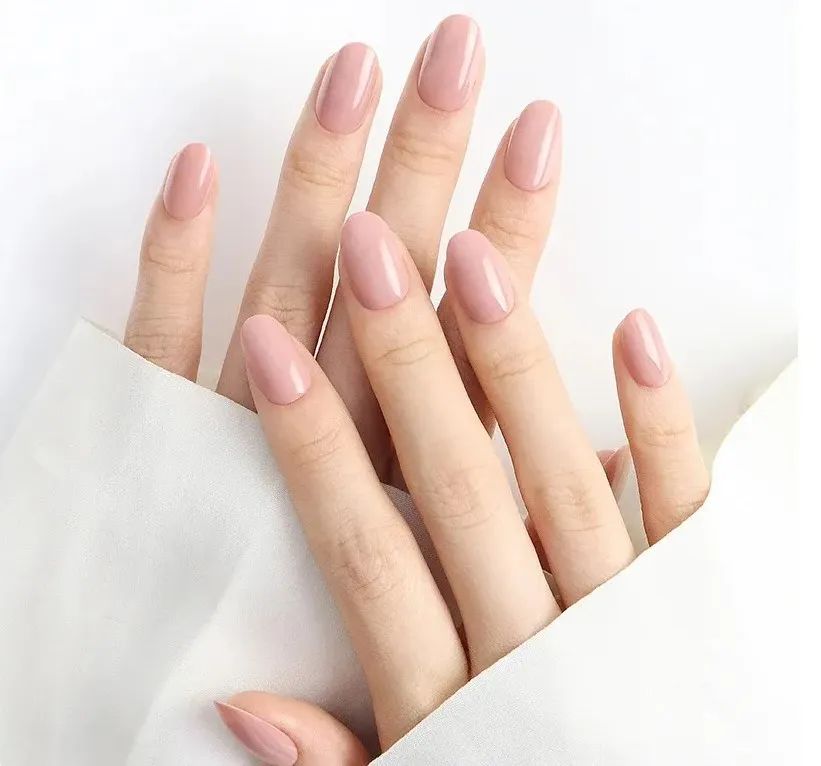
Can you pray with fake nails on? Yes, but only if your wudu (ablution) was made on bare nails. Salah is only valid with a complete wudu, and wudu is only complete when water reaches every fingernail. Fake nails that were already on when you washed block that water, so the wudu doesn't count and neither does the prayer. Press-on nails put on after wudu with alcohol-free glue tabs are different: your wudu stays valid, and you can pray with them on until the wudu breaks. This guide covers how that works in real life, from a regular workday to Ramadan and Eid.
Can you pray with fake nails on?
Prayer validity depends on your state of ritual purity, not on what your nails look like. Before salah, you need wudu, and wudu requires water to touch every part of the hands, including the nails. Anything waterproof sitting on the nail at the moment you wash, whether acrylic nails, gel nails, nail polish or a glued-on press-on, acts as a barrier. The wudu is incomplete, and a prayer performed on an incomplete wudu isn't valid.
Timing is what matters. If your nails were on before you made wudu, you can't pray in them. If you made wudu on bare nails and then applied press-ons with alcohol-free glue tabs, your wudu is intact and your salah is valid. When your wudu breaks, the nails come off before you wash again.
Intention matters here too. Salah is an act of worship, and prayer preparation is part of it. Planning your nails around your prayers, rather than the other way around, is what keeps beauty and religious practice working together. For the wider question of whether fake nails are allowed at all, see are fake nails haram in Islam.
Can you do wudu with fake nails on?
No. You can go through the motions of washing, but wudu made over fake nails isn't complete, because water can't reach the nail underneath. That's true of any nail enhancement that stays on during washing, whatever the nail materials are.
It also isn't possible to wipe over fake nails the way some Muslims wipe over leather socks. Wiping is a concession for specific situations, such as socks put on in a state of purity or a medical bandage or cast. Cosmetic products don't fall into that category, so fake nails have to come off before wudu.
Is wudu valid with acrylic nails?
No. Acrylic nails are bonded to the natural nail and completely waterproof, so wudu made while wearing them isn't valid. Because acrylics take acetone soaking or filing to remove, they can't come off before each prayer either. For a woman who prays five times a day, acrylics effectively mean incomplete wudu or missed salat, which is why they're only practical during days when you aren't praying.
Can gel nails be halal?
Gel nails aren't haram as a product, but they aren't prayer-friendly. Gel polish and gel extensions are cured under a lamp and bond to the nail the same way acrylics do, so water can't pass through them and they can't be removed before wudu. Gel nails can be halal to wear during your period, as long as they're fully removed before the ghusl that ends it. Some wudu friendly nail salons advertise gel or breathable polish for prayer, but a coating that stays on during wudu is still a barrier, so those sets don't solve the problem.
Can you pray salah with fake nails?
Only when the wudu before that salah was made on bare nails. Salah performance itself isn't affected by nails applied after wudu, but it's fully affected by a wudu that wasn't complete.
If you realize after praying that polish, glue or a fake nail was on while you made wudu, the fix is simple: remove it, make wudu again and repeat that prayer. Glue residue counts too. Before each wudu, look at your bare nails and rub off any leftover adhesive. That small step of nail hygiene is what keeps every prayer valid.
Mosque etiquette is important too. Many women keep their nails short and understated for congregational prayer, in line with the Islamic dress code of modest presentation, and save bolder colors for Eid celebrations and gatherings at home.
Is there such a thing as wudu friendly nails?
Yes, but not in the way most products claim. Wudu-friendly nails are nails you can remove cleanly before every wudu, not nails that let water through. Products sold as breathable, water-permeable or Muslim-friendly usually claim water can pass through them. In everyday wudu, with ordinary tap water, that water permeability can't be relied on, so a coating that stays on is still a barrier.
What makes a nail truly wudu friendly is removability. A press-on applied with alcohol-free glue tabs comes off in seconds, leaves the nail clean and dry for washing, and goes back on after wudu. Henna is the other option, because it stains the nail instead of coating it. For hypoallergenic, low-fuss wear, tabs are also gentler on the natural nail than liquid glue.
Are press-on nails wudu friendly?
Yes, when you use glue tabs. Press-on nails attached with liquid glue behave like acrylics: they're slow to remove and leave residue that blocks water. With tabs, a little lotion or warm water loosens the nail, it peels off in seconds, and your nail is ready for wudu. Our complete guide to halal press-on nails walks through sizing, application and removal step by step.
Can you pray with fake press on nails?
Yes. Here's how the routine works across a normal day of salat preparation:
1. Start with wudu on bare nails. Make sure the nails are clean, dry and free of any glue residue.
2. Apply your press-ons after wudu. Use fresh alcohol-free glue tabs, press each nail for 10 seconds, and you're ready. Your wudu is still valid.
3. Pray as long as your wudu lasts. So if your wudu holds from Dhuhr through Asr, you can pray both with your nails on.
4. Remove before your next wudu. Soften the tabs with lotion, oil or warm water, massaging the edges, then lift each nail from the side. Wash, make wudu and reapply with new tabs.
At work, school or while traveling, keep a small pack of tabs in your bag so you can reapply wherever you pray. During Ramadan, when many women add taraweeh and extra prayers, the routine takes only a few minutes each time, and for Eid it gives you a full manicure without compromising a single prayer. For Umrah preparation, most women choose bare nails, as style becomes irrelevant.
Can Muslims use press on nails?
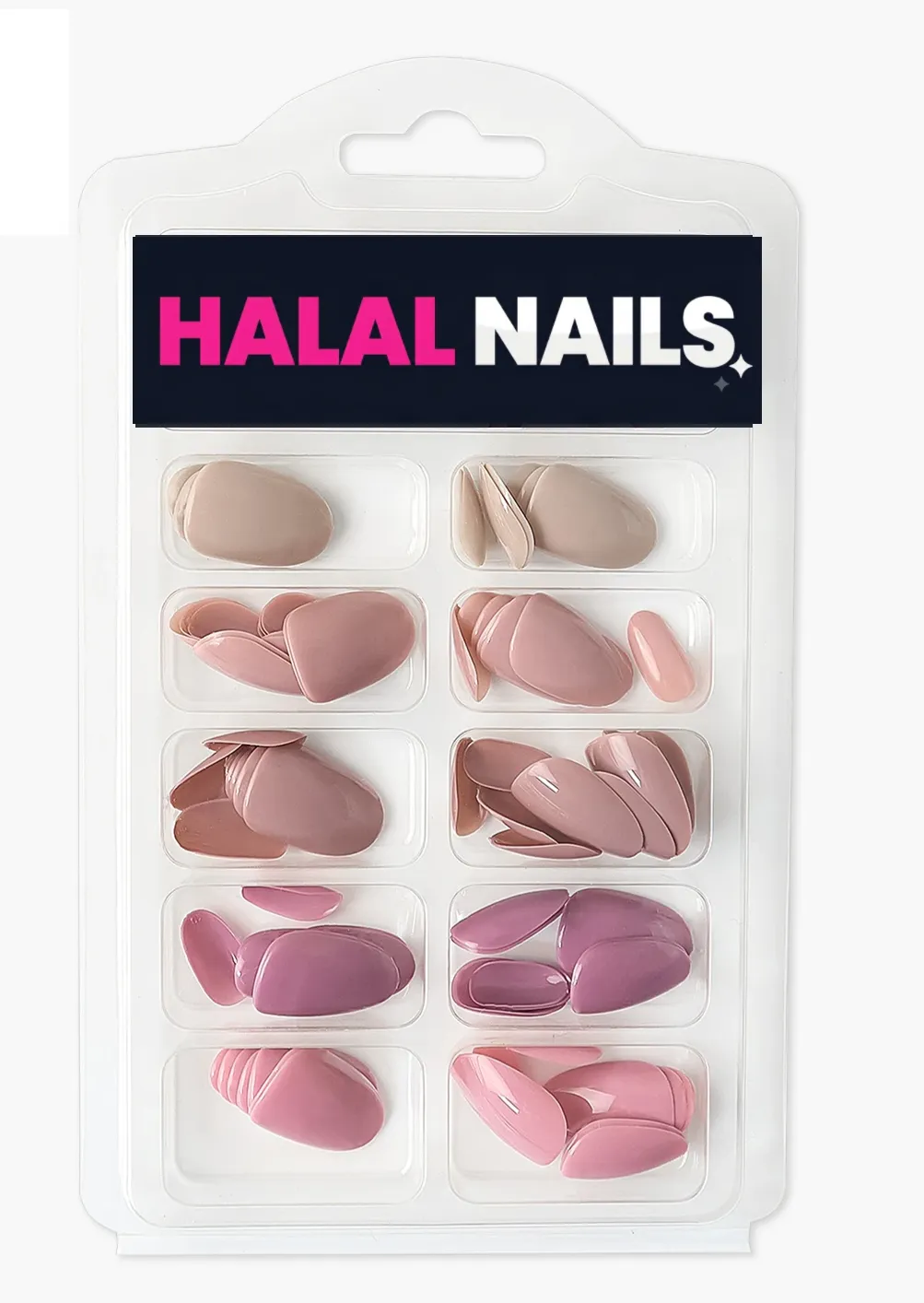
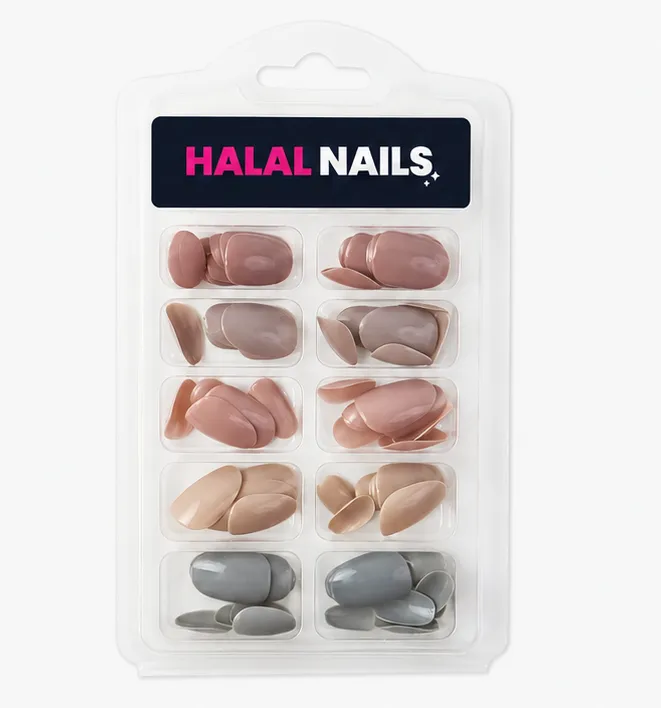
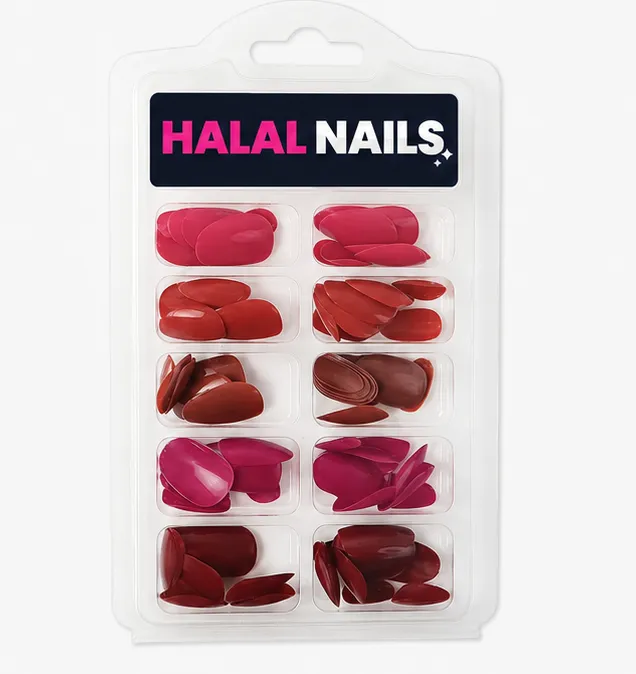
Yes. Press-on nails are among the most practical halal beauty products for Muslim women because they fit around the prayer schedule. They let you follow modest fashion and beauty standards, including short, neutral sets that pair with any hijab fashion, without choosing between your nails and your salah. Whether you follow beauty bloggers for the latest nail art trends or keep things simple, the same rule holds across the US and UK Muslim populations: if it comes off cleanly before wudu, it works with your salah. Our Halal Nails collection includes short sets in Pink Neutrals, Cool Neutrals and Autumn Berries, each with Halal Nails Glue Tabs included.
Whatever you wear, look after the nails underneath. The American Academy of Dermatology's nail care guidance recommends keeping nails clean, dry and trimmed, and the FDA explains how to use nail care products safely.
Frequently Asked Questions
Can Muslims pray with fake nails on?
Yes, if they applied the nails after making wudu on bare nails. The wudu stays valid until it breaks, and the nails must come off before the next wudu.
Can you pray in Islam with fake nails?
You can pray with fake nails that were put on after wudu using removable glue tabs. You can't pray on a wudu that was made while fake nails, polish or glue residue covered your nails.
Can you pray with fake nails if you have wudu?
Yes. Applying press-ons with alcohol-free glue tabs after wudu doesn't affect it, so you can pray with them on. Remove them before you renew your wudu.
What nails can Muslims wear?
Muslims can wear any nails that come off cleanly before wudu, such as press-on nails with glue tabs, or henna, which stains rather than coats the nail. Acrylic and gel nails are only practical on days you aren't praying.