Which Type of Lehenga Is Trending Now?
By Hijabi Bridal Team ·
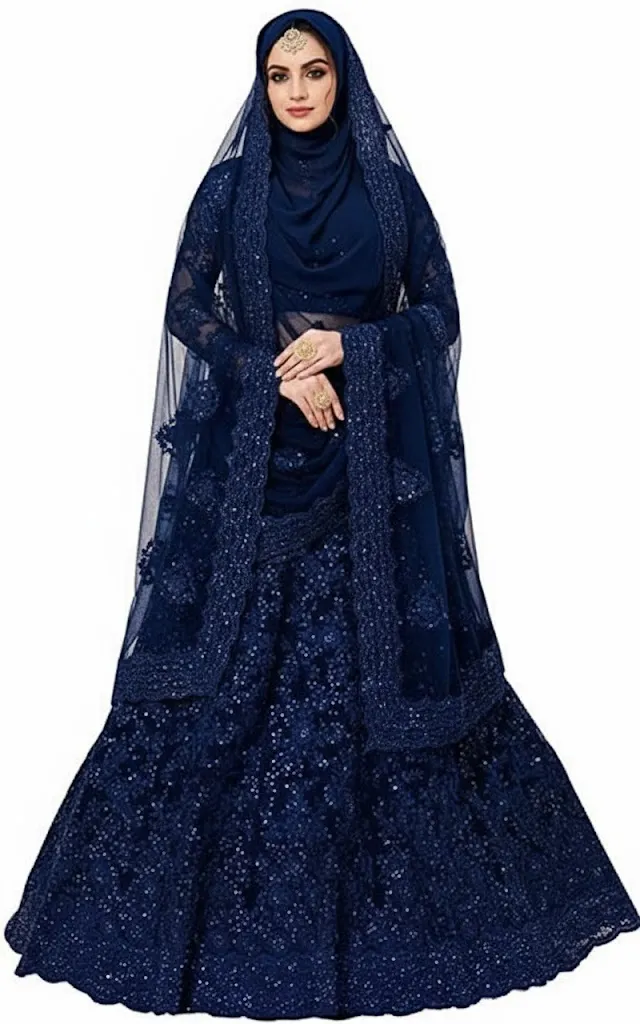
For Muslim brides in the US, the question is not just which silhouette is popular — it is which trending lehenga styles work beautifully with a hijab, and that would be the anarkali lehenga. Anarkali lehenga happens when the blouse, or choli, is connected with skirt as a bodice. The result is a flared dress, beautiful in its embroidery. If you have been scrolling through South Asian clothing trends lately, you already know that the lehenga is having a major moment. This guide covers the modern Muslim lehenga shapes taking center stage in 2026, from structured Indian lehenga classics to contemporary Pakistani lehenga fusions, and how each one translates into real wedding fashion USA moments for modest brides.
Which Type of Lehenga Is Trending Now?
Trending lehenga styles in 2026 reflect a clear shift: Muslim brides in America are blending traditional fish cut silhouettes with modest anarkali lehenga sensibilities, and the results are stunning. Here are the styles generating the most conversation across South Asian clothing trends, bridal forums, and Muslim bridal wear communities.
The Anarkali Lehenga
The anarkali lehenga is one of the most requested styles right now, and it makes complete sense for the modern Muslim lehenga bride. Unlike a conventional lehenga where the skirt and blouse are separate pieces, the anarkali lehenga is constructed with the blouse connected as a bodice directly into the skirt — creating one long, flowing silhouette from shoulder to hem. This built-in coverage means less tailoring is required to achieve a modest look, and the structured bodice naturally accommodates hijab styling without gaping at the neckline. It reads as contemporary and regal at the same time, which is exactly where trending lehenga styles are heading. The Muslim wedding dresses in our collection are actually anarkali lehengas that bridge the gap between a Muslim bridal gown and a traditional lehenga with the blouse separate. This makes the anarkali a practical and elegant choice for the nikah.
The Fish Cut Lehenga and Mermaid Cut Lehenga
The fish cut lehenga and mermaid cut lehenga are arguably the boldest entries in the trending lehenga styles conversation right now. Both silhouettes are cut straight down through the hips and thighs before flaring dramatically at or below the knee. The difference is subtle: the mermaid cut lehenga typically flares lower, closer to mid-calf, while the fish cut lehengaflares slightly higher, creating a more dramatic flounce. For a modern Muslim lehenga look, both styles work beautifully when paired with a long, layered dupatta that adds modest coverage without obscuring the silhouette. Celebrity inspired lehenga designs have popularized both cuts across Indian lehenga and Pakistani lehenga traditions, and US brides are now requesting them regularly in the wedding fashion USA market. Plus size lehenga options in these silhouettes are increasingly available, especially in our Amazon-curated semi stitched lehenga options. Designers recognize that the fitted-then-flared shape is genuinely flattering across body types.
Pakistani Lehenga and Indian Lehenga: How They Differ in 2026
The divide between the Pakistani lehenga and Indian lehenga has softened considerably as South Asian clothing trends globalize. Broadly speaking, the Pakistani lehenga tends toward lighter fabrics, softer embroidery, and more muted color palettes — dusty rose, ivory, sage, and champagne — while the Indian lehenga historically favors richer jewel tones, heavier embellishments, and bolder color contrasts. In practice, the modern Muslim lehenga bride in the US is mixing freely across both traditions, choosing a Pakistani lehenga silhouette in an Indian lehenga color palette, or layering a traditional Indian lehenga skirt with a more contemporary Pakistani lehenga blouse style. Cultural fusion dresses have become a category in their own right within Muslim bridal wear, and Hijabi Bridal's curated Amazon collection reflects exactly this cross-cultural appetite. Plus size lehenga options are available across both traditions, giving every bride access to trending lehenga styles regardless of size. Celebrity inspired lehenga designs — particularly those seen on South Asian actresses at major events — have accelerated this blending of the Pakistani lehenga and Indian lehenga aesthetic, making cultural fusion dresses a permanent fixture in wedding fashion USA rather than a passing moment.
Why Is the Isha Ambani Lehenga So Expensive?
The Isha Ambani lehenga has become a reference point in conversations about Indian couture and luxury fashion globally — and for good reason. When Isha Ambani married Anand Piramal in 2018, her bridal look, designed by Abu Jani Sandeep Khosla, represented some of the most elaborate hand embroidery and exquisite fabrics in the history of South Asian bridal wear. Understanding why the Isha Ambani lehenga commands that level of price — and why the modern Muslim lehenga bride does not need to spend anywhere near that — is genuinely useful for anyone planning a wedding.
What Goes Into the Cost of Indian Couture at That Level
The Isha Ambani lehenga price point reflects several compounding factors that define the upper tier of Indian couture. First, the exquisite fabrics: pieces at this level use hand-loomed silk, tissue, and velvet sourced from specialist weavers, often produced in limited quantities for specific commissions. Second, the hand embroidery: zardozi, gota patti, and resham work at couture level is executed by master craftspeople (karigar) who may spend thousands of hours on a single lehenga. The Isha Ambani lehenga reportedly involved embroidery teams working for months. Third, the luxury fashion house markup: designers like Abu Jani Sandeep Khosla, Sabyasachi, and Tarun Tahiliani operate at the intersection of art and commerce, and their bridal wear pricing reflects not just material and labor costs but brand value and exclusivity. For Muslim brides in America, this level of Indian couture is largely inaccessible — and honestly, unnecessary. The US Indian wedding market has developed robust mid-range and budget options that deliver stunning results with smart styling.
How to Achieve a Similar Look for Much Less
The good news for the modern Muslim lehenga bride is that the visual impact of the Isha Ambani lehenga — the layered richness, the sense of occasion, the bridal gravitas — can be achieved at a fraction of the cost with the right approach. Hijabi Bridal curates Amazon lehengas that use machine-replicated embroidery styles drawn directly from Pakistani lehenga designs and Indian couture references, giving Muslim brides in America access to the aesthetic of luxury fashion without the couture price tag. The key is in the styling. A double dupatta — one draped over the hijab and one across the shoulder — immediately elevates any lehenga into something that reads as intentional and bridal. Adding a third dupatta over the arm takes it to the next level. Adding nikkah jewelry introduces the kind of light-catching detail that hand embroidery provides in high-end pieces. South Asian fashion trends from Bollywood inspired clothing have made these styling codes widely understood, so a well-accessorized modern Muslim lehenga in exquisite fabrics at the mid-range price point photographs just as beautifully as its couture counterpart. Bridal juttis complete the look and add the kind of cultural specificity that luxury fashion houses build into their full bridal ensembles. The bottom line: the Isha Ambani lehenga represents the pinnacle of Indian couture craftsmanship, but the modern Muslim lehenga bride shopping with Hijabi Bridal can achieve the same visual language — layered, embellished, regal — through smart curation of Amazon pieces, double dupatta styling, and the right nikkah jewelry. Bollywood inspired clothing and South Asian fashion trends have made the full bridal toolkit more accessible than ever, and Muslim brides in America are using it brilliantly. Cultural exchange in fashion means these looks no longer belong exclusively to luxury fashion budgets — they belong to every bride who wants them.