What Is the Difference Between Sharara and Gharara Pants?
By Hijabi Bridal Team ·
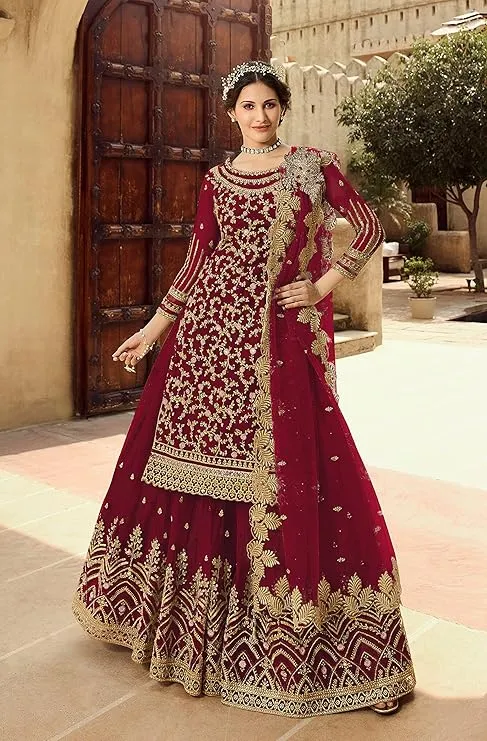
The difference between sharara and gharara pants comes down to where the flare begins. Sharara pants are wide and flared from the waist — the fabric sweeps outward from the hip in a continuous bell shape all the way to the floor, creating a dramatic, unbroken silhouette. Gharara pants, by contrast, are fitted or semi-fitted through the thigh and then flare dramatically from the knee or just above it— created by gathered fabric that is sewn in at that point, producing a distinctive puffed flare below the knee with a more fitted upper leg. Both are forms of traditional South Asian clothing worn for formal occasions, but the silhouette, the movement, and the styling context of each are meaningfully different. If you have seen a garment that looks fitted at the thigh and then suddenly explodes into a wide gathered skirt below the knee, that is a gharara. If the fabric is wide and flowing from the very top, that is a sharara. Which is suitable for the Muslim bride
What Is the Difference Between Sharara and Gharara Pants?
Sharara pants echo in the formal wear traditions of Pakistan, whereas gharara, which hug the thigh, are traditional to India. Still, a Muslim bride can choose this flirtatious look if her top is long enough to cover her thighs from
Sharara Pants: Flared From the Waist
Sharara pants are characterized by a wide, loose-fitting style that begins at the waist or hip and maintains that width all the way to the floor. There is no fitted section, no gathering point, and no knee break — the fabric simply falls in a continuous flare from the waistband downward. This creates a silhouette that is dramatic from every angle: from the front the sharara reads almost like a skirt, while the movement when walking reveals the wide trouser structure beneath.
The loose-fitting style of sharara pants makes them naturally modest and naturally comfortable — two qualities that have made them a staple of Muslim wedding attire across Pakistani clothing and Indian fashion traditions for centuries. The wide leg accommodates movement freely, making sharara pants easier to walk, sit, and dance in than the more structured gharara silhouette.
In terms of embroidered designs, sharara pants carry their embellishment primarily at the hem — where the wide flare meets the floor — and along the leg panels. Embroidered designs at the hem are especially impactful in sharara pants because the width of the fabric creates a large, visible canvas. Gold zardozi (metallic threadwork), sequin borders, and mirror work embroidered designs are all common in formal wear sharara styles, and the effect when the bride or wearer moves is one of sweeping, light-catching motion that is among the most visually spectacular in all of traditional South Asian clothing.
The cultural significance of sharara pants in desi culture is tied to their Mughal origins — they were formal court wear for Muslim women of status, and that association with elegance and occasion has persisted through centuries of Indian fashion and Pakistani clothing tradition. Today, sharara pants are worn at nikah ceremonies, walimah receptions, Eid celebrations, and formal cultural gatherings across desi culture communities in the United States and globally.
Gharara Pants: Gathered and Flared From the Knee
Gharara pants have a fundamentally different construction from sharara pants. The upper section — from waist to thigh or knee — is fitted or semi-fitted, following the line of the leg without the dramatic width of the sharara. At the thigh or knee, gathered fabric is sewn in, creating a pronounced puff or flare that extends from that point to the floor. This gathered section is the defining characteristic of the gharara — it is structurally distinct from the sharara's smooth, continuous flare, and it produces a very different silhouette and movement quality.
The loose-fitting style of the gharara below the knee contrasts with its fitted upper section in a way that is visually distinctive and historically significant. Gharara pants are among the oldest forms of formal wear in traditional South Asian clothing, associated particularly with the Muslim cultures of Lucknow and the broader UP (Uttar Pradesh) region of India, where the gathered, layered silhouette was considered the height of refined feminine dress in Mughal-era court culture.
The fitted upper section of gharara pants means that embroidered designs are distributed differently than on a sharara. The thigh and upper leg might carry embroidered designs that are visible when the wearer is seated or standing still, while the gathered flare below the knee carries its own embroidered designs — often a dense border or all-over pattern — that become visible in motion. This double embellishment zone gives gharara pants a particularly rich visual quality that suits the most formal occasions in Muslim wedding attire and Pakistani clothing tradition.
The cultural significance of gharara pants in desi culture is especially pronounced in Pakistani clothing traditions, where the gharara remains one of the most respected and recognized forms of formal bridal wear. As the Smithsonian's Mughal court dress collections document, the gathered, layered silhouette of the gharara has roots in some of the most sophisticated textile traditions of the Islamic world.
Silhouette, Movement, and Occasion: Choosing Between Sharara and Gharara
Which Is Easier to Wear?
For most occasions — particularly those involving extended wear or movement — sharara pants are the more practical choice. The continuous wide flare from the waist creates a loose-fitting style through the entire leg, meaning there is no fitted section to restrict movement at the thigh or knee. Walking, sitting cross-legged on the floor for a nikah ceremony, and dancing at a reception are all significantly more comfortable in the smooth, unbroken silhouette of the sharara.
Gharara pants, with their fitted upper section and gathered knee flare, require more careful movement. The fitted thigh section limits stride length, and the gathered flare at the knee — while visually spectacular — adds weight and structure below the knee that can feel restrictive compared to the freely flowing sharara. For brides or guests who prioritize comfort and ease of movement alongside formal wear elegance, sharara pants are the more wearable choice across a long wedding day.
Which Suits Which Body Type?
The continuous wide flare of sharara pants creates a loose-fitting style that is naturally flattering across a wide range of body types. Because the width begins at the waist, the silhouette balances the upper and lower body without drawing attention to the hips or thighs. This makes sharara pants particularly flattering for pear-shaped figures and for women who prefer not to have any fitted section in their formal wear.
Gharara pants, with their fitted upper section, work best on figures where the bride or wearer is comfortable with a more defined upper leg. The gathered flare below the knee adds visual volume at the lower leg, which can create a pleasing proportion for straight or athletic figures. The cultural significance of the gharara in desi culture means that it is often chosen regardless of body type consideration — it is a statement of tradition and heritage as much as a styling decision.
Occasion and Formality
Both sharara pants and gharara pants are formal wear — neither is appropriate for casual everyday contexts. Within the spectrum of formal occasions, gharara pants tend to read as slightly more traditional and ceremonial than sharara pants in Pakistani clothing and Indian fashion contexts, owing to their older Mughal-era associations and their more complex construction. For the most formal Muslim wedding attire occasions — particularly the nikah ceremony itself — gharara pants carry an unmistakable weight of tradition and cultural significance.
Sharara pants are equally formal but more versatile across the range of occasions within a wedding celebration. Their loose-fitting style suits the walimah reception, the mehndi night, Eid gatherings, and formal cultural events with equal ease. In Asian-American fashion trends, sharara pants have also gained traction as ethnic wear for special occasions beyond weddings — worn at graduation parties, engagement events, and formal community gatherings where traditional South Asian clothing is the appropriate dress code.
Fabric, Embroidered Designs, and Color
The fabric choices for sharara pants and gharara pants overlap significantly, as both are formal wear garments in the traditional South Asian clothing canon. Silk, velvet, chiffon, and georgette are the dominant fabric choices for both styles, with the specific choice driven by season, occasion, and personal preference rather than by any hard distinction between the two garment types.
Velvet fabric in both sharara and gharara pants creates the richest, most formal look — particularly suited to fall and winter occasions and to the most ceremonial Muslim wedding attire contexts. Silk and raw silk deliver a luminous surface that elevates embroidered designs by creating a shining base against which metallic and silk thread work catches light. Chiffon and georgette suit spring and summer occasions and create the most dramatic movement in the wide flare of the sharara silhouette.
Embroidered designs on both sharara and gharara pants reflect the regional traditions of Indian fashion and Pakistani clothing. Zardozi (gold metallic threadwork) is the most prestigious embroidered design technique in both traditions, appearing in dense border patterns and all-over motifs on the most formal pieces. Resham (silk thread) embroidered designs in floral and geometric patterns are common across a broader range of price points. Mirror work, sequin borders, and cutdana (small bead) embroidered designs are popular in both garment types for their light-catching quality in event and photography lighting.
Color choices for both garment types reflect the same desi culture traditions — red and jewel tones for the most traditional Muslim wedding attire occasions, champagne and pastel for more contemporary bridal styling, and bold saturated colors for festive and Eid contexts. The color conversation in Pakistani clothing and Indian fashion bridal wear has expanded significantly in recent years — with American Muslim brides in particular exploring a wider palette than previous generations.
Frequently Asked Questions
What is the difference between sharara and gharara pants?
Sharara pants are flared from the waist — the wide, loose-fitting style begins at the hip and continues to the floor in a smooth, unbroken bell shape. Gharara pants are fitted or semi-fitted through the thigh and then gather and flare dramatically from the knee, creating a distinctive puffed silhouette below the knee. Both are formal wear styles in traditional South Asian clothing, but the silhouette, movement, and construction of each are distinctly different.
Which is more comfortable to wear — sharara or gharara?
Sharara pants are generally more comfortable for extended wear and movement. Their continuous loose-fitting style from waist to floor allows free movement when walking, sitting, and dancing. Gharara pants have a fitted upper section that can limit stride, and the gathered knee flare adds structural weight below the knee. For a long wedding day, most brides find sharara pants more wearable.
Are gharara pants appropriate for a nikah ceremony?
Yes. Gharara pants are among the most traditional and ceremonially appropriate forms of Muslim wedding attire in Pakistani clothing and Indian fashion traditions. Their Mughal-era origins and complex construction give them a cultural significance that makes them a respected and recognized choice for the nikah ceremony and other formal Muslim wedding occasions.
What embroidered designs are most common on sharara and gharara pants?
Zardozi (gold metallic threadwork), resham (silk thread) embroidery, sequin borders, and mirror work are the most common embroidered designs on both sharara and gharara pants. On sharara pants, embroidered designs are concentrated at the wide hem; on gharara pants, embroidered designs appear on both the upper fitted section and the gathered flare below the knee.
Where can I buy sharara pants in the USA?
Hijabi Bridal's sharara collection offers 2026 styles in silk, velvet, and chiffon — sourced from Amazon and curated for Islamic modesty standards. South Asian boutiques in US cities with large desi culture communities also carry sharara and gharara pants in both ready-to-wear and semi-custom options. Online platforms like Etsy carry handmade and small-batch versions from South Asian artisan sellers.
Can sharara or gharara pants be styled with a hijab?
Yes. Both sharara pants and gharara pants are natural choices for hijabi brides and guests. The long tunic worn over both styles covers the hips and upper body, and the dupatta that accompanies the set can be styled as a hijab. A separate bridal hijab in a coordinating fabric — silk or chiffon — can also be worn in place of or alongside the dupatta for additional coverage and a more structured bridal hijab look.