What Are Punjabi Juttis Made Of? Leather & Embellishments
By Hijabi Bridal Team · ·
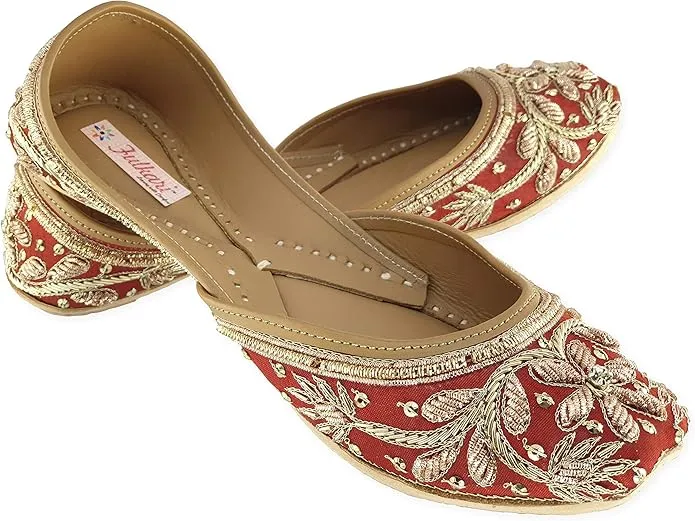
Punjabi juttis represent centuries-old craftsmanship where simple materials like leather and silk and cotton threads transform into stunning fashion accessories. These flat shoes combine supple leather with elaborate embroidery, creating footwear essential for South Asian weddings and cultural celebrations. From bridal jutti shoes matching heavy velvet lehengas to guest pairs perfect for strolling, handmade construction ensures comfort through multi-day wedding events. Hijabi Bridal makes juttis available via the US import market with our curated pieces from Amazon.
What are Punjabi juttis made of?
Every set of jutti shoes begins with premium leather selected for its softness and durability, perfect for all-day wedding wear. Artisans choose goat leather or buffalo leather that's been traditionally tanned to remain supple yet strong to make these handmade shoes. This leather forms both the upper and sole of the jutti, creating a flexible base that molds comfortably to the foot. Handmade embroidery transforms plain leather into showstopping pieces—vibrant silk threads, metallic zari wires, glass beads, sequins, and tiny mirrors get meticulously stitched across velvet or silk surfaces.
The embroidery requires skilled hands; each glass bead gets individually glued then reinforced with cotton thread stitching. Gold and silver threads create intricate floral motifs and paisley design patterns for the embroidery, while sequins catch reception lighting perfectly on a background of velvet or silk. For leather surfaces, the handmade leather receives multiple layers of natural dye for rich colors—deep maroon, emerald green, royal blue—that won't fade. Sometimes the natural leather color is given a beautiful sheen, or a fitted cover of silk or velvet. Cotton thread secures the Indian footwear, ensuring pieces withstand hours of wedding festivities without loosening.
Traditional design elements distinguish authentic jutti from factory versions of the Indian footwear. The characteristic horned toe gets carefully hammered over wooden lasts using only leather and cotton thread reinforcement. Interior padding uses soft leather scraps or velvet fabric inserts hand-stitched with cotton thread into place. This combination of quality leather, velvet or silk fabrics, cotton stitching, generous embroidery, design patterns, and handmade construction makes jutti indispensable for Punjabi wedding culture celebrations. Whether these fashion accessories are matching traditional Punjab clothing or standing alone as ethnic footwear statement pieces in South Asian culture.
What is jutti called in English?
Jutti most closely translates to "embroidered flat shoe" in English, distinguishing it from the curled-toe mojari worn in Rajasthan. While both represent traditional Indian footwear, jutti features straight pointed toes perfect for modern wedding aesthetics. These handmade leather shoes showcase elaborate surface decoration—phulkari embroidery, zari work, mirror appliques—that elevates them beyond simple Punjabi shoes.
The term "decorator shoes" captures jutti's role as festive footwear far more ornate than everyday flats. Mojari shoes curl upward at the toe while jutti maintains clean lines suitable for contemporary South Asian fashion wardrobes. Brides pair jutti with heavy lehengas knowing the embellished surface coordinates perfectly with outfit embroidery. Guests choose simpler jutti pairs that transition seamlessly between mosque ceremonies and evening receptions.
Jutti serves identical function to Western bridal flats but with exponentially richer surface detail. Handmade leather shoes feature embroidery matching lehenga palettes—gold threads for ivory gowns, silver dabka for pastel anarkalis. Punjabi culture wedding planners specify "jutti or equivalent flats" when coordinating footwear photography. This practical English naming bridges cultural specificity with universal understanding essential for American wedding vendors unfamiliar with Punjabi terminology. Whether called embroidered footwear, decorator shoes, or simply jutti, the craftsmanship defines its identity across ethnic footwear traditions.
What is the cultural significance of juttis?
The cultural significance of jutti slippers is rooted in Mughal era influence. Like most South Asian heritage bridal wear, jutti shoes originated during the Islamic Mughal empire that ruled the subcontinent during the 16th through the 19th century. The cultural symbolism of of royalty is the reason why jutti and Indian footwear, and all traditional festival wear, remain hugely popular today. And not only in India, Pakistan, and Bangladesh - South Asian heritage has moved Punjabi culture throughout the world. Most areas of the world have used subcontinent traditional fashion accessories at some point, and jutti shoes, these handmade, heavily embellished, handcrafted leather Indian footwear have made their mark - going with jeans and heavily embroidered lehengas equally.
As a fashion accessory, traditional handmade footwear has a lot of room for acceptance. The appearance and cultural symbolism of royalty makes jutti widely sought after, and the pricing for handcrafted leather traditional jutti makes them accessible. Of course they are used in Pakistani and Indian weddings, but ethnic fashion jutti for women look like princess slippers, making them suitable for the wider bridal market.
Retailers market jutti as "traditional" and "handmade" emphasizing craftsmanship over stylistic categorization, which is valid, but even if jutti were made by machine, they are no less lovely. Whether described as traditional Indian footwear, leather jutti, festival wear, or fashion accessories, handmade construction and cultural symbolism define jutti across South Asian heritage.
What does "jutti" mean?
Jutti means shoe. In the most literal sense, it doesn't mean traditional, cultural Indian footwear with a closed toe, it means shoe. In India the term for shoe is jutti, but there is no difference between jutti and khussa. Khussa is the term in Pakistan. In Mughal days, all shoes were handmade, of leather, and used similar Pakistani and Indian fashion styles as what we see today. The same ethnic look of South Asian culture - used decoratively with embroidery as part of wedding attire and plain leather for everyday use. In Punjabi clothing, anthing besides jutti were sandals.
Frequently Asked Questions
What is Punjabi jutti made of?
Punjabi jutti uses premium goat or buffalo leather for uppers and soles, hand-stitched with silk threads, zari work, glass beads, sequins, and mirrors. Cotton thread secures embellishments while interior leather padding ensures all-day comfort.
What is jutti called in English?
Jutti translates to "embroidered flat shoe" or "Punjabi flat." Unlike curled-toe mojari, jutti features straight pointed toes perfect for modern wedding aesthetics and handmade leather construction.
What is the cultural significance of juttis?
The cultural significance of jutti slippers is rooted in Mughal era influence. Like most South Asian heritage bridal wear, jutti shoes originated during the Islamic Mughal empire that ruled the subcontinent during the 16th through the 19th century and lent them the cultural symbolism of royalty.