What Is a Nikah? The Islamic Marriage Ceremony Explained
By Hijabi Bridal Team ·
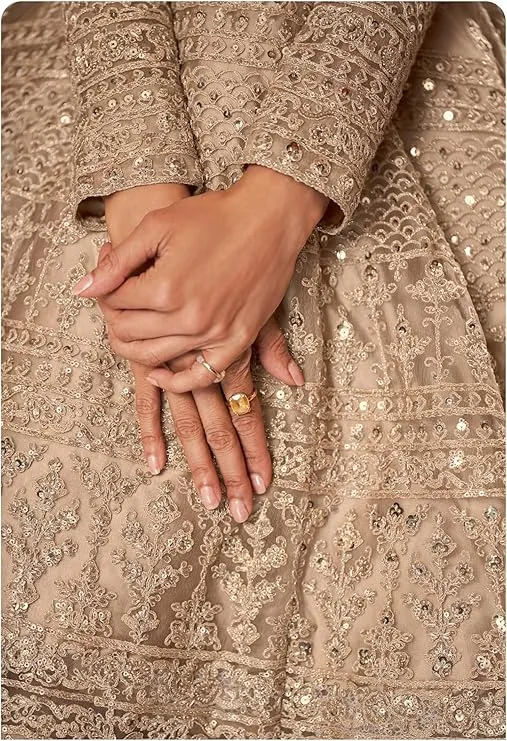
A nikah is the Islamic marriage contract — the formal and spiritually binding agreement between a bride and groom that constitutes marriage in Islam. Nikah is a contract that two people will live together forever. It is not simply a ceremony that precedes the wedding celebration; it is the wedding itself. The nikah is an Islamic ceremony rooted in the Quran and the practice of the Prophet Muhammad (peace be upon him), and it requires the presence of witnesses and an officiant to be valid. For the Muslim bride, the nikah is also a deeply personal occasion, and the Muslim bridal dress she chooses for it reflects her faith, her culture, and the significance of the moment. Whether the nikah takes place in a mosque in Dearborn or a banquet hall in Houston, its meaning is the same: two people entering a covenant recognized by God and community.
What Is a Nikah?
A nikah is the Islamic marriage contract that formalizes the union between a Muslim bride and groom. It is a pillar of Islamic family law and one of the most significant acts a Muslim can undertake. The marriage contract establishes the rights and responsibilities of both parties — including the mahr, the mandatory gift from the groom to the bride — and it is witnessed, recited, and accepted in a structured ceremony that has remained consistent in its essentials across fourteen centuries of Islamic tradition.
What distinguishes the nikah from a civil or secular marriage ceremony is its dual character: it is simultaneously an Islamically legal marriage contract and an act of worship. Performing the nikah is considered an act that pleases God, and the Prophet Muhammad (peace be upon him) described marriage as completing half of one's faith. This gives the Islamic ceremony a weight and spiritual significance that shapes everything around it — including the bridal attire, the choice of officiant, the location, and the gathering of witnesses.
The Marriage Contract
The marriage contract at the heart of the nikah consists of an offer (ijab) and an acceptance (qabul). The groom — or his representative — makes the offer, and the bride accepts. This exchange must be clear, unambiguous, and made in the presence of witnesses. The marriage contract also specifies the mahr, which is the bride's exclusive right and cannot be waived or redirected without her consent.
In the United States, many couples also register their nikah with the state as a civil marriage, ensuring the marriage contract carries legal recognition under American law as well as Islamic religious validity. Wedding planning for American Muslim couples increasingly involves navigating both the Islamic ceremony requirements and civil registration — a practical reflection of American Muslim culture at work.
The Role of Witnesses
Witnesses are not optional in a nikah — they are a condition of its validity. Islamic law requires the presence of at least two Muslim witnesses to the marriage contract. The witnesses must be of sound mind, adult, male, and Muslim. Their role is to hear and confirm the offer and acceptance, providing the human testimony that validates the marriage contract in the eyes of the community and Islamic law.
The witnesses serve a function that goes beyond mere formality. In Islamic tradition, marriage is a public act — a declaration made before God and community rather than a private arrangement. The witnesses embody that communal dimension, and their presence transforms the exchange of the marriage contract from a private agreement into a recognized Islamic ceremony. In practice, witnesses are often close male family members of the bride and groom, though the specific requirements for witnesses vary slightly across the four major schools of Islamic jurisprudence.
For interfaith marriage situations — where one partner may be converting to Islam or the ceremony involves cultural exchange between different faith traditions — the witness requirement is one of the practical details that wedding planning must address carefully. The witnesses must themselves be Muslim, regardless of the broader guest list or the cultural background of the families involved.
The Officiant
The officiant who presides over a nikah is typically an Islamic scholar, an imam, or a Qadi (Islamic judge). The officiant's role is to guide the ceremony, ensure the marriage contract is properly executed, confirm the presence and eligibility of witnesses, and often to offer a khutbah (sermon) that frames the nikah within Islamic teaching on marriage, family, and faith.
The officiant does not hold the same sacramental role as a priest or minister in other religious traditions — in Islam, the nikah is valid because of the contract, the consent, and the witnesses, not because of the officiant's personal spiritual authority. The officiant facilitates and validates rather than confers. That said, having a respected officiant — a knowledgeable imam or scholar — is deeply valued in most Muslim communities, and wedding planning typically involves arranging the officiant well in advance of the ceremony date.
In the United States, imams who serve as officiant for nikah ceremonies are often also legally ordained to perform civil marriages, allowing them to sign the marriage license and complete both the Islamic ceremony and civil registration in a single event. This is one of the ways American Muslim culture has adapted Islamic traditions to the practical requirements of life in the United States.
Bridal Attire at the Nikah
The bridal attire a Muslim bride wears to her nikah is one of the most visible and personal expressions of the occasion's significance. A Muslim bridal dress for the nikah must satisfy the modesty requirements of Islamic law — full coverage of the body except the face and hands, opaque fabric, and a style that is not form-fitting — while also reflecting the bride's nationality, cultural background, and aesthetic preferences.
The cultural significance of bridal attire at the nikah cannot be overstated. For South Asian Muslim brides, the Muslim bridal dress is often a heavily embroidered lehenga or sharara in red, gold, or jewel tones, with a dupatta styled as headwear. For Arab-American brides, a long-sleeved white or ivory gown with a matching hijab is common. For West African Muslim brides, richly colored kaftan or dirac styles with elaborate headwear reflect the cultural significance of their regional traditions. All of these are valid, beautiful expressions of Islamic ceremony dress.
The cultural significance of the nikah dress also lies in what it communicates to the community. The guests and witnesses present at the nikah see the bride dressed for one of the most important moments of her life — and the care she has taken with her bridal attire signals the respect she holds for the Islamic ceremony itself. A Muslim bridal dress chosen thoughtfully, in a fabric and style appropriate to the occasion, is both an act of personal expression and an act of deference to the gravity of the marriage contract being made.
Headwear and the Nikah
Headwear is a particularly significant element of bridal attire at the nikah, especially when the ceremony is held in a mosque. A Muslim bride who wears the hijab daily will typically choose an elevated bridal hijab for the nikah — a silk or embellished chiffon wrap that coordinates with her muslim bridal dress and marks the occasion as distinct from everyday practice.
A bride who does not wear the hijab daily faces a more personal decision. Many choose to cover for the nikah out of respect for the Islamic ceremony and the location, particularly in a mosque setting. Others wear decorative headwear — a jeweled piece, a structured wrap, or a loosely draped dupatta — that adds a ceremonial quality without constituting a full hijab. The cultural significance of this choice varies by community and family, and wedding planning conversations often include the question of headwear alongside venue, food, and guest list.
The Nikah in American Muslim Culture
Because of the many Muslims living in the diaspora, arranged marriages are still common for American Muslims, and success rates have proven to be higher. For those who have reverted to Islam and don't have Muslim family, matchmaking services fill a similar function. Matchmaking services scroll private profiles for the users, keeping modesty in the process, then recommend marriage partners.
In the United States, the nikah has evolved alongside the growth and diversification of the American Muslim community. American Muslim culture encompasses South Asian, Arab, African, convert, and mixed-heritage communities, each bringing distinct traditions to the Islamic ceremony while sharing its essential structure.
Wedding planning for nikah ceremonies in the United States increasingly reflects this diversity. Nikah ceremonies are held in mosques, banquet halls, hotel ballrooms, private homes, and outdoor venues. The guest list may be entirely Muslim or may include non-Muslim family members and colleagues — a reality of interfaith marriage and cultural exchange that shapes decisions about food, music, and the structure of the event. Cultural exchange between Muslim and non-Muslim communities has also influenced bridal attire, with some brides choosing fusion looks that blend Western bridal silhouettes with Islamic modesty requirements and South Asian or Middle Eastern embroidery traditions.
Interfaith marriage in the United States — where a Muslim marries a person from another faith background — adds another layer of complexity to nikah wedding planning. Islamic law permits Muslim men to marry Jewish or Christian women, while Muslim women are generally required to marry Muslim men under the majority scholarly position. Interfaith marriage situations require careful wedding planning to ensure the nikah is performed in accordance with Islamic law while honoring the cultural background of both families. Cultural exchange in these contexts can be richly beautiful, and the Muslim bridal dress often reflects the creative negotiation between two traditions.
For brides and grooms navigating the full scope of nikah wedding planning in the United States, understanding both the religious requirements and the cultural variations is essential. The Islamic ceremony at the heart of the nikah is consistent — the marriage contract, the witnesses, the officiant, the offer and acceptance — but the celebration around it is as diverse as the American Muslim community itself.
Frequently Asked Questions
What is a nikah?
Nikah is a contract that two people will live together forever. A nikah is the Islamic marriage contract between a bride and groom. It is the act that constitutes marriage in Islam, requiring the offer and acceptance of the marriage contract in the presence of witnesses and typically an officiant. It is both a legally binding contract and an act of Islamic worship.
Who can perform a nikah?
A nikah is typically performed by an Islamic scholar, imam, or Qadi who serves as the officiant. The officiant guides the ceremony and ensures the marriage contract is properly executed. In the United States, many imams who serve as officiant are also legally ordained to perform civil marriages.
How many witnesses are required for a nikah?
A nikah requires at least two Muslim witnesses to be valid. The witnesses must be adult, Muslim, and of sound mind. Their presence is a legal requirement of the marriage contract under Islamic law, not merely a formality.
What does a Muslim bride wear to a nikah?
A Muslim bride wears a muslim bridal dress that satisfies Islamic modesty requirements — full coverage, opaque fabric, and a non-form-fitting style. The specific bridal attire varies by nationality and culture: South Asian brides often wear an embroidered lehenga or sharara, Arab-American brides frequently choose a long-sleeved gown, and West African brides may wear a kaftan or dirac. Headwear is a key element of the nikah bridal attire.
Can a non-Muslim attend a nikah?
Yes. Non-Muslim family members and friends are often welcome as guests at a nikah ceremony, particularly in American Muslim culture where interfaith marriage and cultural exchange are common. The witnesses themselves must be Muslim, but the broader guest list is typically open.
Is a nikah legally recognized in the United States?
A nikah is not automatically legally recognized as a civil marriage in the United States. Many couples have their officiant sign a civil marriage license at the same time as the Islamic ceremony, ensuring the marriage contract is valid under both Islamic law and US civil law. Wedding planning for American Muslim couples typically addresses this dual registration requirement.