What Color Do Muslim Brides Usually Wear? White
By Hijabi Bridal Team · ·
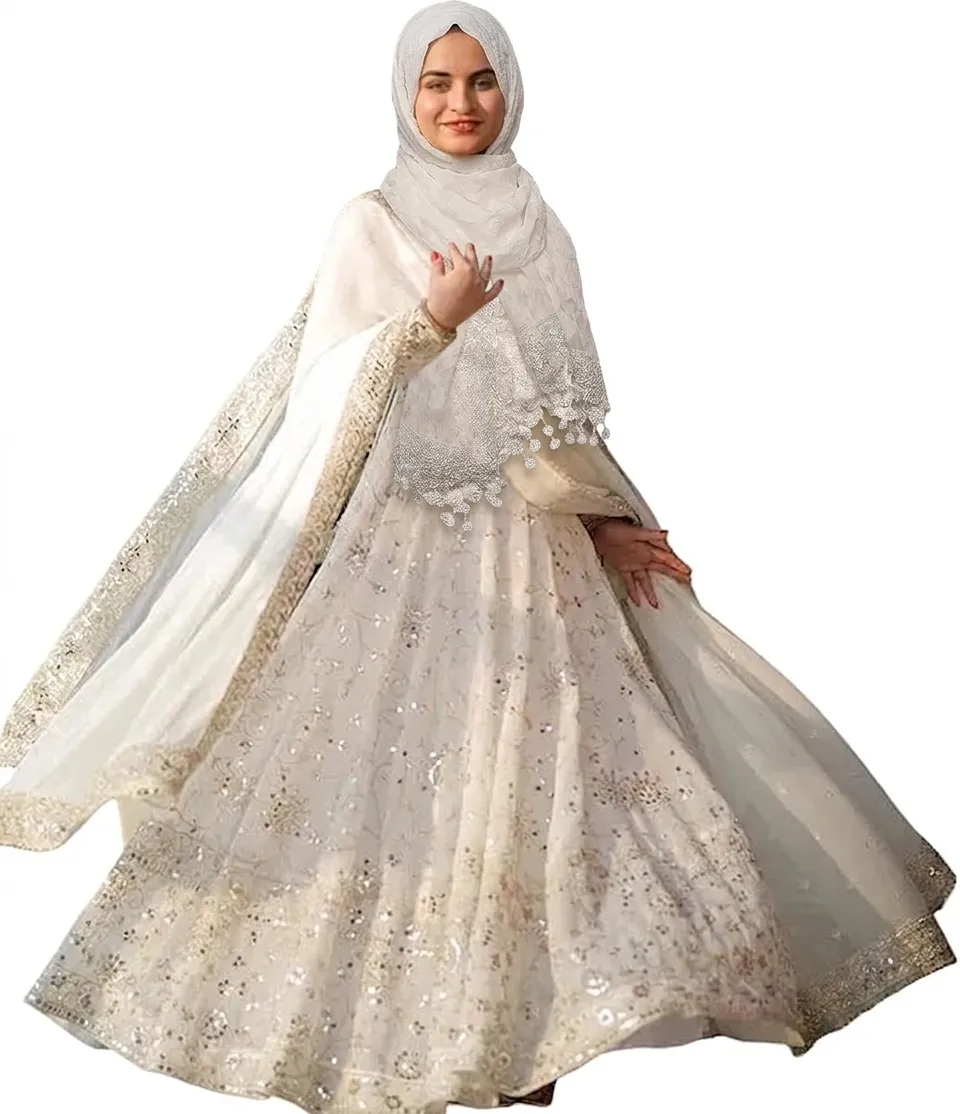
In the diverse landscape of 2026, the question of what color do Muslim brides usually wear often leads to a conversation about white. Today, many brides are embracing white wedding dresses as a way to honor their Western upbringing while maintaining deep respect for Islamic customs and cultural traditions. However, rather than opting for a standard Western ball gown, the most sophisticated white Muslim bridal looks involve translating that pristine palette into classic silhouettes like the sharara, lehenga, anarkali, or caftan. While vibrant reds have historically dominated South Asian weddings and gold tones have led Middle Eastern weddings, a significant shift is occurring within American Muslim weddings.
What Color Do Muslim Brides Usually Wear? White Muslim Bridal
For the modern bride, choosing white Muslim bridal attire is about more than just a color; it is about the fusion of identities. In US Muslim wedding trends, we are seeing a move away from the 'princess' cupcake dress in favor of white wedding dresses that utilize traditional craftsmanship. A white lehenga with silver zardozi work or a floor-length white caftan with intricate gold embroidery allows a bride to feel connected to her heritage during the nikah ceremony. This approach ensures that the bridal attire remains modest and culturally resonant. Whether attending a henna night or the primary ceremony, the choice of a white sharara provides a regal, airy aesthetic that stands out in the multicultural landscape of American Muslim weddings.
Bridal fashion in the US is increasingly inclusive, and modest silhouettes are influencing the broader market. When planning a nikah ceremony, brides often find that white wedding dresses in maxi (anarkali) style provide the perfect level of coverage while looking effortlessly elegant. These cultural traditions are not lost when the color changes; rather, they are reinterpreted. In South Asian weddings, the switch from red to white is often seen in interfaith marriages where the couple wishes to bridge two worlds. Even in Middle Eastern weddings, where white is more common, the emphasis remains on the quality of the fabric and the modesty of the cut.
Navigating Customs and Celebrations
Understanding the timeline of a wedding is essential for choosing the right outfit. A bride might choose a colorful ensemble for her henna night but pivot to a stunning white Muslim bridal lehenga for her actual wedding day. Islamic customs do not strictly dictate color, allowing for this creative freedom. In the context of interfaith marriages, white serves as a beautiful middle ground that satisfies both traditional expectations and modern bridal desires. Many brides find that accessorizing these looks with heavy jewelry and intricate veils help to maintain a high-fashion edge.
As US Muslim wedding trends evolve, the white Muslim bridal aesthetic has become a staple for the walima or the nikah ceremony. The key to success is in the details—matching a white crepe hijab with a heavily beaded white anarkali creates a seamless, polished appearance. In both South Asian weddings and Middle Eastern weddings, the bride is the center of attention, and Islamic bridal attire in white ensures she looks the part without sacrificing her values. For those navigating interfaith marriages, a white wedding dress in a traditional silhouette is a respectful nod to the American context of the celebration. Trends regarding formal wear also suggest that grooms are increasingly coordinating with these crisp, white bridal palettes, opting for cream or gray traditional long coats (sherwani).
Do Muslim Brides Wear White?
Muslim brides do wear white, and the number of Muslim brides choosing white is growing steadily across the American Muslim community, as is the variety of white Muslim bridal outfits. White is not prescribed or prohibited in Islamic wedding traditions; Islam requires modesty, coverage, and dignity in wedding attire, and a white wedding dress that meets those standards looks bridal, as any other color. What has driven the rise of white Muslim bridal looks in the US is cultural exchange — the natural result of Muslim brides growing up in an American context where white is the default bridal color, while simultaneously honoring the religious customs and family traditions that shape their wedding planning decisions.
For a Muslim bride navigating this choice, the most elegant solution tends towards modest wedding fashion instead of a standard Western ball gown. White Muslim bridal styling at its best translates the color into traditional bridal fashion: a white lehenga with silver zardozi embroidery, a floor-length white caftan with intricate gold threadwork, a white sharara worn with a satin crepe hijab and nikkah jewelry. These approaches satisfy religious customs around modesty — the floor-length coverage, long sleeves, and opaque fabric that Islamic wedding traditions require are naturally built into these silhouettes — while delivering the clean, modern aesthetic that white provides. Modest fashion in white is not a compromise; it is one of the most considered and elegant bridal choices available across the US Muslim population.
American Muslim culture has increasingly normalized white as a bridal color across two wedding occasions — the nikah ceremony and the walima reception — though with different styling for each. At the nikah, white wedding dresses in lehenga or anarkali form carry the ceremonial weight the occasion demands. At the walima, a cream or ivory caftan creates a relaxed but elevated bridal presence. For interfaith marriage ceremonies, where the guest list spans Muslim and non-Muslim backgrounds, white wedding attire serves as a visual bridge for cultural exchange — communicating celebration and bridal identity to every guest regardless of their frame of reference. Diverse wedding traditions across the US Muslim population deliberately regard cultural sensitivity along with Islamic values in their wedding planning. Islamic values in modest Muslim bridal fashion are not sacrificed in the process — they are simply expressed through a different palette.
Are Muslim wedding dresses white?
Traditionally, Muslim wedding dresses are red, green or another jewel tone - not white. In actuality, white weddings were only adopted in European culture some 200 years ago with Queen Victoria's wedding. Before then, Western brides wore colors also. Today, because the primary color in bridal fashion in America is white, US Muslim wedding trends have adopted white as a modern or contemporary look. Arabs also choose white, and with Middle Eastern influences on fashion, many Muslim wedding dresses in other areas are also white. However, South Asian styles prefer more cultural and regional Islamic bridal wear in red, although pastel looks show more contemporary versions of traditional designs.
Modern Muslim wedding dresses are found in white, sage green, pink and lilac in the US and in Arab countries. What matters more than color in Islamic tradition is that wedding attire meets modesty requirements: full coverage, opaque fabric, hijab-friendly designs, and a non-form-fitting silhouette for faith weddings and interfaith wedding attire. Whether traditional, modern, cultural, contemporary or regional, modesty is the main requirement for Islamic bridal wear. In past years, modern Muslim wedding dresses mimicked the form-fitted looks of wider bridal industry, but US Muslim wedding trends are evolving into hijab-friendly designs that are both traditional and modern, contemporary and cultural - whatever color is chosen.Frequently Asked Questions
What color do Muslim brides usually wear?
While red is the most common choice in South Asian weddings, white has become a major trend for American Muslim weddings. Islamic customs do not require a specific color, so brides often choose white wedding dresses that feature traditional silhouettes like the lehenga or caftan. Other Muslim brides usually wear colors based on their regional cultural traditions.
Do Muslim brides wear white?
Muslim brides do wear white. White is not prescribed or prohibited in Islamic wedding traditions. Islam requires modesty, coverage, and dignity in wedding attire, and a white wedding dress that meets those standards is as valid as any other color. White muslim bridal looks in traditional silhouettes like the lehenga, sharara, and caftan are a growing trend in American Muslim culture, particularly in interfaith marriage contexts.
Are Muslim wedding dresses white?
Traditionally, Muslim wedding dresses are red, green or another jewel tone - not white. In actuality, white weddings were only adopted in European culture some 200 years ago with Queen Victoria's wedding. Before then, Western brides wore colors also. Today, because the primary color in bridal fashion in America is white, US Muslim wedding trends have adopted white as a modern or contemporary look.
Is it okay for a Muslim bride to wear white?
It is increasingly popular for Muslim brides to wear white. In many American Muslim weddings, brides choose white Muslim bridal outfits for the nikah ceremony to blend Western aesthetics with Islamic customs. To keep the look traditional, many choose a white sharara or anarkali rather than a Western-style gown.
What is the best silhouette for a white Muslim bridal dress?
For a classic look, Muslim brides often choose a lehenga, sharara, or a regal caftan. These styles honor cultural traditions while providing the modesty required for the nikah ceremony. White wedding dresses in these styles are staples of current US Muslim wedding trends.
Do brides wear white to a henna night?
Typically, the henna night is reserved for bright, vibrant colors like green, yellow, or orange. White is more commonly worn at the nikah ceremony or walima reception in white Muslim bridal styling.