What Color Do Muslim Brides Usually Wear? Sage Green
By Hijabi Bridal Team · ·
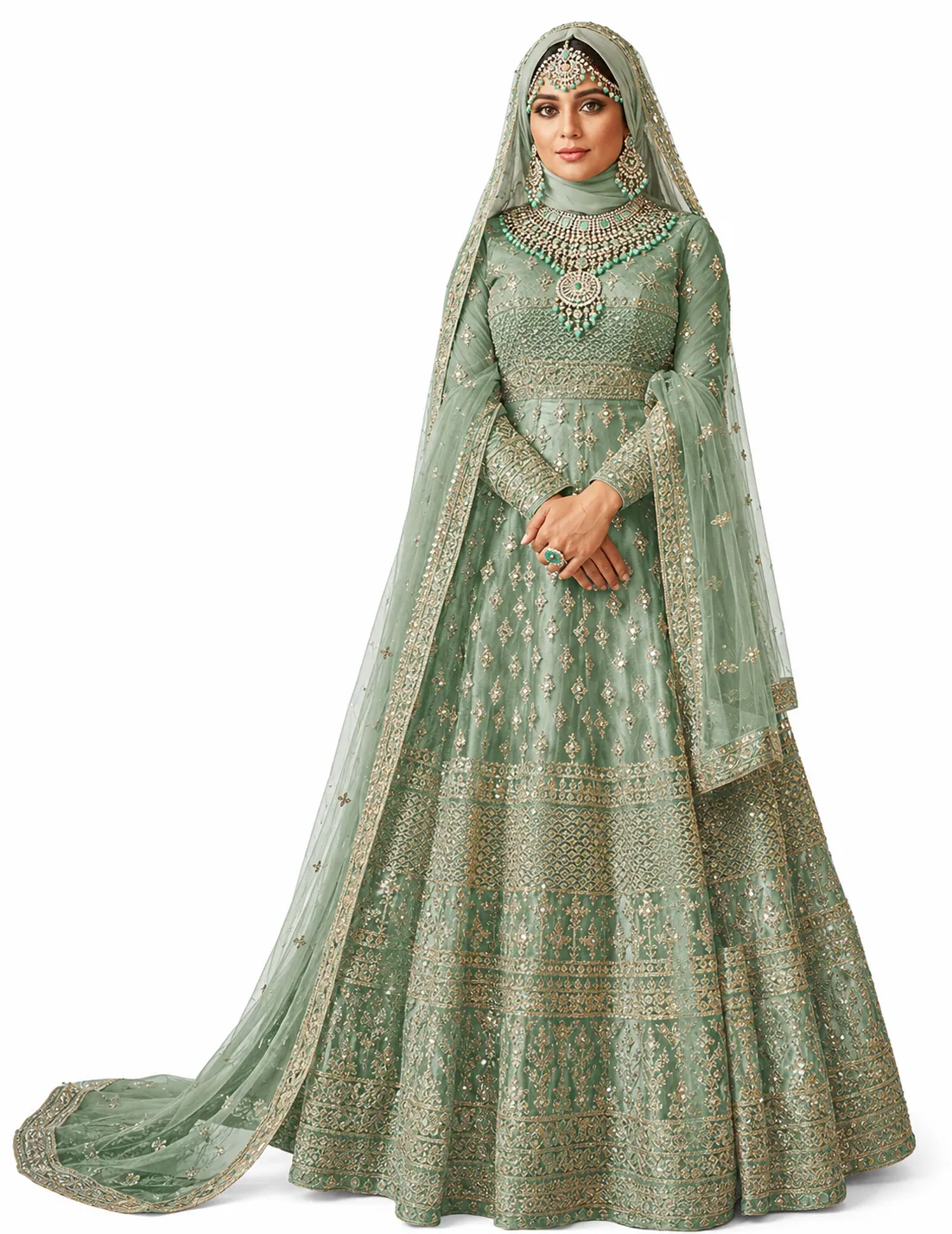
While red still leads as the dominant bridal color in Pakistani weddings and across South Asian Islamic wedding traditions, the honest answer to what color do Muslim brides usually wear in 2026 - it's the sage green Muslim bridal look. One of the most significant shifts in US Muslim wedding trends right now is the rise of sage as a genuine bridal color choice — not a compromise, not a reception alternative, but a primary nikah color with its own cultural authority and a growing body of bridal fashion coverage to support it.
What Color Do Muslim Brides Usually Wear?
American Muslim brides usually wear red or white as their traditional wedding attire, depending on cultural background and personal vision. Sage green is the wedding dress color that has moved most dramatically in bridal fashion trends in 2026, and Muslim brides have been central to that movement. Sage green Muslim bridal looks have appeared with increasing frequency in South Asian editorial coverage, in US Muslim wedding photography, and in the product searches driving the modest bridal market. This color has a quality few bridal colors match: simultaneously soft and distinctive, traditional and fresh, it photographs with depth across every lighting condition where ivory and champagne often wash out. Islamic wedding traditions have always adapted to the cultural context of the community observing them, and this shift in wedding dress color is a natural evolution of that pattern.
Pakistani weddings have long included green as a bridal option, particularly for the henna night (mehndi). Indian weddings similarly use green at pre-wedding events. What is new is the move of this color from the henna night into the nikah ceremony itself — a shift driven by both Western bridal fashion trends and the US Muslim community's own expanding sense of meaningful traditional wedding attire. The sage green Muslim bridal dress in silk or butterfly net, worn with a matching crepe hijab and gold jewelry, is one of the most cohesive looks in the modest bridal market right now. The cultural significance of choosing it is layered: it honors South Asian influence, carries Islamic wedding traditions resonance, and signals a contemporary aesthetic simultaneously.
In interfaith marriages — a growing segment of the wedding market — the color offers the same diplomatic neutrality as champagne but with more visual interest and a stronger connection to South Asian influence the bride may want to honor. It is among the fastest-growing search terms in the modest bridal category, outperforming lilac and peach in year-over-year growth. The color works across all three primary Muslim wedding occasions — henna night, nikah, and walima — with different styling for each. This traditional wedding attire category is now represented commercially in ways it was not three years ago, and wedding planning resources consistently list it as a top recommendation for 2026 nikah ceremonies. This shift reflects the Middle Eastern wedding customs and cultural exchange in wedding traditions that define the current American Muslim bridal moment, and Muslim brides across backgrounds are embracing it. The three sage green Muslim bridal pieces available at Hijabi Bridal — a silk sharara suit with metallic embroidery, a butterfly net bridal dress in sizes XS to XL, and a sage green crepe bridal hijab — cover all three events and can be mixed across the wedding weekend for a cohesive but varied look.
What color should a bride wear in Islam?
Islam doesn't place color restrictions on a Muslim bride, so she should wear a color that's pleasing to her - but it's better if it's associated with Islamic tradition. Sage green Muslim bridal wear is a perfect example of a bride choosing a modern, trending color that speaks to fashion trends but also has a great deal of cultural significance, green being an Islamic color. Sage green wedding attire or bridal dresses are trending in modest fashion and suit Islamic wedding customs as well. Under South Asian influence, sage green Muslim bridal looks have already been widely adopted, and will begin trending Middle Eastern culture by 2027. Even wedding decor goes easily with sage green. Hijab styles in this color favor a loose, relaxed, silky look that is perfect for sage green.
Why Do Muslim Brides Wear Green?
Muslim brides wear green because green has deep roots in Islamic wedding traditions across South Asian and Middle Eastern wedding customs — and because, in 2026, a green wedding dress has become one of the most prominent wedding colors in American Muslim bridal trends. Sage green Muslim bridal attire, in particular, has risen to this moment as a choice that resonates with Islamic heritage and contemporary aesthetics simultaneously.
The green color significance in Islam is real and worth naming accurately. Green is traditionally regarded as a sacred color in Islamic wedding traditions — associated with the Prophet (peace be upon him) and with paradise. The meaning of green in Islam makes it a meaningful bridal look for a Muslim bride who is attentive to the spiritual dimension of her wedding. That said, green is cultural wedding attire in Indian wedding fashion and Pakistani wedding customs, but not a universal Islamic requirement. Brides from other backgrounds may not share the same relationship to these wedding colors because their traditions developed differently. Green color significance is real; the universality is not.
In Pakistani wedding customs specifically, green is the expected mehndi color — the pre-wedding henna night where the dress follows the event's established visual identity. Muslim Indian wedding fashion carries a parallel tradition: green appears at the mehndi and at Eid celebrations as a color of festivity and blessing. In 2026, sage green Muslim bridal looks have moved from a pre-wedding color into the nikah ceremony itself — and into wedding fashion trends that Western publications are actively covering. A sage green wedding dress in this muted, earthy tone is the version of cultural wedding attire that crosses most naturally into modern aesthetics. A Muslim bride in this color at a garden nikah reads as simultaneously culturally specific and contemporarily bridal. Sage green wedding dresses carry the rare quality of honoring Islamic wedding traditions while feeling entirely current — which is exactly why American Muslim bridal trends is converging on it in 2026.
Why Do Muslims Wear Green on a Wedding?
For a Muslim wedding, green Muslim bridal wear is almost a religious custom - there is great symbolism in green attire following the Islamic tradition of green being the favorite color of the Prophet Muhammad, peach be upon him. The sentiment for the bridal party or guests is the same. It's even more appropriate considering that the symbolism of green is Islam is associated with paradise, and every Muslim bride, with her green gemstones and green bridal fashion, wishes to be seen as stepping straight from jannah, or heavenly gardens. For symbolism, green attire is the color that carries Islamic tradition in a way no other color can replicate. Wearing green attire to a Muslim wedding for the symbolism of green is an act of devotion, a religious custom as much as a style choice — and for brides who want their bridal fashion to carry meaning beyond aesthetics into religious practice, that dimension is irreplaceable.
Beyond Islamic tradition, the practical reasons are equally compelling. Green Muslim bridal attire is one of the most universally flattering colors across skin tones — from the lightest complexions to the deepest, every shade of green has a version that works beautifully. Deep emerald and forest green are especially rich against medium and dark skin tones, while sage, mint, and olive green suit lighter complexions and softer bridal aesthetics. Green also coordinates naturally with gold embroidery and nikkah jewelry. The gold and green combination is one of the most elegant and time-tested pairings in South Asian traditions and Middle Eastern culture. While white has a clearer cultural exchange for wedding customs in the US, sage green is picking up traction as a trending color in the American Muslim community and among interfaith marriages as well.
Green attire for Muslim weddings and bridal wear in Islamic culture stands out. In a bridal landscape dominated by red and white, a bride in a deeply embroidered emerald lehenga with its symbolism and Islamic tradition or a flowing sage bridal dress is genuinely distinctive. Wedding photography reads green reads as lush, rich, and deeply considered — a look that communicates intentionality and cultural significance. For American Muslim brides who want their wedding photographs to reflect both their faith and their personal aesthetic, green delivers both.
Can You Wear Green to a Muslim Wedding?
For most guests the answer to whether you can wear green to a Muslim wedding is a warm yes, but with one important qualification: green is one of the most established wedding colors in South Asian wedding customs, which means it is very likely that someone in the bridal family or wedding party will be wearing it. Wedding guest etiquette at these celebrations does not formally prohibit green the way Western bridal customs prohibit white — Islamic tradition does not reserve any color exclusively for the bride. But cultural norms in Pakistani and South Asian Muslim contexts strongly associate green with the bridal party and the mehndi night, making it a color that requires a little awareness before you commit to it as a guest.
If you are family — a sibling, cousin, or close relative of the bride or groom — the most culturally sensitive approach is to check with the bride or a family coordinator before choosing green wedding attire. Green bridal looks are so visually associated with the wedding party in US Muslim community celebrations that an unintentional match creates an awkward situation in photographs. Cultural sensitivity here is simply good manners. If the bridal color palette includes sage green or forest green, pivot to a different color — champagne, navy, blush, or a warm rose all signal bridal color palette awareness without any compromise on your own style. If no one in the wedding party is wearing green, you are free to wear it with full confidence.
For general guests — friends, colleagues, or guests at an interfaith marriage attending from a Western background — green wedding attire at a Muslim wedding can be awkward if the bridal party is also wearing it. Otherwise, it reads as a warm, culturally engaged choice. Sage green bridal aesthetics have become prominent enough in American Muslim fashion that a guest in tasteful sage or olive green is often perceived as someone who simply didn't know the bride would wear it, but understands the couple's cultural context. South Asian wedding customs welcome this kind of awareness from guests of all backgrounds. Wedding guest etiquette across Muslim communities is not rigid on color — it is rooted in the broader Islamic tradition of hospitality and communal celebration.
At interfaith marriage celebrations where the guest list spans Muslim and non-Muslim backgrounds, American Muslim fashion sensibilities tend to be welcoming of green on guests who wear it modestly and intentionally. The bridal color palette is the bride's domain; cultural norms ask guests to avoid white and red before any other consideration. Sage green Muslim bridal adjacent tones are genuinely safe for guests who are not part of the wedding party and won't generally be photographed with the bride, as long as cultural norms lead you to confirm rather than assume when you are close to the family. Islamic tradition celebrates guests who show up having made an effort, and thoughtfully chosen sage green bridal-adjacent wedding attire is exactly that kind of effort.
Frequently Asked Questions
What color do Muslim brides usually wear?
Muslim brides most commonly wear red as their traditional wedding attire, driven by Pakistani wedding customs and Indian Muslim bridal traditions where red has been the dominant nikah color for generations. Sage green is the fastest-growing wedding dress color in 2026, with cultural significance rooted in Islamic wedding traditions and strong momentum in bridal fashion trends. Ivory, champagne, and gold are common in Middle Eastern wedding customs. Islamic wedding traditions require only modest coverage; the color is the bride's personal and cultural choice.
Why do Muslim brides wear green?
Muslim brides wear green because of the cultural significance of green in South Asian Islamic wedding traditions — particularly Pakistani weddings where green is the established henna night color — and because the meaning of green in Islam gives it spiritual resonance for brides attentive to that dimension. In 2026, sage green Muslim bridal has moved from the henna night into nikah ceremony bridal attire, driven by wedding fashion trends across both the Muslim bridal market and the broader US bridal industry.
Why Do Muslims Wear Green on a Wedding?
For a Muslim wedding, green Muslim bridal wear is almost a religious custom - there is great symbolism in green attire following the Islamic tradition of green being the favorite color of the Prophet Muhammad, peach be upon him. The sentiment for the bridal party or guests is the same. It's even more appropriate considering that the symbolism of green is Islam is associated with paradise, and every Muslim bride, with her green gemstones and green bridal fashion, wishes to be seen as stepping straight from jannah, or heavenly gardens.
Can you wear green to a Muslim wedding?
Yes, with awareness. Green is deeply embedded in Muslim bridal and South Asian wedding customs, so check with the bride or family if you are a relative — an unintentional match with the bridal color palette is a real risk. For general guests, green wedding attire is a warm, culturally engaged choice that the US Muslim community and South Asian wedding customs welcome warmly. Cultural norms ask guests to avoid white and red before any other color; green is among the safest guest choices, particularly in softer, sage tones.
Is sage green appropriate for a Muslim wedding?
Yes. Sage green is an excellent choice for a Muslim wedding in 2026 — appropriate for the nikah ceremony, the henna night, and the walima reception. It carries cultural significance rooted in Pakistani and Indian Muslim bridal traditions, resonates with the meaning of green in Islam, and aligns with the most prominent wedding fashion trends of 2026 across both modest and mainstream bridal markets.
What sage green Muslim bridal styles are available?
Hijabi Bridal's sage green Muslim bridal collection includes a silk sharara suit with metallic embroidery, a butterfly net modest wedding dress in sizes XS to XL, and a sage green crepe bridal hijab. All three are available on Amazon with US shipping and can be mixed across the wedding weekend for a cohesive sage green bridal look.