Muslim Sherwani Photos: Do Muslims Wear Sherwani?
By Hijabi Bridal Team ·
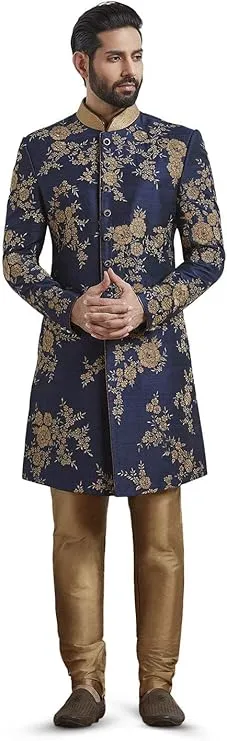
When exploring Muslim Sherwani photos online, one of the first questions many people ask is whether Muslims actually wear the sherwani — and if so, when, how, and why. The answer is a confident yes, and the cultural context behind it is as rich as the garments themselves.
Do Muslims Wear Sherwani?
Yes — Muslims wear the sherwani, particularly on formal and ceremonial occasions. The sherwani is a traditional long coat originating from South Asia, characterized by its knee-to-thigh length, structured collar, and ornate fabric. While it is not exclusively a Muslim garment, it holds deep historical and cultural significance within Muslim communities.
To understand its roots, the history of South Asian court dress traces back to the Mughal Empire, when Persianized Turkic rulers elevated the long coat into elite formalwear. As one historical reference notes: What is the origin of "Sherwani"? Sherwani is an elite dress wear of Muslim nobles and warlords. Its origin dates back to medieval times where Persianized Turkic dynasties ruled. This lineage is precisely why Muslim Sherwani photos so consistently feature the garment at weddings, Eid celebrations, and other formal events.
The Cultural Context of Sherwani in Muslim Dress
Context matters enormously when discussing clothing preferences within Muslim communities. Islam encourages modesty and dignity in dress, and the sherwani naturally satisfies both requirements. Its long silhouette, full coverage, and regal design align well with Islamic values of modest attire, making it a practical and spiritual choice for formal occasions.
The diversity of Muslim cultures worldwide means that clothing preferences vary significantly. A Muslim man in Pakistan may choose an embroidered sherwani with a turban for a wedding, while a Muslim man from West Africa may prefer a different traditional style entirely. However, in South Asian Muslim communities — including many families within the US Muslim community — the sherwani remains the gold standard for special occasions.
This diversity is on full display in Muslim Sherwani photos shared across social media, wedding blogs, and fashion platforms. The photos document not just a garment, but an identity — a visual record of how Muslim men express cultural pride through clothing.
Occasions When Muslims Wear Sherwani
The sherwani is not everyday wear. It is reserved for occasions that call for dignity and celebration. Among the most common occasions are:
Weddings (Nikah and Walima)
This is the most prominent context for the sherwani. The groom typically wears an elaborately embroidered sherwani, often in ivory, cream, gold, or jewel tones. Muslim Sherwani photos from wedding occasions frequently go viral for their visual grandeur. As noted in discussions about South Asian weddings, male guests at a Nikah are often expected to wear a sherwani, especially when the groom's family has South Asian roots.
Eid al-Fitr and Eid al-Adha
These are special occasions when Muslim men across generations — from young boys to elders — dress in their finest attire. The sherwani is a popular choice during both Eids, reinforcing its role as festive formalwear. Muslim Sherwani photos from Eid mornings capture families dressed in coordinating outfits, often featuring matching fabric and embroidery across generations.
Graduation and Milestone Ceremonies
Increasingly, Muslim men are choosing the sherwani for academic and professional milestones, blending tradition with personal achievement.
Cultural and Religious Festivals
Beyond Eid, the sherwani appears at occasions like Mawlid al-Nabi (the Prophet's birthday, peace be upon him) and community galas organized by mosques and Islamic centers across the US.
Design, Fabric, and Quality: What Makes a Great Sherwani?
When shopping Muslim Sherwani photos, you will quickly notice that design, fabric, and quality are the three pillars that distinguish an exceptional sherwani.
Design ranges from classically understated to heavily embellished. Traditional design often features hand-stitched embroidery (known as zardozi or tilla work) in gold or silver thread. Modern design embraces cleaner lines, minimalist collars, and contemporary color palettes. Many grooms today opt for fusion design that incorporates both — a structured Western silhouette with South Asian embroidery.
Fabric is equally important. Premium sherwani fabric includes brocade, cotton, velvet, and wool blends for cooler months. For summer occasions, cotton and linen-based fabric offer breathability without sacrificing elegance. The quality of the fabric directly impacts the drape, longevity, and overall appearance of the garment.
Quality craftsmanship is what separates a heirloom sherwani from a rental piece. High quality involves hand-finishing, reinforced seams, and precise tailoring. Quality tailoring has surged in demand among second-generation South Asian men in the US who want garments that honor their roots while fitting modern Western body standards.
Accessories That Complete the Look
No sherwani is complete without the right accessories. Muslim Sherwani photos consistently showcase a curated set of traditional and modern accessories that elevate the overall look.
- Turban or topi: A wrapped turban (safa or pagri) in matching or contrasting fabric is traditional at weddings. A simple topi (prayer cap) is more common for Eid.
- Footwear: Traditional khussa or mojari shoes — handcrafted leather slippers with pointed toes — are the classic choice. Modern interpretations include embroidered loafers.
- Pocket square and brooch: These accessories add a Western-influenced finishing touch to the look.
- Jewelry: While Muslim men generally keep jewelry minimal out of religious preference, cufflinks, rings, and watches are acceptable accessories that appear in many Muslim Sherwani photos. Necklaces can be worn by the groom.
Fashion Trends in Muslim Sherwani Styling
Fashion trends in the sherwani world evolve constantly. Current fashion trends lean toward lighter color palettes — cream, sage, dusty blue — replacing the traditional heavy maroons and navy blues of the past. Black and gold is being worn more frequently. Monochromatic design, where the embroidery and base fabric share the same color family, is one of the dominant fashion trends seen in recent Muslim Sherwani photos from wedding seasons.
The US Muslim Community and the Sherwani
Muslim Sherwani photos shared within this community often reflect a negotiation between two worlds: the desire to honor cultural heritage and the practicality of living in a Western context. This has driven demand for sherwanis that are lighter, easier to travel with, and styled in ways that translate well in American wedding venues.