Bridal Hijab vs. Veil: What Every Bride Should Know
By Hijabi Bridal Team · ·
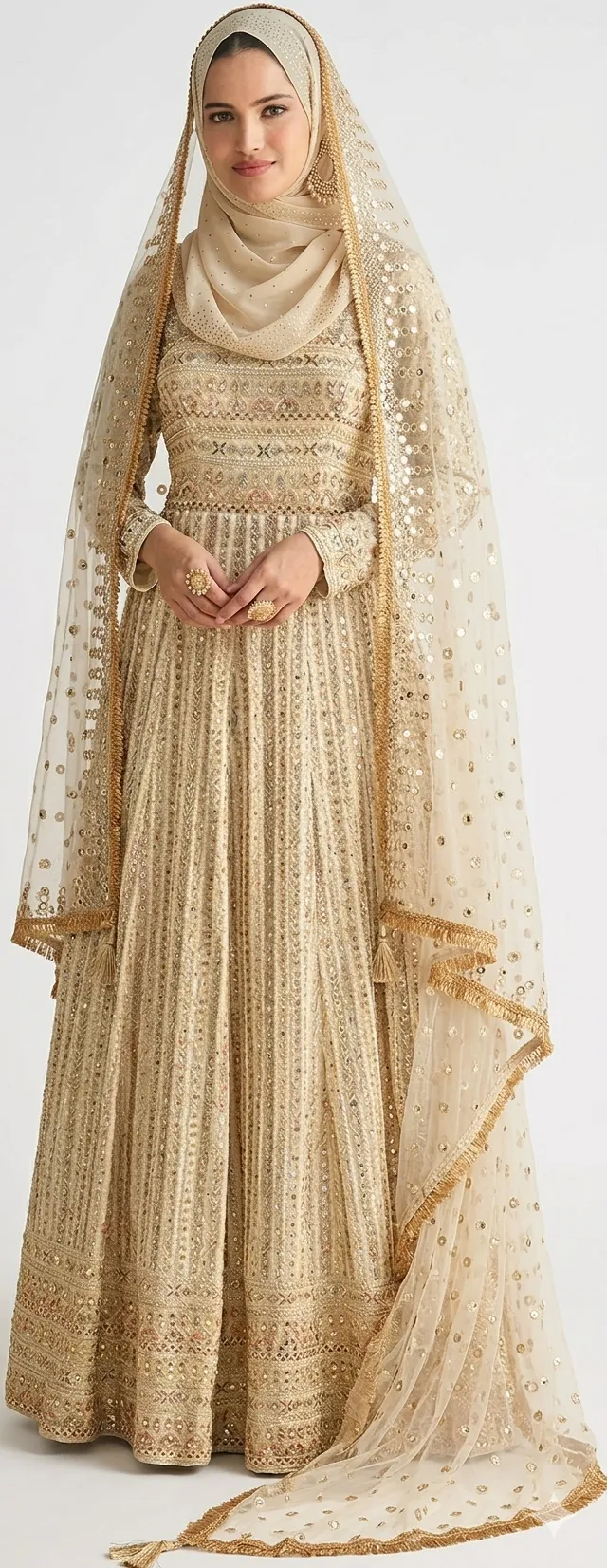
A hijab is a religious head covering worn by Muslim women as an act of faith, whereas a wedding veil is a Western bridal accessory with no religious requirement attached. The two serve entirely different purposes. However, Muslim brides can incorporate wedding veils with a hijab look. Bridal dupattas serve the perfect role as a wedding veil, whether covering the face and head or trailing down the back of your dress. That said, A hijab and a wedding veil are not the same thing.
What Is the Difference Between a Hijab and a Veil?
The core difference between a hijab and a veil is this: a hijab is religious and permanent in public; a veil is decorative and temporary. A Muslim woman who wears the hijab does not remove it in public settings — including her wedding ceremony. A bride wearing a Western veil typically removes it at some point during the reception.
Can a hijabi bride wear a veil?
You can always incorporate a wedding veil look onto your bridal hijab, for pure fashion or added coverage, Islamically. Some brides choose a large embroidered dupatta to drape over their heads and the upper part of their wedding gown for both reasons. Dupattas generally measure two and a half meters and are long enough to be pinned to your hijab and cover your face or trail down your back. This works lovely with a sheer white or ivory dupatta, and is even more stunning as the unexpected glamor touch with jewel tones and pastels. Soft net fabrics are the most popular choices for US Muslim brides.
When used to cover the face and makeup, wedding veils are encouraged in Islam, not prohibited. In the United States, the bridal veil has become a distinct and growing category within Muslim bridal fashion. They can be worn purely as a fashion accessory. When sheer, wedding veils act as Islamic coverage to help disguise the face and makeup. Most Muslim brides who wear a veil with a hijab leave it in place unless it's covering the face. When opaque, it acts as hijab and a perfect covering for when male witnesses enter the room during the nikkah ceremony.
Is a Hijab a Veil?
Technically, a hijab can be described as a type of veil in the broadest sense — it is a piece of fabric that covers part of the head. But in the context of US wedding culture, the answer is no: a hijab is not a veil. When most Americans use the word "veil," they mean the Western bridal accessory worn over a white gown. American Muslims expand the context by incorporating different textures and colors.
What Is a Bridal Hijab?
A bridal hijab is a hijab specifically elevated for a bride's wedding day. It serves the exact same religious function as an everyday hijab — covering the hair, ears, and neck — but it is made from more luxurious materials and may feature embellishments like beading, embroidery, crystals, or hand-sewn pearls. It does not cover the face. It does not lift during the ceremony like a classic wedding veil. It is a hijab, worn with intentionality and beauty, chosen to complement the bride's wedding gown or lehenga.
Do You Have to Wear a Hijab on Your Wedding Day?
The hijab is a religious commitment and many Muslim brides use the hijab in daily life and during their wedding ceremonies. Many Muslim women who do not wear the hijab in daily life still choose to cover modestly for their nikah ceremony out of respect for the sacred occasion and the mosque setting. If you do wear the hijab daily, you will almost certainly continue wearing it on your wedding day — in a specially chosen bridal hijab style that honors both your faith and the significance of the moment. You might wear in a traditional South Asian style with double dupattas or in a western context with a dupatta worn in a similar fashion as the wedding veil.
Bridal Hijab Styles for US Muslim Brides in 2026
The most popular bridal hijab styles among US Muslim brides in 2026 fall into three categories:
- Crepe bridal hijab — structured fabric that holds its shape through a long ceremony. Available in every bridal color including champagne, ivory, red, sage green, and navy. The most practical choice for an all-day wedding.
- Sparkle and fluff hijab — textured materials with shimmer or feathered edges for brides who want maximum visual impact. Popular for nikah ceremonies where photographs are the priority.
- Dupatta as hijab — an embroidered or velvet dupatta draped over the hair or hijab and pinned into place. Creates a layered, regal look especially popular in South Asian Muslim weddings. Often paired with a second dupatta draped over the shoulder.
All three styles are available in our bridal hijab collection on Amazon, many with US Prime shipping. Also, our bridal dupatta collection contains many colors to suit your wedding veil wishes, should you choose to embellish your hijab with a veil.
What hijab material is best for a wedding?
The best hijab material for a wedding as the bride is whatever fabric you're used to wearing. Unless you have a hijab stylist, this isn't the day to start experimenting. When you're doing your wedding dress up with bridal makeup, you'll see how easy it is to go with something familiar. Muslim wedding traditions emphasize the hijab as a form of Islamic fashion, so whatever you do, choose a fabric that works well with you and make sure it has something fancy added, like lace, gold specks or embroidery.
We normally think of formal events necessitating silk or velvet, and that's certainly true of your dress. But the last thing you want is your hijab getting messy, so it's key that you're good at wrapping it. Regardless of what your bridal party chooses for hijab fabric, you want to look especially put together in your cultural heritage as a bride. The familiar chiffon hijab, with special touches added, is a good choice for most brides for these elegant accessories.
What are alternatives to a traditional bridal hijab?
Modern Muslim brides increasingly explore creative alternatives to the standard chiffon bridal hijab while maintaining modesty essential for Islamic wedding ceremonies. Lace bridal hijabs provide romantic texture contrasting heavily embroidered lehengas, where delicate lace patterns create sophisticated layering without additional volume. Lace bridal hijabs also appeal particularly to brides seeking European-inspired romance within white modest wedding attire frameworks. The intricate patterns complement crystal bridal belts and chokers without competing visually.
The silk wedding hijab delivers luxurious drape ideal for close-up photography, its smooth surface reflecting reception lighting beautifully across mosque and banquet settings. The bridal hijab cap emerges as popular solution, anchoring slippery silk wedding hijabs securely throughout multi-event celebrations. Place the hijab over hairline and face, then apply the bridal hijab cap over the hijab at the hairline before flipping the hijab back over the head for flawless coverage. Even better, a customizable hijab cap will tie in the back to adjust perfectly for different head sizes, ensuring comfort without constant readjustment.Wearing an elaborate dupatta as an Islamic wedding veil presents another compelling alternative to traditional bridal hijab, which is usually plain chiffon that hosts nikkah bridal jewelry. A heavily embroidered dupatta draped over the hijab creates cascading volume that makes a different look entirely. Islamic wedding veils crafted from fine organza or net serves as a bridal headcovering over the hijab while allowing face visibility. Islamic wedding veils worn in this manner requires careful fabric weight selection so that they drape, not droop. A wedding headscarf can also be opaque dupatta fabric, which is heavier, but coordinates seamlessly with lehenga palette while offering flexible styling options. A wedding headscarf styled with or as a dupatta preserves tradition as a religious wedding accessory.
As religious wedding accessories, bridal headcovering solutions strike the necessary balance through strategic layering and fabric coordination creating effortlessly elegant silhouettes. These Islamic bridal fashion styles accommodate wedding dress codes that require full coverage while showcasing personal style through strategic fabric choices and embellishment placement. Muslim wedding traditions evolve continuously, with contemporary brides blending cultural expectations with modern silhouettes creating photogenic moments across diverse celebration formats.
Article Facts and FAQ
Is a bridal hijab the same as a wedding veil?
No, a bridal hijab is not the same as a wedding veil. A bridal hijab is a religious head covering worn by Muslim women — elevated in fabric and design for a wedding, but still functioning as a hijab that covers the hair, ears, and neck. A wedding veil is a Western bridal fashion accessory with no religious requirement, typically made from tulle or lace, and usually removed during the reception. However a wedding veil, as a dupatta, can be used over the head of the bride to cover her makeup when sheer. When opaque, it can cover her hair as well and is perfect for when male witnesses enter during the nikkah ceremoney.
What is the difference between a hijab and a veil?
A hijab is a religious head covering worn by Muslim women as an act of Islamic modesty and faith. It covers the hair, ears, and neck, leaves the face uncovered, and is not removed in public. A veil is a Western bridal accessory — typically tulle or lace — worn for aesthetic and symbolic reasons with no religious requirement. A hijab is permanent in public; a veil is temporary and decorative and can be added to a hijab look by a Muslim bride.
Is a hijab a veil?
In the broadest sense, a hijab is a type of head covering that could technically be called a veil. But in the context of US wedding culture, a hijab is not a veil. When most people say "veil" they mean the Western bridal accessory worn over a white gown. A hijab is a religious garment with a different purpose and meaning.
Can a Muslim bride wear both a hijab and a veil?
Some Muslim brides incorporate veil-like layers or tulle fabrics into their bridal hijab styling for visual effect — creating a look that has the volume and drama of a veil while still functioning as a hijab. Some even use a long trailing dupatta over the hijab as a veil. This is a personal and aesthetic choice. The hijab must still fulfill its religious function regardless of any additional styling. A Muslim bride would not wear a Western-style veil in place of her hijab.
Do you have to wear a hijab on your wedding day as a Muslim woman?
Some Muslim women who don't wear hijab daily choose to cover modestly for the nikah ceremony out of respect for the occasion or the mosque setting. If you do wear hijab daily, you will continue to wear it on your wedding day — in a specially chosen bridal style.
What fabrics are used for a bridal hijab?
The most popular fabrics for a bridal hijab are crepe, chiffon, and silk. Crepe holds its shape well and is practical for long ceremonies. Chiffon is lighter and creates a more flowing, romantic look. Silk and satin add a luxurious sheen that photographs beautifully. Some brides also choose embroidered net or velvet for a more ornate, South Asian-inspired look. All of these fabrics are available in our bridal hijab and dupatta collections.
What are the most popular bridal hijab styles in the US right now?
For US Muslim brides in 2026, the most popular bridal hijab styles are crepe hijabs in bridal colors like champagne, ivory, and sage green; sparkle and fluff hijabs with textured or feathered edges for nikah ceremonies; and large embroidered dupattas draped as hijabs for South Asian-style weddings. The double-dupatta bridal look — one dupatta worn as a hijab and one draped over the shoulder — is especially popular and widely photographed in the US Muslim wedding community.
How do I choose the right bridal hijab for my face?
Bridal hijabs from Amazon give a lovely selection of hijab materials for your wedding style that perfectly match different skin tones. But how exactly do you style a bridal hijab according to face shape? Out of all the face shapes, there are actually only two when it comes to hijab. There is the oval face and the non-oval face. If your face type is perfectly oval, you can wear tight hijab styles otherwise loose styles reign.
A dupatta is a long South Asian scarf traditionally worn draped over the head and shoulders. However a hijabi can use a dupatta in a similar fashion as a Western wedding veil over the hijab covering the face or trailing to the back.
What are alternatives to a traditional bridal hijab?
Modern Muslim brides increasingly explore creative alternatives to the standard chiffon bridal hijab while maintaining modesty essential for Islamic wedding ceremonies. Some alternatives include the lace bridal hijab, perfect for white wedding looks, an dthe sil wedding hijab that can be worn easily when anchored with a customizable hijab cap. Embellished dupattas used as Islamic wedding veils also top the charts for alternative looks.